

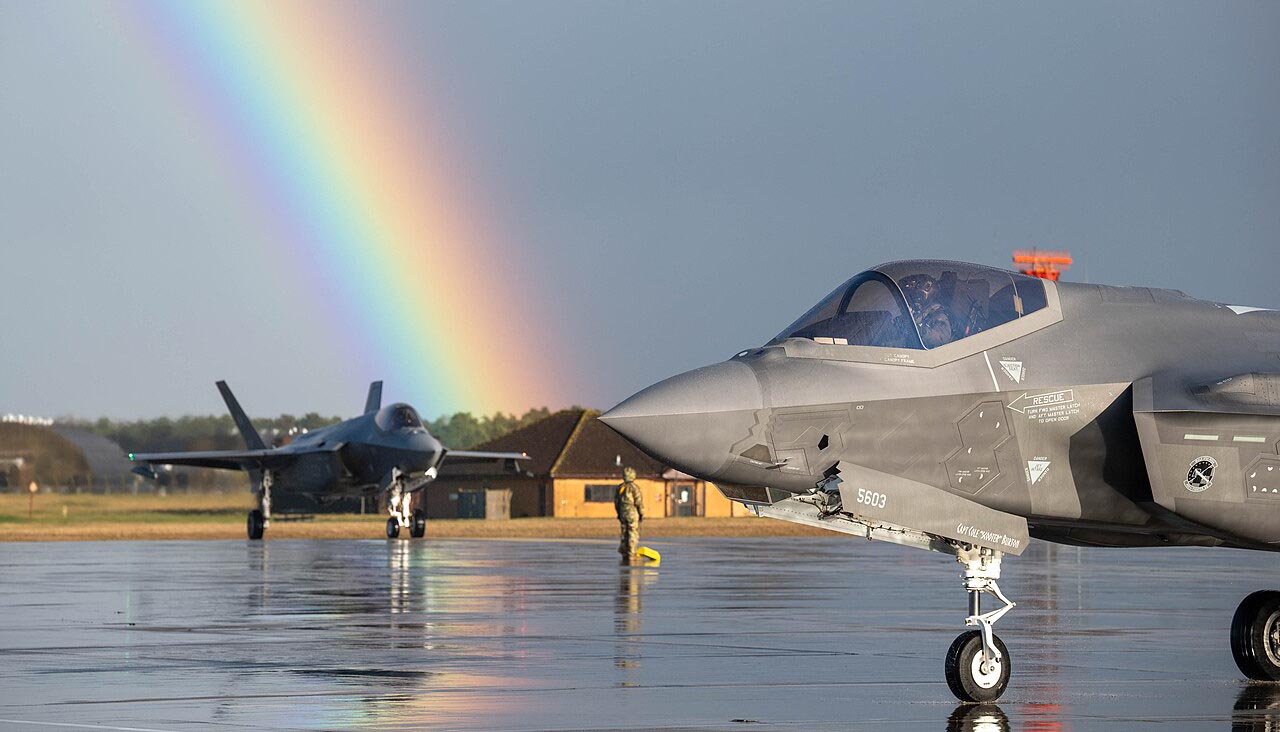
AZORES — Two brand-new British F-35 stealth fighters have been stranded on a remote Atlantic island chain for nearly two months following mid-air mechanical failures, defense sources have confirmed.
The Lockheed Martin F-35B Lightning II jets, valued at roughly $119 million (£90 million) each, were forced to make unscheduled emergency landings at Lajes International Airport in the Azores. The aircraft were in the middle of a transatlantic delivery flight from the Lockheed Martin production facility in Fort Worth, Texas, to their permanent home at RAF Marham in Norfolk, UK.
The prolonged grounding highlights persistent questions surrounding the reliability and global logistics tail of the multi-billion-dollar stealth fighter program.
Mid-Atlantic Emergency
The two short-takeoff and vertical-landing (STOVL) variants were crossing the Atlantic when cockpit alerts forced the pilots to divert to the Portuguese airbase in the Azores.
While diversion to Lajes, a strategic mid-Atlantic refueling hub, is standard protocol for single-engine fighters experiencing technical anomalies, the fact that the multi-million dollar assets have remained stuck on the tarmac for nearly eight weeks points to severe logistical bottlenecks.
Standard recovery procedures typically involve flying in specialized maintenance teams and proprietary spare parts within days. However, getting the highly sophisticated, low-observable (stealth) fighters back into the air has proven to be a prolonged headache for the Royal Air Force (RAF).
A Fleet Under Scrutiny
The stranding comes at a highly sensitive time for the UK Ministry of Defence. The British F-35 fleet is already facing intense political and defense scrutiny following a scathing 2025 audit.
The audit painted a grim picture of the UK’s frontline stealth capabilities, exposing systemic maintenance challenges, including:
- Critical Spares Shortages: A cannibalization culture where parts are routinely stripped from one aircraft to keep another flying.
- Environmental Degradation: Unexpected corrosion issues affecting airframes deployed at sea and in humid environments.
- Zero-Availability Windows: Shocking admissions that, during specific periods, not a single UK F-35 was classified as “fully mission capable” due to maintenance backlogs.
The Path Forward
The RAF, which currently plans to purchase a total of 74 F-35Bs in its initial tranche, has maintained that the safety of its aircrews remains the top priority.
Back on October, 2025, another technical incident forced a F-35 Lightning II fighter to remain stranded at Lajes on transatlantic flight from Fort Worth, Texas to Florennes Air Base.