

On the night of December 29, the weather at JFK was a major factor in the escalating situation for Flight American Airlines 3085.
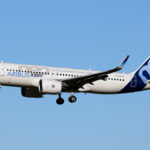
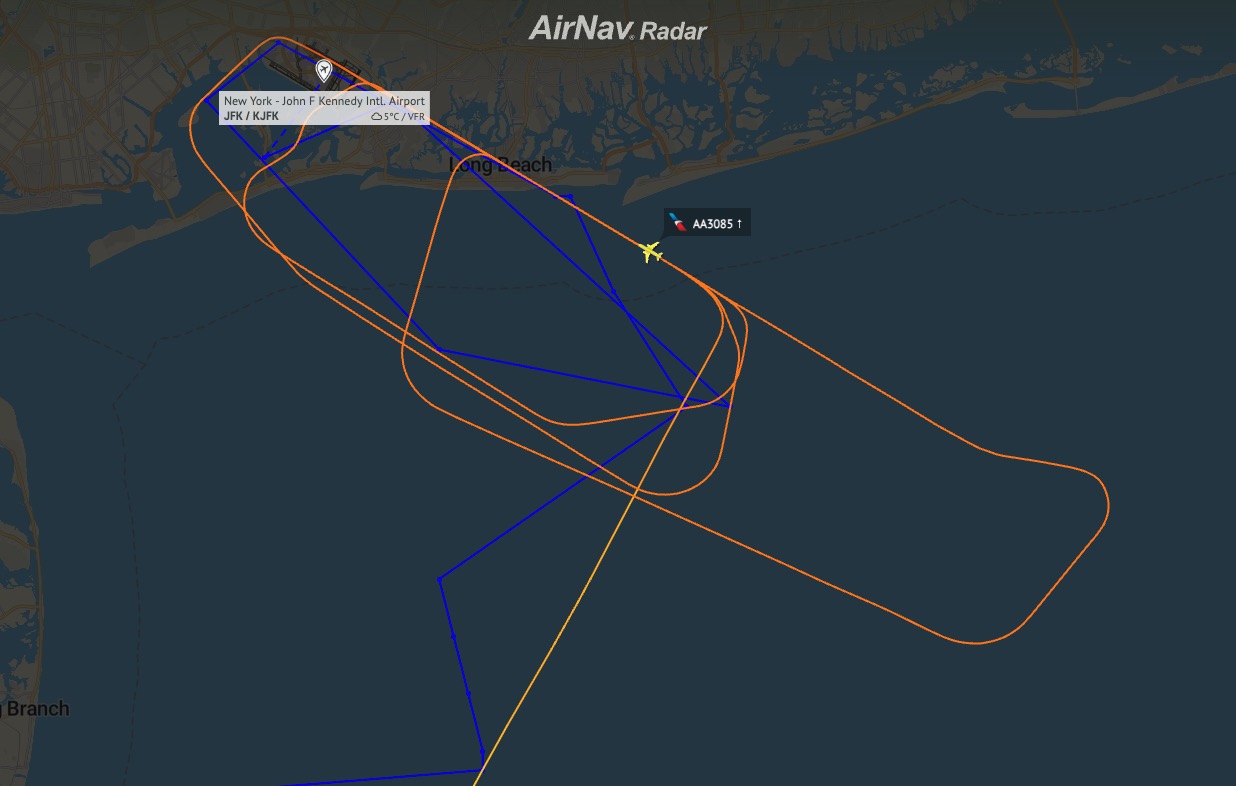
On the evening of December 29, what was meant to be a routine transcontinental hop from Santa Ana (SNA) to New York (JFK) turned into a high-stakes test of airmanship. American Airlines flight AA3085, operated by an Airbus A321 (N104NN), found itself caught in a grueling cycle of missed approaches that pushed the aircraft’s fuel reserves to their limit.
A Series of Unfortunate Approaches
The tension began as the aircraft neared the end of its cross-country journey. Facing challenging weather conditions at JFK, the flight crew initiated their first approach, only to be forced into a go-around due to an unstable approach.
Standard procedures dictate that if an approach isn’t “stabilized” meaning the speed, descent rate, and configuration aren’t perfect by a certain altitude The pilots must climb away and try again. However, the situation grew more complex as the second and third attempts both resulted in further go-arounds.
Reports indicate that following a system reset in the cockpit, the aircraft struggled to properly “accept” the approach data, complicating the pilots’ ability to automate the landing sequence.
Declaring “Mayday”: The Fuel Crisis
By the time the A321 was vectored for its fourth attempt, the situation had shifted from a technical annoyance to a safety emergency. Continuous low-altitude maneuvering and repeated climbs consume fuel rapidly. With reserves reaching a critical threshold, the pilots made the decisive call to declare a “Mayday” for low fuel.
This declaration is a powerful tool in aviation; it gives the aircraft absolute priority over all other traffic. ATC immediately cleared the path to Runway 31 Right, though they issued a final warning: the crew would have to contend with strong, gusty winds.
Calm Under Pressure
Despite the “Mayday” status and the mechanical frustrations, the landing was executed safely. Recordings of the ATC audio have since circulated online, drawing widespread praise for the “ice-water-in-the-veins” composure shown by both the pilots and the controllers.
There were no frantic voices or panicked decisions. Instead, the crew followed their training:
- Aviate: They flew the plane through three failed attempts.
- Navigate: They requested space to regroup when the cockpit became overwhelmed.
- Communicate: They were transparent with ATC about their fuel state before it became a catastrophe.
The ATC Audio: Key Moments
Transcripts of the exchange highlight the shift from routine operations to an emergency footing. Note the change in the pilots’ “callsign” priority once Mayday is declared.
AA3085: “New York Approach, American 3085, we’re going around again. We’re having some issues with the approach capture after the reset.”
ATC: “American 3085, Roger. Climb and maintain 3,000. Turn right heading 120. Do you need assistance?”
AA3085: “Negative for now, we just need a few minutes to regroup and run some numbers. Requesting delay vectors.”
(Minutes later, as fuel levels dropped)
AA3085: “New York, American 3085. Mayday, Mayday, Mayday. American 3085 is declaring a fuel emergency. We need the shortest vector possible to Runway 31 Right.”
ATC: “American 3085, Mayday acknowledged. You are cleared for the visual 31 Right, or the ILS if you have it. You have priority. Winds are 310 at 18, gusting 26. Caution wake turbulence, Heavy 777 departed two minutes ago.”
The Weather Breakdown (JFK, Dec 29)
The conditions at the time of the incident were significantly more difficult than a standard clear winter night:
| Feature | Condition | Impact on Flight 3085 |
| Wind Speed | 15–20 mph sustained | Created consistent crosswind challenges. |
| Wind Gusts | Up to 28 mph | The primary cause for the “unstable approach” calls. |
| Visibility | 2–3 miles in Mist/Fog | Reduced the time pilots had to visually transition from instruments to the runway. |
| Precipitation | Light Rain/Drizzle | Slicked the runways and further degraded visual cues through the windshield. |
| Cloud Ceiling | Broken at 1,500 ft | Forced the crew to rely heavily on the ILS (Instrument Landing System). |
Aftermath
The aircraft taxied to the gate under its own power, and passengers disembarked without injury. While the FAA and airline typically review such incidents to understand the technical glitches involved, the primary takeaway from the aviation community has been one of respect. In an industry where “go-around” is often a dirty word to frustrated passengers, the crew of AA3085 proved that choosing to try again—even four times—is always the right call if safety is at stake.