


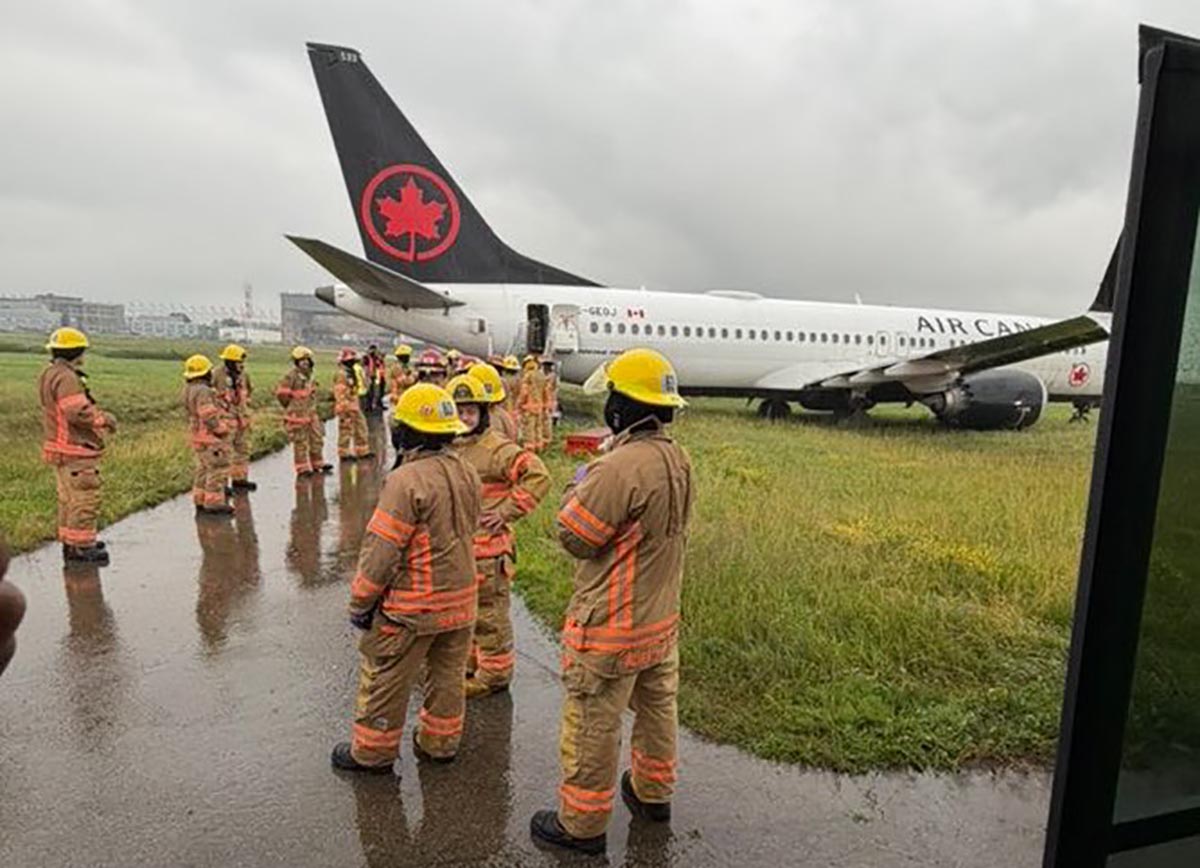
MONTRÉAL — An Air Canada flight arriving from Los Angeles veered off a paved surface and into the grass after landing at Montréal-Trudeau International Airport (YUL) on Thursday afternoon, triggering runway closures and widespread operational delays.
None of the 156 passengers or six crew members aboard Flight AC774 were injured.
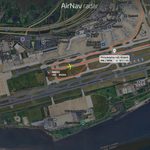
The incident involved a Boeing 737 MAX 8 aircraft (registration C-GEOJ). According to airline officials and flight tracking data, the plane completed a routine landing on runway 06L at approximately 4:00 p.m. local time. ADS-B tracking data indicates that while vacating the runway at a ground speed of roughly 55 knots via taxiway B3, the aircraft failed to execute the turn onto taxiway B, sliding straight off the pavement into the adjacent grassy area.
Emergency Response and Delays
Following the taxiway excursion, Aéroports de Montréal (ADM) immediately activated its emergency coordination centre. To ensure a safe evacuation environment, airport authorities temporarily shut down the facility’s north runway.
The runway closure caused immediate cascading delays across the airport’s network, with domestic and international flights averaging 30-minute delays, and U.S.-bound departures facing setbacks of up to an hour. NAV Canada also implemented strict air traffic flow restrictions to manage the bottleneck, which was further complicated by turbulent regional weather and pouring rain. The north runway was eventually reopened just before 10:00 p.m. Thursday night.
The Passenger Experience
Passengers remained on board the aircraft for nearly three and a half hours while emergency teams secured the site. By 7:45 p.m., Air Canada confirmed that all 162 occupants had safely disembarked the plane via stairs and were shuttled to the main terminal by airport buses.
Despite the scare, passengers widely praised the flight crew’s professionalism and calm handling of the situation during the long wait for evacuation.
Investigation Underway
Air Canada announced plans to tow the narrowbody jet to a maintenance hangar for a rigorous technical inspection. Both the airline and the Transportation Safety Board of Canada (TSB) have launched independent investigations to determine whether environmental factors, mechanical issues, or pilot inputs caused the aircraft to miss the taxiway turn.