
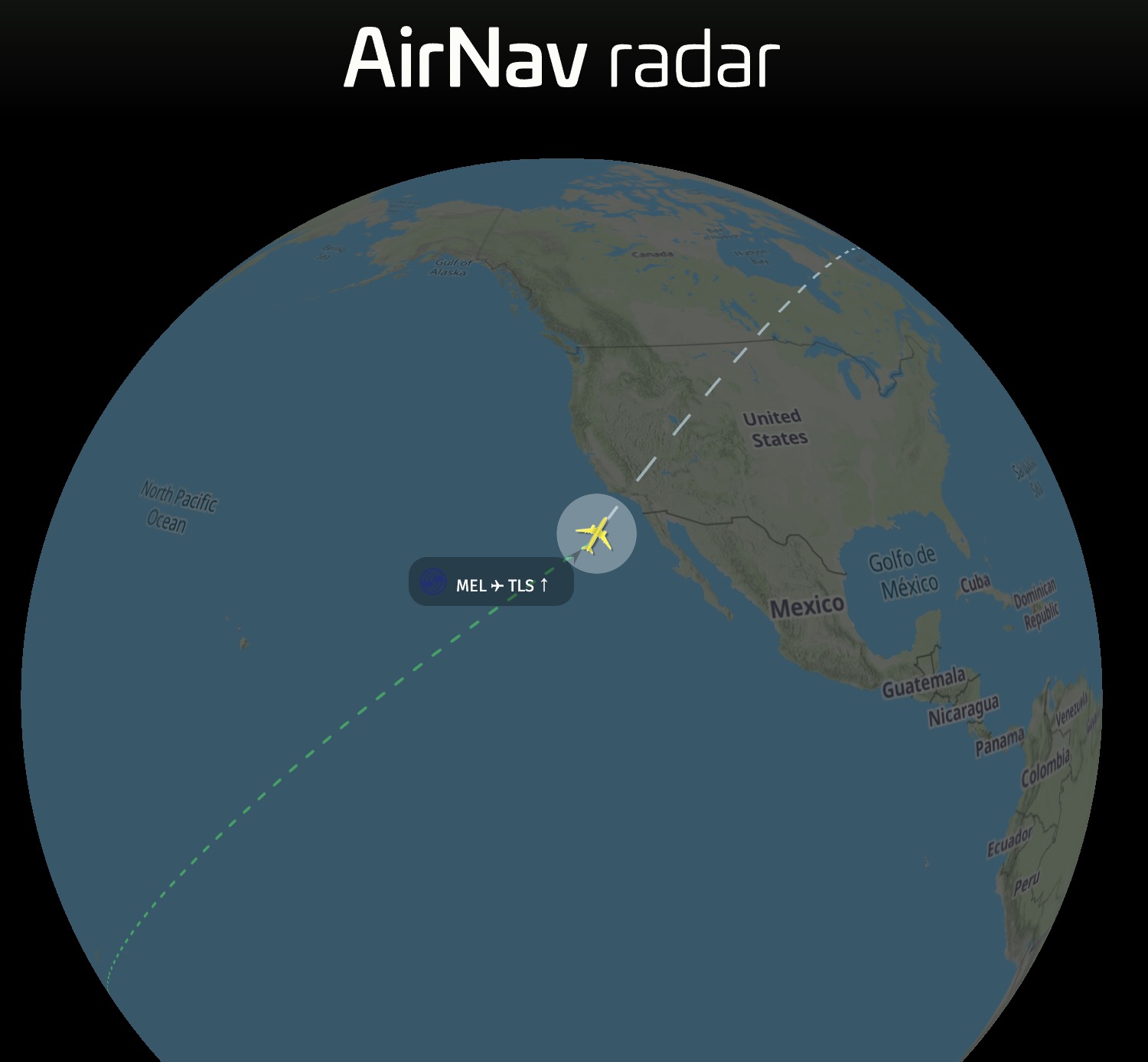
TOULOUSE / MELBOURNE — In a historic display of ultra-long-haul endurance, the flagship aircraft for Qantas Airways’ ambitious “Project Sunrise” is embarking on an unprecedented journey around the globe, attempting to shatter records and redefine non-stop air travel.
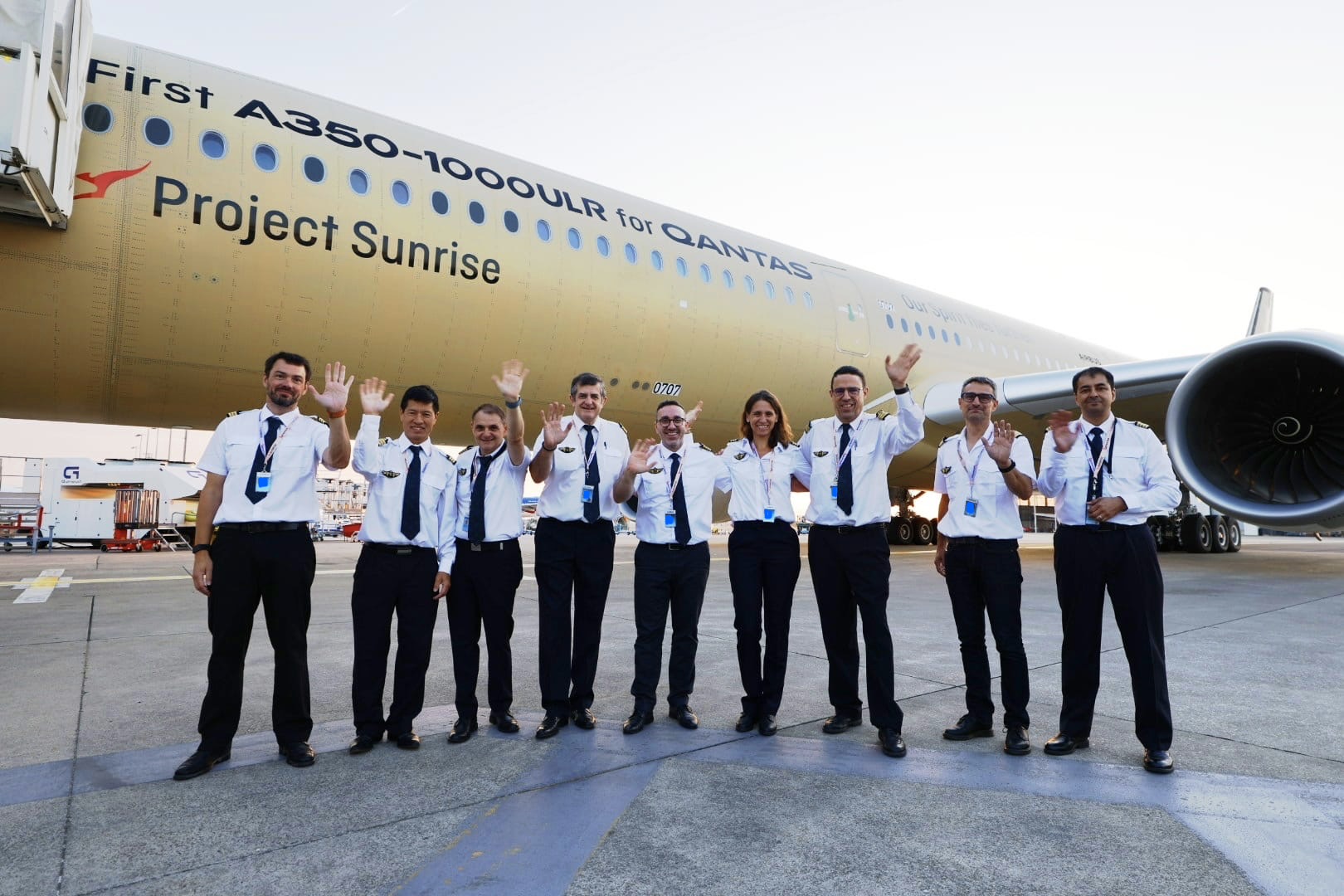
The aircraft, an Airbus A350-1000ULR bearing the test registration F-WULR (MSN 707), embarked on the second leg of its world-spanning certification tour on Monday. After successfully completing a direct 19-hour flight from Airbus headquarters in Toulouse, France, to Melbourne, Australia, late last week, the twin-engine jet took off from Melbourne Airport (MEL) at 5:27 PM local time to return to France.
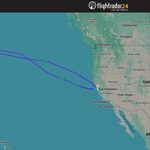
Rather than retracing its steps back across Asia, the test crew opted for a dramatic eastbound circumnavigation: routing east across the vast Pacific Ocean toward the U.S. West Coast, before cutting across North America and crossing the Atlantic Ocean back into European airspace.
Riding the Jet Stream Past ‘Mach 1’
If the demanding flight schedule holds, the aircraft is projected to remain airborne for nearly 24 consecutive hours—making it one of the longest continuous flights ever recorded by a commercial-type airliner.
The marathon test flight got off to an extraordinary start. Just three hours after departing Melbourne, as the jet climbed into cruise altitude over the South Pacific, telemetry recorded a staggering ground speed of 662 knots (approximately 1,226 km/h or 762 mph) according to Flightradar24.
While a numerical ground speed of 662 knots technically surpasses the speed of sound at sea level (Mach 1 is roughly 661 knots), aviation engineers emphasized that the aircraft itself was not breaking the sound barrier. Flying safely within its subsonic aerodynamic envelope, the A350 was riding an exceptionally powerful high-altitude jet stream. The fierce tailwinds effectively supercharged the aircraft’s speed relative to the earth’s surface below, delivering a massive push across the Pacific.
The Engineering Behind ‘Project Sunrise’
The ultra-long-range variant is purpose-built to fulfill Qantas’ long-standing dream of connecting Australia’s east coast directly to London and New York non-stop—overcoming what the airline famously terms the “tyranny of distance.”
To achieve a range exceeding 18,500 kilometers (nearly 10,000 nautical miles), Airbus engineers fitted the ULR variant with:
- An additional 20,000-liter Rear Center Tank (RCT): Boosting fuel capacity to survive nearly a full day in the air without refueling.
- New Galley Cooling Architecture: Replacing heavy centralized systems with localized, lightweight units to trim weight.
- Custom Flight Test Instrumentation: Packed with over 1,000 sensors and “dummy passengers” to monitor cabin heating, air quality, and fuel flow sequencing in real time.
For this round-the-world proving run, the aircraft is being operated by a combined flight crew of Airbus test pilots and Qantas aviators, providing crucial operational data ahead of scheduled commercial entry in 2027.
Arrival Expected Tuesday
The flight is currently tracking on schedule across its transpacific-transatlantic trajectory. Air traffic controllers and global flight-tracking enthusiasts are following the historic airframe closely as it approaches Europe.
If all goes according to plan, F-WULR will touch down on the runway at Toulouse-Blagnac Airport (TLS) on Tuesday at approximately 09:00 local time, completing a full loop around the planet in just two long-haul legs.