


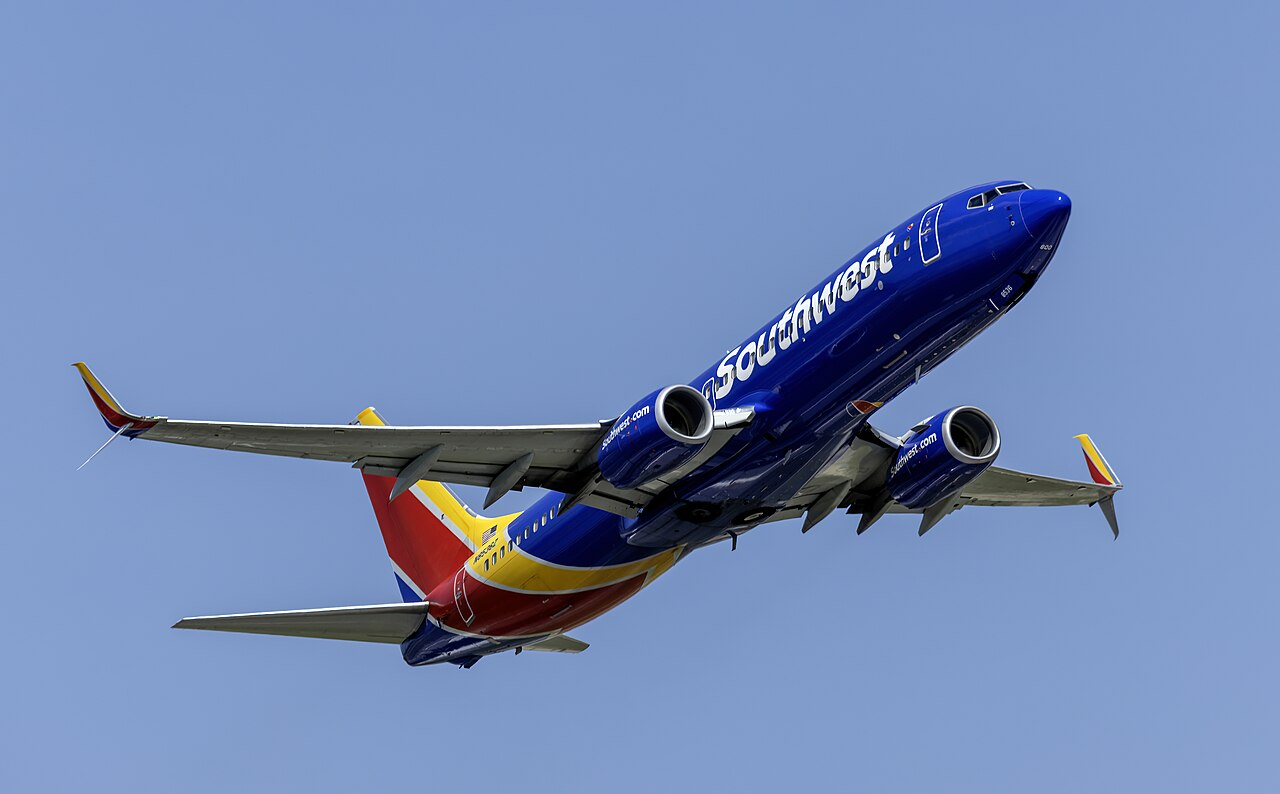
NASHVILLE, TN — The Federal Aviation Administration (FAA) has launched a priority investigation after two Southwest Airlines Boeing 737s came within 500 feet of each other near Nashville International Airport (BNA) on Saturday afternoon.
The incident, which occurred around 5:30 p.m. local time on April 18, 2026, was triggered when an air traffic controller inadvertently directed one aircraft into the immediate path of another.
The Sequence of Events
The close call began during a period of gusty winds at BNA. Southwest Flight 507, arriving from Myrtle Beach, South Carolina, was forced to abort its landing on Runway 2L. As the crew initiated a standard “go-around” maneuver to circle back for another attempt, air traffic control (ATC) instructed the pilots to turn right.
This turn placed Flight 507 directly in the departure path of Southwest Flight 1152, which had just been cleared for takeoff from the parallel Runway 2R, bound for Knoxville.
Evasive Action and TCAS Activation
According to preliminary flight data and cockpit audio, the two jets converged rapidly, losing the required 1,000-foot vertical separation. The “near mid-air collision” was averted by the Traffic Collision Avoidance System (TCAS), an automated safety net that provides pilots with emergency “Resolution Advisories.”
- Flight 507: Received a command to descend.
- Flight 1152: Received a command to climb.
Data from FlightRadar24 indicates the aircraft passed with only 500 feet of vertical distance between them—half the legal minimum. Witnesses on the ground and aviation analysts noted that one aircraft essentially flew directly over the other before they were able to bank away.
Official Responses
In a statement released Monday, Southwest Airlines praised the quick thinking of its flight crews:
“Southwest appreciates the professionalism of its Pilots and Flight Crews in responding to the event. Nothing is more important to Southwest than the Safety of our Customers and Employees.”
The FAA acknowledged the controller’s role in the conflict, stating that the crew of Flight 507 “received instructions from air traffic control that put the flight in the path of another airplane.”
Growing Concerns Over Airspace Safety
This incident adds to a string of high-profile near-misses that have plagued major U.S. airports over the last 18 months. Industry experts point to a “crisis level” of ATC staffing shortages and system fatigue as contributing factors.
The FAA investigation will determine if the error was due to individual controller fatigue or a systemic failure in the parallel runway protocols at Nashville. Both flights reached their destinations safely, and no injuries were reported among the passengers, many of whom were unaware of how close they had come to disaster until after landing.