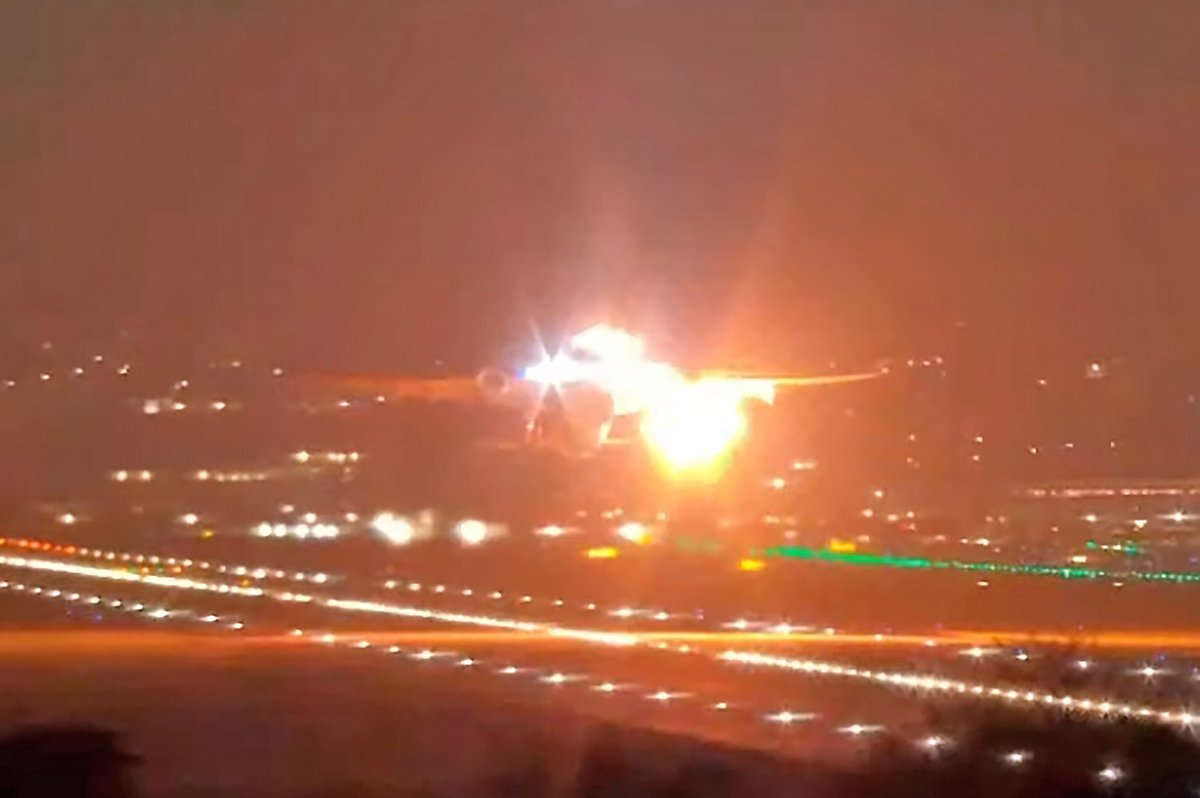



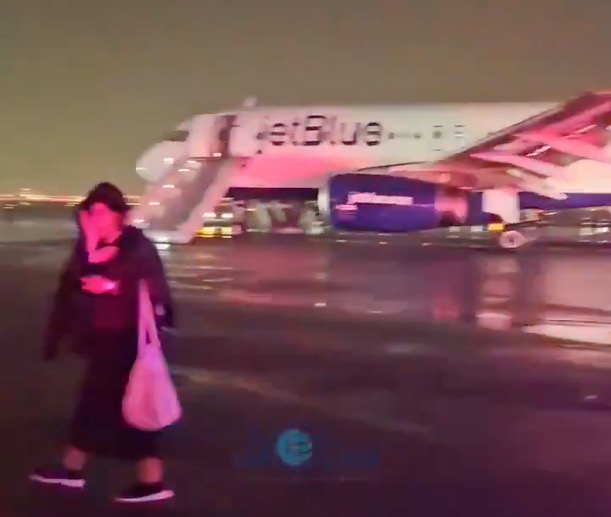
NEWARK, N.J. — A Florida-bound JetBlue flight was forced to make a dramatic emergency landing at Newark Liberty International Airport (EWR) on Wednesday evening after an engine failure sent smoke billowing into the cabin and cockpit.
The incident, involving JetBlue Flight B6543 (registration N640JB), triggered a full airport ground stop and a taxiway evacuation that left passengers “shaking and crying” but ultimately unharmed.
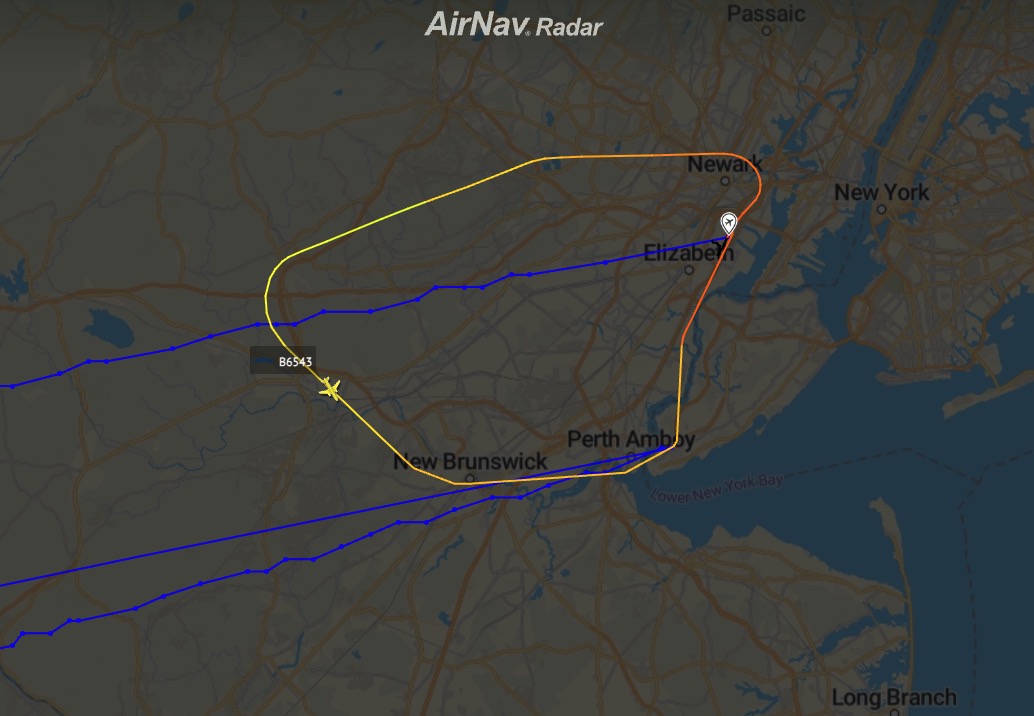
The Airbus A320, carrying 122 passengers and crew members, departed Newark at approximately 5:45 p.m. headed for West Palm Beach. According to Port Authority officials, the trouble began almost immediately after takeoff.
- 5:55 p.m.: The flight crew reported an issue with the number one engine (left side) and noted smoke entering the flight deck.
- 6:02 p.m.: After just 17 minutes in the air, the aircraft touched down safely back at Newark.
- 6:10 p.m.: Once the plane exited the runway onto a taxiway, the pilot determined that the smoke levels in the cabin required an immediate evacuation.
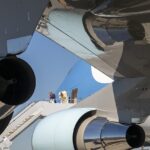
As emergency vehicles swarmed the aircraft, the crew deployed the inflatable emergency slides. Passengers described a scene of controlled chaos as they scrambled onto the tarmac to escape the fumes.
The Port Authority confirmed that no injuries were reported during the evacuation, although one passenger was reportedly evaluated at a local hospital for chest pains related to the stress of the event.
Airport Disruption and FAA Investigation
The evacuation on the taxiway necessitated a total suspension of flight operations. Because passengers were on the active airfield, the Federal Aviation Administration (FAA) issued a ground stop, halting all arrivals and departures at one of the nation’s busiest hubs.
| Impact Category | Details |
| Ground Stop Duration | Approx. 1 hour (Lifted at 7:00 p.m.) |
| Flight Delays | 31% of arrivals; 30% of departures |
| Passenger Count | 122 (including crew) |
| Aircraft Model | Airbus A320 |
The FAA and the National Transportation Safety Board (NTSB) are expected to investigate the cause of the engine “snag.” Early reports suggest a mechanical failure in the engine housing may have allowed oil or hydraulic fluid to enter the ventilation system, creating the smoke reported by the crew.
JetBlue Response
In a statement, JetBlue emphasized that “safety is our top priority” and confirmed that all affected customers were re-accommodated on a different aircraft later that night. The airline is currently working with federal authorities to review the maintenance history of the aircraft involved.