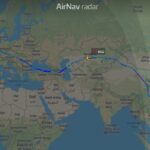


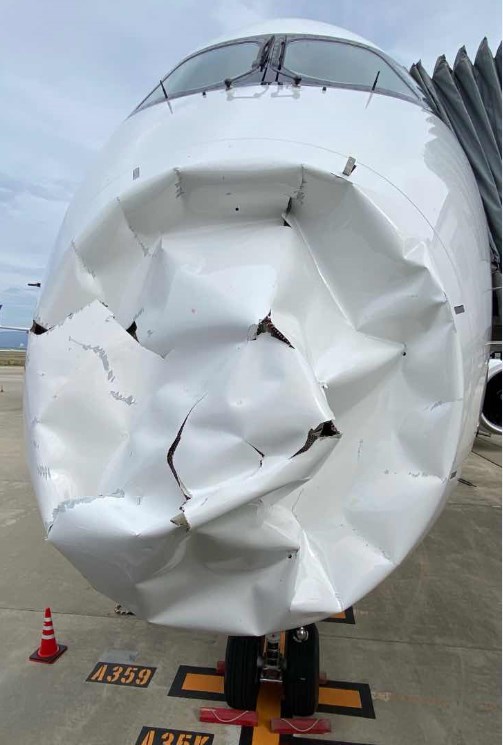
The BEA has released its final report detailing the dramatic return of Air France Flight AF291 to Osaka, Japan, on May 28, 2023.
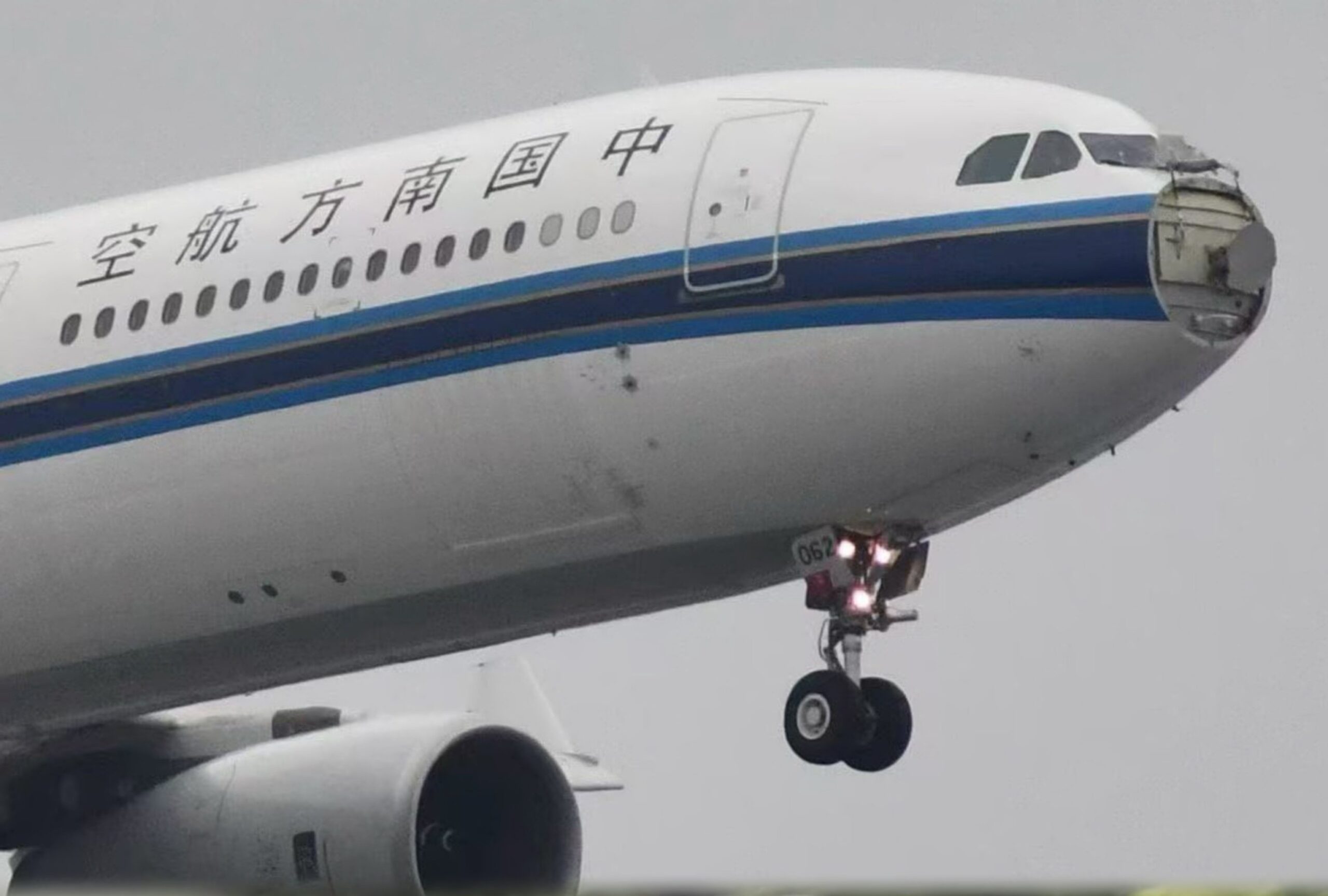
The Paris-bound Airbus A350, which was carrying 324 people, made an emergency landing after its nose cone, or radome, suddenly crumpled inward.
Hidden Damage Leads to Structural Failure
The BEA investigation concluded that the radome collapse was the result of hidden damage sustained during an earlier bird strike. Investigators believe the inner skin of the composite nose had begun to peel away from its honeycomb core—a failure likely initiated weeks prior to the incident—and this damage was not fully detected during subsequent maintenance checks.
The structural integrity finally gave way as the A350 was descending through Flight Level 300 (FL300) on its return to Kansai International Airport (KIX). The crew had initiated the turnaround earlier after experiencing repeated weather radar faults. The collapse of the radome, while initially alarming, disturbed the airflow and caused a brief period of unreliable airspeed readings.
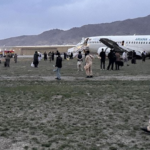
Despite landing overweight, the crew executed the landing safely, and all 324 people aboard were unharmed, though photographs of the crushed radome quickly drew widespread attention online.
Safety Recommendations Implemented
The incident has prompted specific safety improvements across the industry:
- Airbus has since tightened inspection rules for A350 radomes following bird strikes and whenever crews report repeated weather radar faults.
- Airbus has also updated pilot guidance concerning procedures for dealing with unreliable airspeed indications.
- Air France has reminded its technicians about the specific inspection risks associated with composite nose structures.
The key takeaway from the AF291 incident is that even a seemingly minor or “small” bird strike can cause latent damage to the composite nose, and careful, thorough follow-up maintenance is critical to prevent failures that may only manifest much later in flight.