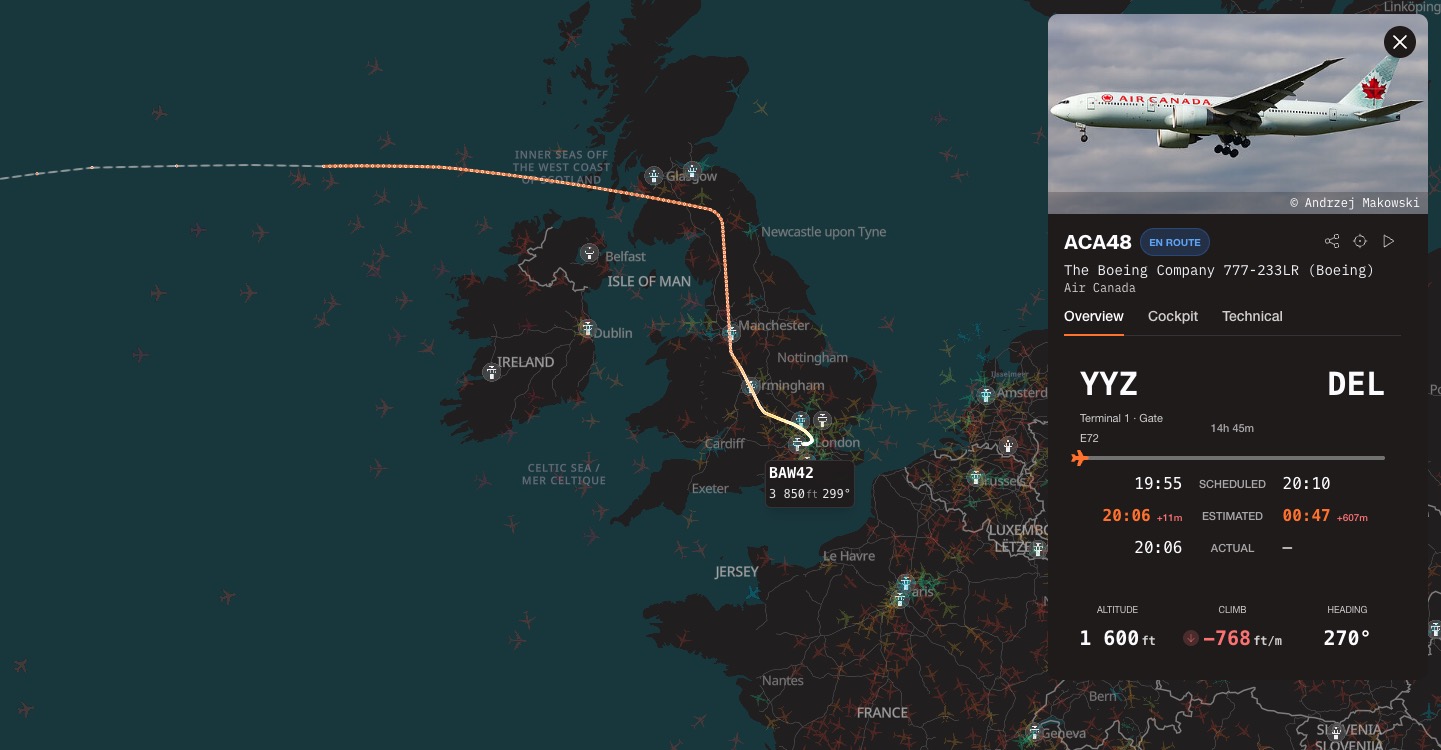



A flight from Guernsey to Manchester attracted over 1.3 million trackers on Flightradar24 and leaving even the tracking platform baffled about the attention.
A routine Aurigny Air Services flight from Guernsey to Manchester became an internet sensation yesterday, attracting over 1.3 million trackers on Flightradar24 in what appears to be one of the most-watched flights in aviation tracking history. Even Flightradar24 itself admits it doesn’t understand why flight GR678 captured such extraordinary global attention.
An Ordinary Flight’s Extraordinary Moment
Flight GR678, operated as AUR78B by Aurigny Air Services, follows a familiar path that thousands of passengers have traveled before – the 350-mile journey from Guernsey Airport to Manchester. On any typical day, this ATR 72-600 aircraft would complete its 90-minute flight with minimal fanfare, serving the essential transportation needs of Channel Islands residents and visitors.
Yesterday was different. As the aircraft (registration G-ORAI) took off from Guernsey, digital aviation enthusiasts around the world began tracking the flight in unprecedented numbers. What started as routine Monday travel quickly snowballed into a global phenomenon that left industry observers scratching their heads.
A Snowball Effect?
The extraordinary tracking numbers for Aurigny flight AUR78B (callsign GR678) stem from what experts describe as the “popularity snowball effect” – a fascinating digital phenomenon where viral attention feeds on itself. Once the flight appeared on Flightradar24’s “most tracked flights” list, curious users began clicking on it simply because others were watching, creating a self-reinforcing cycle that propelled the humble Channel Islands service to unprecedented heights of digital fame.
Flightradar24’s system naturally promotes already-popular flights, making them more visible to users who then track them out of intrigue, further boosting their numbers in an endless cycle of digital interest.
Most Tracked Flights in History
The tracking numbers for GR678 represent a level of interest typically reserved for historic flights or those carrying world leaders. Previous record-breaking tracked flights included Nancy Pelosi’s controversial journey to Taiwan, which drew over 700,000 trackers, and Queen Elizabeth II’s final flight, which attracted millions of viewers and temporarily crashed tracking servers.
Could It Have Been a Technical Glitch?
While the popularity snowball effect provides a compelling explanation for Flight GR678’s viral status, some aviation industry observers have raised questions about whether a technical glitch might have contributed to the extraordinary tracking numbers. However, if a glitch was responsible for GR678’s initial visibility boost, it would still require the subsequent human curiosity and algorithmic amplification to reach such remarkable numbers. The possibility remains that what started as a technical anomaly was transformed into genuine viral interest through the very real feedback loop effect that characterizes modern digital platforms.
The Platform That Made It Possible
Flightradar24 has become the world’s most popular flight tracking service, allowing users to follow aircraft in real-time using data from a global network of ADS-B receivers. The platform typically sees heightened interest in flights during major news events, unusual weather conditions, or when aircraft carry notable passengers.
The service’s “most tracked flights” feature creates a feedback loop where popular flights become more visible, potentially attracting additional viewers who track flights simply because others are watching. This viral mechanism may partially explain how GR678’s tracking numbers multiplied so rapidly throughout the day.

The GR678 phenomenon serves as a reminder that in our hyperconnected world, fame can strike anywhere – even 20,000 feet above the English Channel on a routine Monday afternoon flight. For 90 minutes yesterday, over a million people around the world focused their attention on a single aircraft crossing the English Channel – a remarkable example of how technology can create unexpected moments of global connection.