
Two Russian military aircraft briefly violated Lithuanian airspace on Thursday evening, entering NATO territory for approximately 18 seconds.
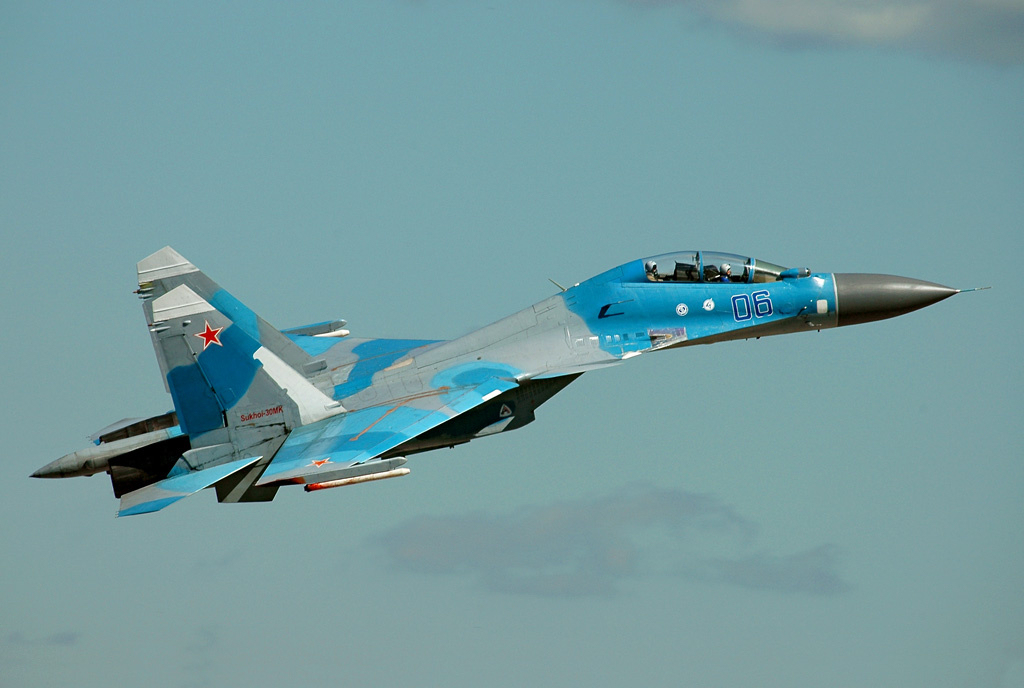
The Lithuanian Ministry of Defense reported that around 6 p.m. local time, a Russian Su-30 fighter jet and an Il-78 refueling tanker crossed approximately 700 meters (765 yards) into Lithuanian airspace near the town of Kybartai from the Russian exclave of Kaliningrad before returning to Russian territory after 18 seconds.
In response to the violation, two Spanish Air Force Eurofighter Typhoon fighter jets from NATO’s Baltic Air Policing mission were immediately scrambled to intercept and patrol the area. The Spanish aircraft are stationed at Šiauliai Air Base in Lithuania as part of NATO’s continuous air defense presence protecting the Baltic states.
“Russian military aircraft briefly entered Lithuanian airspace. Our forces acted quickly with NATO jets on patrol. Lithuania remains strong and ready. Every inch of our country is protected,” the Lithuanian Ministry of Defense stated.
Lithuanian President Gitanas Nausėda strongly condemned the violation in a video posted to social media platform X: “This is a blatant breach of international law and territorial integrity of Lithuania. Once again, it confirms the importance of strengthening European air defense readiness.”
The president announced that Lithuania’s Foreign Ministry plans to summon Russian embassy officials to formally protest what he described as Russia’s “reckless and dangerous behavior.”
The Lithuanian armed forces believe the military planes might have been conducting refueling exercises in the neighboring Russian exclave of Kaliningrad. Local media suggested the incident may have occurred during in-flight refueling operations, though the aircraft’s entry into Lithuanian airspace appeared to be either intentional provocation or navigational error.
Russia’s Defense Ministry has denied that its jets entered Lithuanian airspace, insisting that the Su-30 fighters carried out scheduled training flights over the Kaliningrad region. Russian officials claimed that “objective control data” confirms there were no deviations from the planned route.