


NEWARK, NJ — A 33-year-old United Airlines Boeing 767 was forced to turn back to Newark Liberty International Airport on Tuesday evening following a fresh technical issue, renewing ongoing concerns regarding the carrier’s aging widebody fleet.
United Airlines flight UA962, bound for Berlin, departed Newark on Tuesday, June 30, 2026, at 5:15 PM EDT. The transatlantic flight was originally scheduled to last just over eight hours.
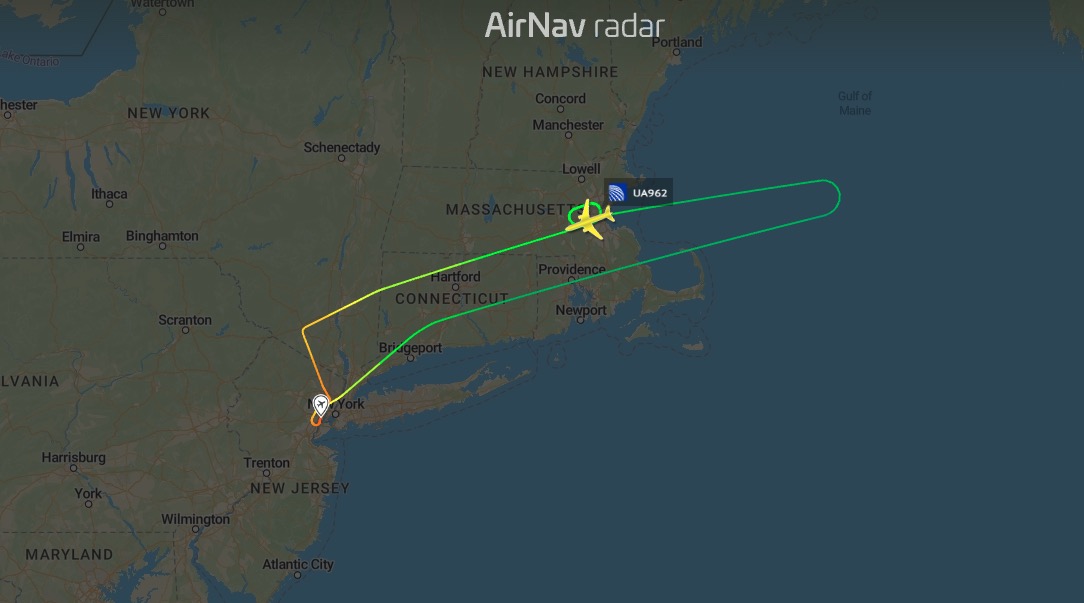
The aircraft, a Boeing 767-322ER registered as N661UA, took off from runway 22R and climbed steadily to an altitude of 33,000 feet as it headed east over the Atlantic Ocean. However, just 30 minutes into the flight, the flight crew encountered an unspecified technical difficulty and made the decision to abort the crossing.
To ensure a safe landing weight, the twin-engine jet spent several minutes circling at flight level FL200 (20,000 feet) over Massachusetts to dump fuel before steering back toward New Jersey. The aircraft touched down safely back at Newark roughly two hours after its initial departure.
United quickly arranged a replacement aircraft, another Boeing 767-300ER registered as N664UA. The substitute flight finally lifted off at 11:18 PM EDT and is projected to arrive at Berlin Brandenburg Airport at approximately 1:10 PM local time on Wednesday, carrying passengers to their destination nearly six hours behind schedule.
Growing Scrutiny Over Aging Fleet
This latest turn-back is putting a spotlight on the reliability of United’s veteran 767 fleet. Records show that this specific airframe, N661UA, has a history of maintenance disruptions over the past year and a half:
- August 6, 2025: The same aircraft suffered a technical issue that forced it to return to Newark during another scheduled flight.
- December 30, 2024: While operating as flight UA957, N661UA was forced to divert to London Heathrow for an unscheduled maintenance inspection due to technical problems mid-flight.
Aviation safety advocates frequently point out that while older commercial aircraft are entirely airworthy if properly maintained, they often require more intensive upkeep and are structurally more susceptible to mid-flight component failures.