


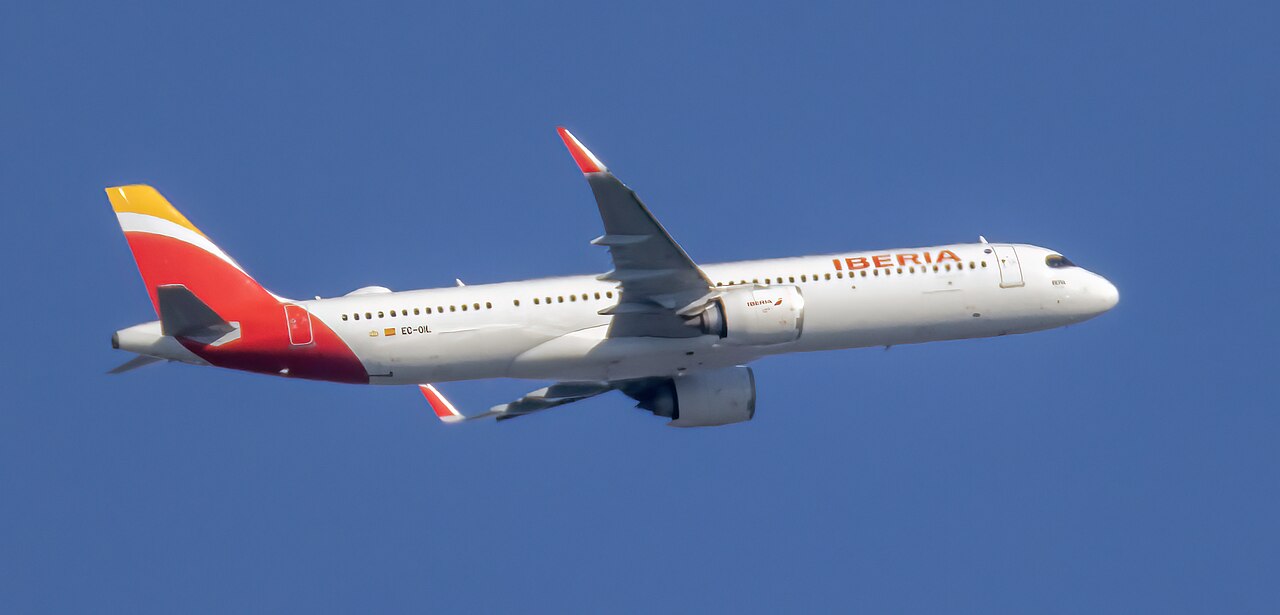
MADRID — In a unique fusion of commercial aviation and high-altitude astronomy, Spanish flag carrier Iberia is set to operate a special flight on 12 August to capture and broadcast the total solar eclipse from 10,000 meters (33,000 feet) above the clouds.
Operating under the symbolic flight code IB1473—a homage to the birth year of astronomer Nicolaus Copernicus—the flight will carry a team of 30 astronomers and scientific researchers directly into the path of totality as the Moon completely masks the Sun over northern Spain.
A Flying Laboratory Above the Clouds
The round-trip flight will depart from Adolfo Suárez Madrid-Barajas Airport at 18:45 local time before navigating a carefully plotted trajectory over the province of Palencia in north-central Spain. By climbing above 33,000 feet, the aircraft will eliminate any risk of cloud interference or tropospheric haze, offering a pristine vantage point for scientific observation.
On board will be a multidisciplinary team from the Shelios project and the Instituto de Astrofísica de Canarias (IAC), led by renowned astronomer Dr. Miquel Serra-Ricart.
“Observing from cruising altitude will allow us to have a clear view of the solar corona, free from cloud cover and other atmospheric phenomena that can make ground-based observation more difficult,” noted Dr. Serra-Ricart. Researchers will use the flight to record measurements of the solar corona’s structure and observe surrounding celestial bodies, including Mercury and Venus.
Commanding the ultra-long-range Airbus A321XLR will be Captain Javier Lopera Alcalá alongside pilot Javier Meana Fernández, who brings specialized academic background in astrophysics to the cockpit.
Real-Time Live Broadcast Powered by Starlink
While the flight is closed to the general public, space and aviation enthusiasts worldwide will be able to experience the event in real time. Iberia will leverage its newly deployed Starlink high-speed satellite Wi-Fi to stream high-definition video directly from the aircraft to its official social media channels.
The onboard broadcasting setup includes:
- Three High-Definition Onboard Cameras: Positioned to capture both the celestial phenomenon and interior scientific operations.
- Cockpit GoPro View: A dedicated camera mounted in the flight deck designed to film the Moon’s shadow as it sweeps across the Earth’s surface and cloud tops at supersonic speeds.
Precision Maneuvers and Scientific Timing
To ensure flawless framing and signal stability during the brief window of totality, the flight crew will execute a calibrated test maneuver prior to the main event.
Between 7:42 p.m. and 7:44 p.m. CEST, the A321XLR will conduct a planned sequence to align the aircraft with the Sun. This maneuver will allow technicians and astronomers to verify camera tracking, test camera framing, and confirm the precise flight path necessary to keep the eclipse centered in view.
A Century in the Making
The 12 August event marks the first total solar eclipse visible from the Iberian Peninsula since 1912. For Iberia, deploying one of its newest flagship narrow-body aircraft highlights the growing role of modern airliners as mobile observation platforms for scientific milestone events.
“We are delighted to collaborate on an initiative that brings together aviation, science, and innovation,” said Diego Fernández, Iberia’s Director of Strategy, Transformation, and Sustainability. “This flight will leverage the advantages of cruising altitude to contribute directly to the study of an exceptional astronomical phenomenon.”
.