

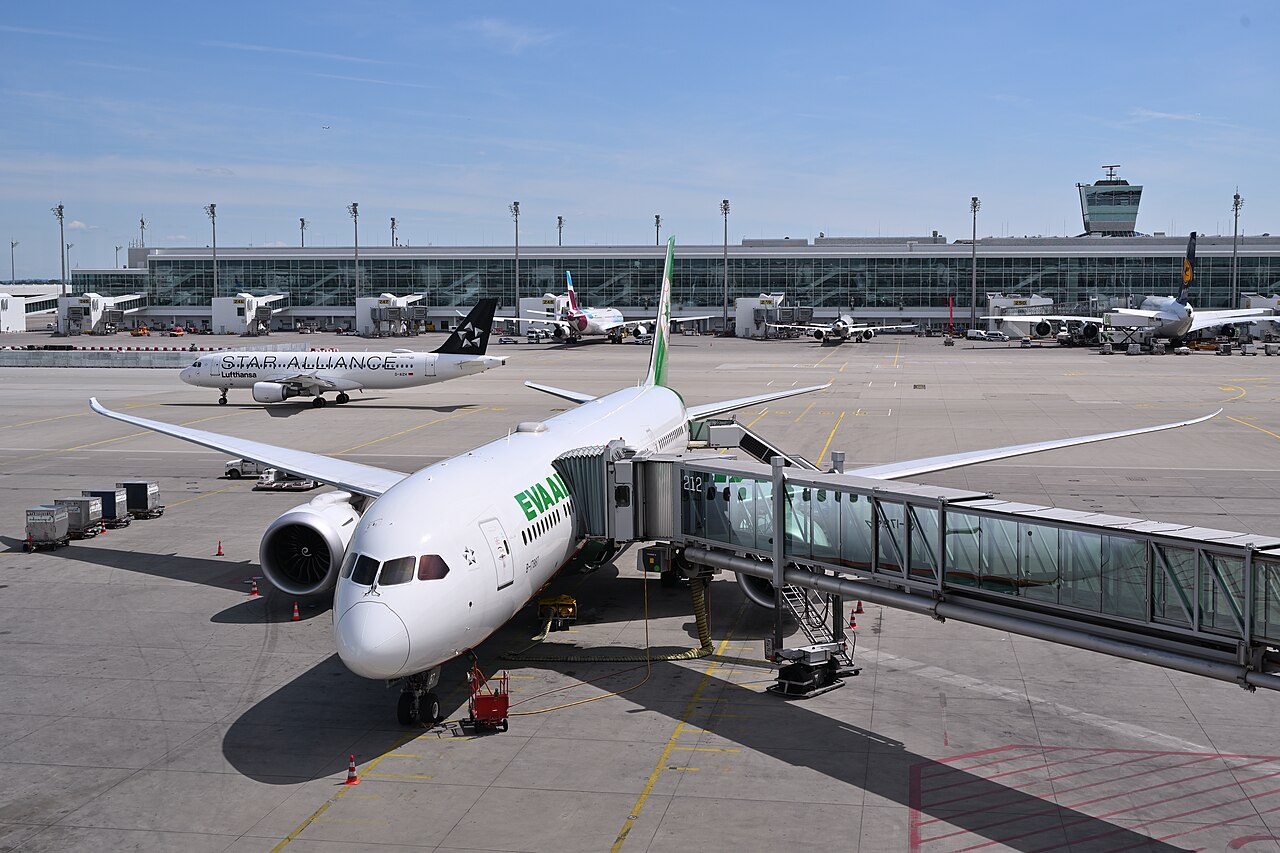
LOS ANGELES – In a rare and disturbing breach of cockpit professionalism, EVA Air has suspended a senior pilot following allegations that he physically assaulted his first officer during a taxiing maneuver at Los Angeles International Airport (LAX).
The Taiwanese carrier confirmed it has launched an immediate internal investigation into the incident, which reportedly saw the flight’s captain, identified by the surname Wen, lose his temper after a disagreement over safety protocols.
Conflict Over Taxiing Speed
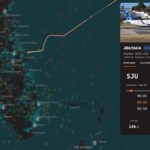
According to preliminary reports, the tension began as the aircraft was taxiing toward the runway for takeoff. The first officer, a Malaysian national, observed that Captain Wen was exceeding the standard ground speed limit of 30 knots (approximately 55 km/h).
After several verbal warnings from the first officer went unheeded, the co-pilot followed standard operating procedure (SOP) by manually applying the brakes to bring the aircraft back within safe speed limits.
Alleged Physical Assault
The safety intervention reportedly triggered a violent reaction from the captain. Witnesses or reports from the carrier indicate that Wen took offense at the junior officer’s actions and struck him at least four times.
The first officer sustained swelling and bruising on the back of one hand as a result of the altercation. While the exact date of the flight was not specified in the initial report, EVA Air has characterized the event as “recent.”
EVA Air operates several daily regular non-stop flights between Los Angeles (LAX) and Taipei (TPE).
As of early 2026, the primary flight numbers and the aircraft typically used are:
| Flight Number | Typical Departure (LAX) | Aircraft Model |
| BR5 | Midday (~11:00 AM) | Boeing 777-300ER |
| BR11 | Late Night (~10:00 PM) | Boeing 777-300ER |
| BR15 | Late Night (~11:00 PM) | Boeing 777-300ER |
Airline and Safety Response
In an official statement, EVA Air emphasized its commitment to safety and professional conduct:
“EVA Air launched an investigation immediately after learning of the incident. We are currently working to confirm the exact details of what occurred and have suspended the pilot involved pending the results of the inquiry.”
The airline has not yet disclosed whether passengers were on board at the time or if the flight was subsequently delayed or canceled. Cockpit violence is treated with extreme severity in the aviation industry, as “Crew Resource Management” (CRM)—the culture of communication and cooperation between pilots—is considered fundamental to flight safety.
Crew Resource Management (CRM) is the “soft skills” backbone of modern aviation. While pilots are highly trained in the technical aspects of flying, CRM focuses on the human factors—how a team communicates, manages stress, and makes decisions under pressure to prevent accidents.
The recent incident at LAX involving EVA Air is a textbook example of a “CRM breakdown,” specifically a failure in the hierarchy and communication protocols that CRM was designed to fix.
The 6 Core Pillars of CRM
CRM is built around several key competencies that every pilot must master and refresh annually:
- Communication: The exchange of clear, unambiguous information. In the EVA Air case, the First Officer used “standardized callouts” (saying “Speed”) which is the correct CRM method to alert a captain of a deviation.
- Situational Awareness: Maintaining an accurate mental map of what is happening. The captain allegedly ignored the reality of the aircraft’s taxi speed.
- Problem Solving & Decision Making: Evaluating risks and choosing the best path. Instead of a professional correction, the captain chose physical aggression.
- Leadership & Teamwork: Breaking down the “God in the cockpit” myth. CRM encourages a “Flat Authority Gradient”—meaning while the Captain is the final authority, the First Officer has a duty to speak up and even intervene if safety is compromised.
- Workload Management: Distributing tasks so no one is overwhelmed.
- Threat and Error Management (TEM): Identifying potential threats (like high taxi speed) and managing the error before it becomes an accident.
History: Born from Tragedy
CRM didn’t always exist. Before the 1980s, the cockpit was a strict hierarchy where questioning a Captain was often seen as insubordination. Several major disasters changed this:
- United Airlines Flight 173 (1978): The plane ran out of fuel while the captain was fixated on a landing gear problem. The co-pilot knew they were low on fuel but was too intimidated to speak up forcefully.
- Tenerife Airport Disaster (1977): The deadliest accident in history occurred partly because a junior officer was hesitant to challenge a prestigious senior Captain who took off without clear clearance.
Why the EVA Air Incident is Significant
In aviation safety, the First Officer “applying the brakes” is a major intervention. It signifies that the “check and balance” system worked, but the Captain’s violent reaction represents a total collapse of Psychological Safety—the belief that one can speak up without fear of retribution.