


From airspace closure to ground mishaps: the bad sequence of events that grounded Air India flight AI101.
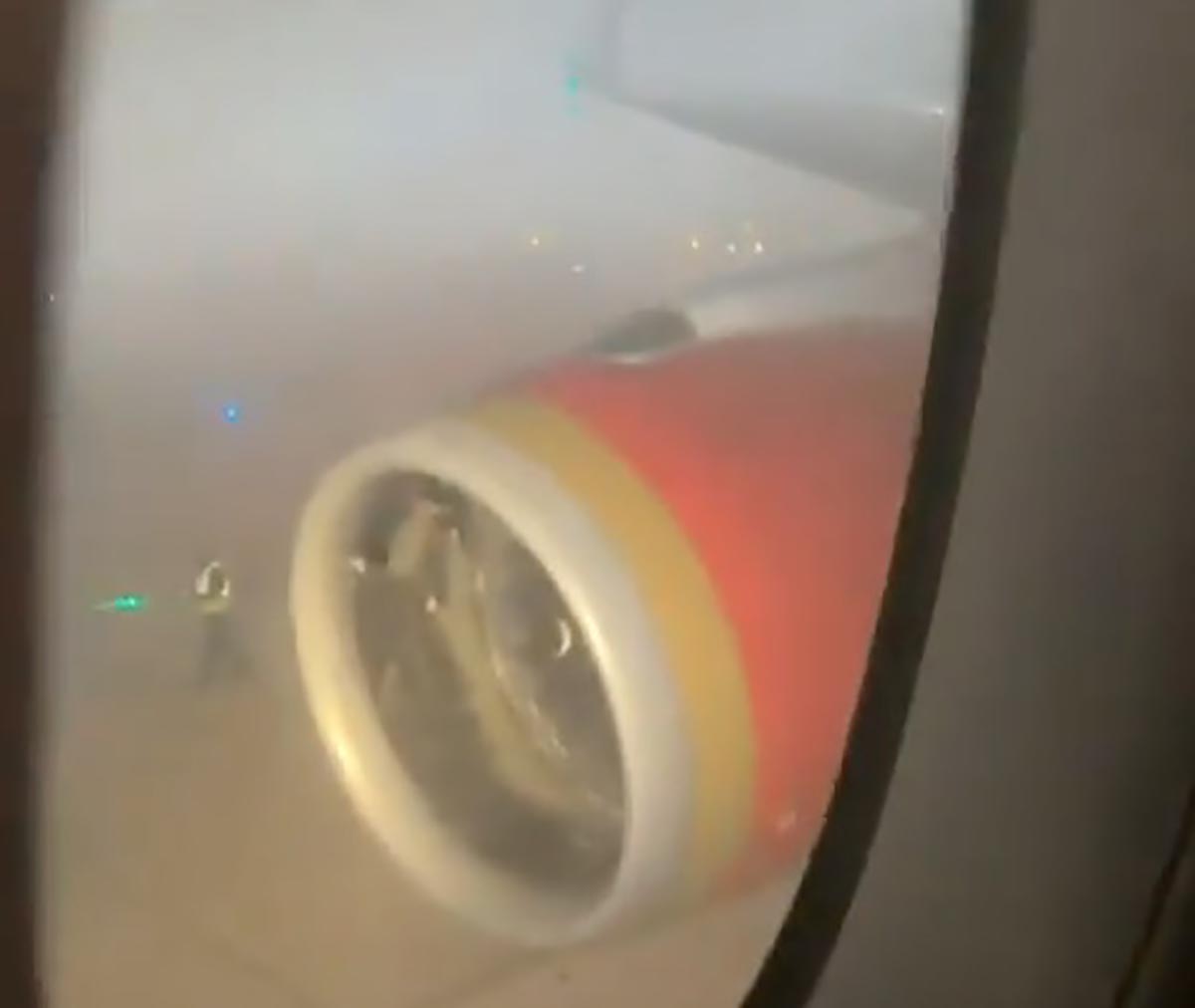
A high-stakes international flight turned into a costly ground emergency at Delhi Indira Gandhi International Airport (DEL) early this morning, after a two-year-old Air India Airbus A350 ingested a cargo container into its right-hand engine during taxi.
The incident involving Flight AI101, destined for New York (JFK), occurred during a period of “marginal visibility” as North India continues to grapple with seasonal dense fog.
The “Boomerang” Flight: Caught in Geopolitics
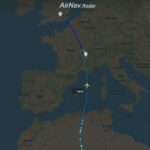
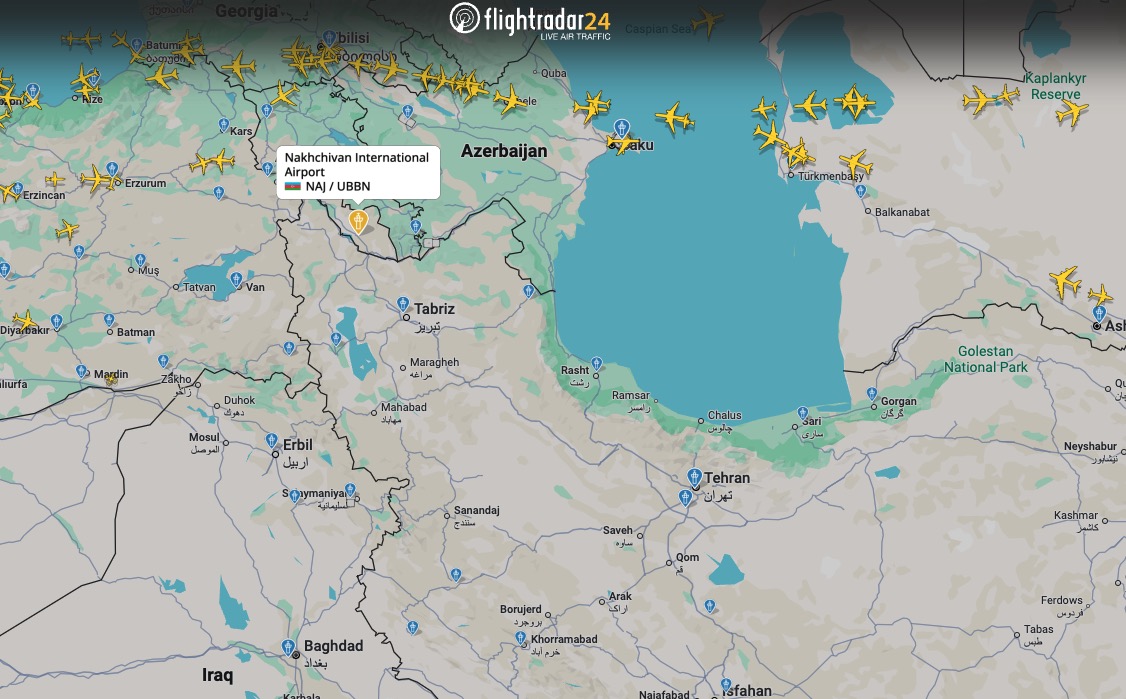
The flight originally departed Delhi at approximately 2:36 AM IST. However, just hours into the journey, the aircraft was forced to perform a U-turn over Ahmedabad due to sudden and unexpected closure of Iranian airspace amid escalating regional tensions.
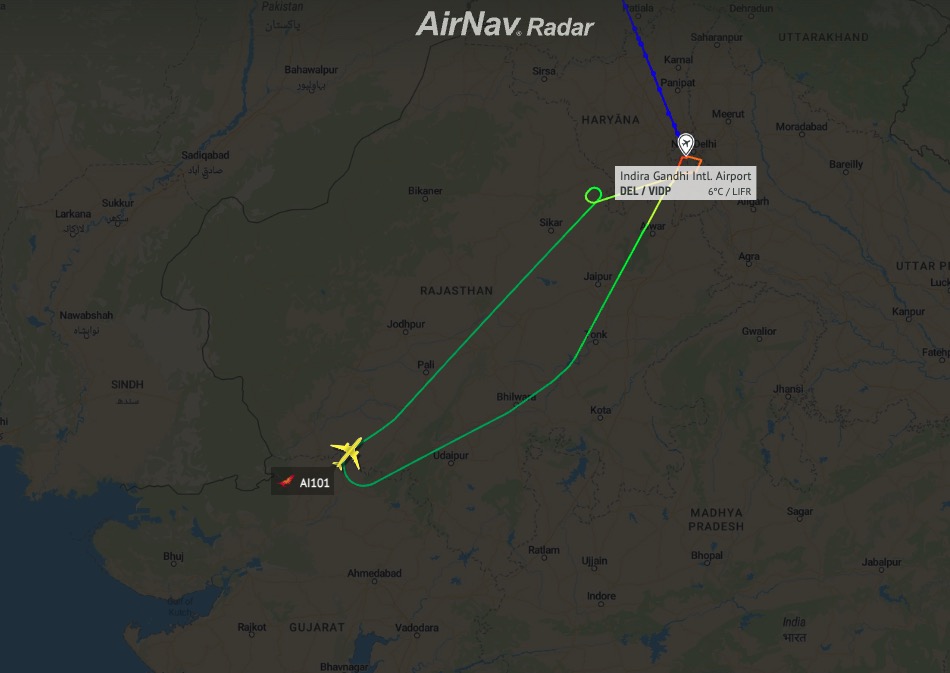
With the primary corridor for westbound transatlantic flights blocked and no immediate rerouting options, the crew made the tactical decision to return to base. The aircraft landed safely back in Delhi on Runway 28 around 5:25 AM IST.
The Incident: A Collision in the Fog
The aircraft was maneuvering through the airport’s complex taxiway system. According to a statement released by the Directorate General of Civil Aviation (DGCA), the A350 was at the junction of taxiway N and N4 when the disaster struck.
A tug operated by BWFS (Bird Worldwide Flight Service) was transporting cargo containers to the Baggage Makeup Area of Terminal 3. While traveling on the designated vehicular lane, the tug crossed the taxiway intersection.
During the crossing, one of the containers toppled off the tug and onto the taxiway. The Air India A350, taxiing nearby, sucked the toppled container into its No. 2 (right-hand) engine.
Damage and Immediate Response
The DGCA reported “substantial damage” to the Rolls-Royce Trent XWB-84 engine. The sheer force of the ingestion necessitated an immediate halt to the taxi. Ground crews were forced to clear metal debris from the taxiway before the aircraft could be safely moved.
Although the flight had been prepared for a long-haul journey to New York, it never departed for its transatlantic leg. Instead, after the incident was stabilized, the aircraft was towed to Stand 244 for a full damage assessment.