

AIRLIVEAIRLIVE
  • News
  • Emergency
  • Accident
  • Incident
  • Tracking
  • Blog
  • Report
  • Military
  • Space
  • CamsLIVE
  • Store
    • T-shirts
    • Hat
    • Models
    • Toys
    • Boeing
    • Airbus
    • Space
    • My Account
    • Order tracking
0

No products in the cart.

Notification Show More
AIRLIVEAIRLIVE
0
Search
  • News
  • Emergency
  • Accident
  • Incident
  • Tracking
  • Blog
  • Report
  • Military
  • Space
  • CamsLIVE
  • Store
    • T-shirts
    • Hat
    • Models
    • Toys
    • Boeing
    • Airbus
    • Space
    • My Account
    • Order tracking
Follow US
AIRLIVE Aviation news network
Get aviation breaking news on WhatsApp
AIRLIVE > All articles > Location > Europe > Lufthansa transatlantic A340 flight below 10,000ft vs 33,000ft
AeronauticsEuropeNorth America

Lufthansa transatlantic A340 flight below 10,000ft vs 33,000ft

Last updated: August 11, 2025, 23:05 UTC
Published: Wednesday, August 13, 2025, at 14:40 UTC
Category: Aeronautics Europe North America
Author: Melanie Kraft

Airline: Lufthansa
Data: D-AIHZ LH
Lufthansa A340. Credit: Allen Watkin
SHARE

Lufthansa operated an unpressurised transatlantic flight remaining below 10,000 feet to Frankfurt following an incident in Boston this week.

After suffering a puncture from a high loader in Boston, a Lufthansa A340-600 had to perform an unpressurised transatlantic flight to Frankfurt.

The aircraft (registration D-AIHZ) was patched to make sure it can be safely ferried back to Lufthansa base in Europe.

What Happens If an Airbus A340 Flies a Transatlantic Route at 10,000 Feet Instead of 33,000 Feet?

Commercial jets like the Airbus A340 are engineered to operate efficiently at high altitudes—typically around 33,000 to 39,000 feet. But what if a transatlantic flight tried to cruise at just 10,000 feet instead? The difference isn’t just theoretical—it has real consequences for fuel consumption, flight time, cost, and safety.

Fuel Consumption: Kerosene Burn at Lower Altitudes

The A340, a long-range widebody aircraft, is known for its four engines and capability to handle ultra-long-haul flights. Like most commercial airliners, it’s designed to be most fuel-efficient at high altitudes where the air is thin and drag is low.

At 33,000 feet, the A340-300 typically burns around 7 to 9 tons of jet fuel per hour, depending on weight, weather, and configuration. Drop it down to 10,000 feet, and that number can double, potentially reaching 14 to 18 tons per hour.

At lower altitudes, air density increases, which means much more drag and greater engine thrust is needed just to maintain speed—resulting in significantly higher kerosene usage.
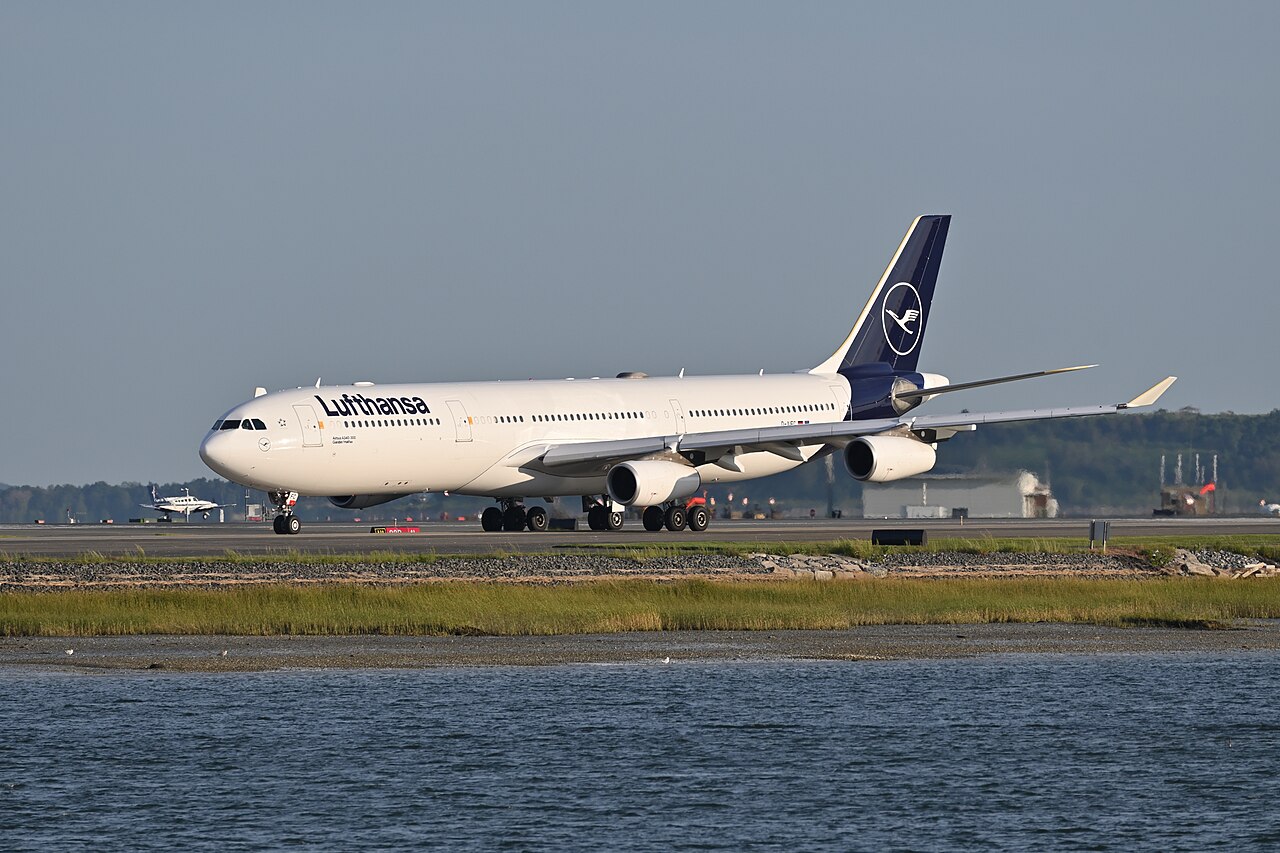
Lufthansa Airbus A340-300 D-AIFC taxiing at Boston Logan International Airport. Credit: 4300streetcar

Flight Time: Slower and Longer at 10,000 Feet

Increased drag doesn’t just burn more fuel—it also slows the aircraft down. While the A340 might cruise at Mach 0.82 (around 870–900 km/h or 540–560 mph) at cruising altitude, the speed at 10,000 feet would be considerably lower due to the higher air resistance.

This would translate into longer flight durations. A typical transatlantic flight from Frankfurt to New York that takes 8–8.5 hours at cruising altitude could take 9.5 to 10.5 hours or more at 10,000 feet—while burning much more fuel the entire way.

Safety Challenges

Flying an Airbus A340 at just 10,000 feet over the Atlantic introduces serious operational challenges:

  • Weather: At that altitude, the aircraft would be flying directly through turbulent weather systems, instead of above them. Expect more turbulence, higher chances of icing, and exposure to storms.
  • Emergency response: In the rare event of an emergency, the lower altitude gives the crew less time and fewer options to respond compared to cruise levels.

High Environmental Cost

Fuel efficiency is critical not just for cost but also for environmental impact. Flying at 10,000 feet would lead to a significant increase in CO₂ emissions, making the flight far less sustainable.

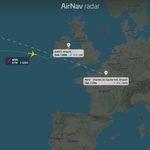
After suffering a puncture from a high loader in Boston, Lufthansa A340-600 D-AIHZ was patched enough to make it home for permanent repairs as an unpressurized ferry flight. The flight, which will take 10h30m at just 10,000 feet, normally lasts 6h30m. https://t.co/mOv9hl3Aee pic.twitter.com/t2qkLGHOTK

— Flightradar24 (@flightradar24) July 8, 2025

The ferry flight on July 8,2025 took 10h 30m at just 10,000 feet (it normally lasts 6h 30m) and burned about 100 tons of jet fuel as the cabin was empty.
TAGGED:D-AIHZLH
ByMelanie Kraft
Melanie's aviation journey began at a young age, earning her first pilot certifications while still a teenager, before she ever held a driver’s license! As lead journalist at AIRLIVE.net, she plays a pivotal role in shaping the voice and editorial direction of the website. Her experience spans flight operations, air traffic coordination and emergency incident analysis.

LATEST NEWS

BREAKING All departures stopped at London Heathrow and Gatwick Airports
Europe Incident UK
September 8, 2026
LHR
Ryanair flight FR5883 is declaring an emergency and circling after departure from Norwich
Emergency Europe Tracking UK
September 8, 2026
Ryanair Boeing 737 MAX 8-200
9H-VUV EMA FR FR5883 NWI
Trump demands Bombardier build planes in U.S. or lose access to American market
News USA
September 7, 2026
Alaska Airlines 26-year-old Boeing 737 from Santa Ana declared an emergency and diverted
Emergency Tracking USA
September 7, 2026
Alaska Airlines Boeing 737-790
AS AS671 FAT N612AS
An Amazon Boeing 767 cargo caught fire after it overrun the runway at Miami Airport
Accident USA
September 7, 2026
Boeing 767-300F
MIA
United UA1011 declared an emergency 2 hours after departure from Washington and diverted to Newark
Emergency Tracking USA
September 6, 2026
United Airlines Boeing 787-9
EWR N26960 UA UA1011

Related news

IncidentUSA

A 67-year-old Arizona passenger duct-taped to seat on American Airlines flight to Newark

September 5, 2026
CanadaIncident

Accidental emergency slide deployment delays British Airways Boeing 787-10 to Heathrow

September 5, 2026
EuropeNewsUK

A grass fire forced London Heathrow Airport to close one runway

September 5, 2026
EuropeMilitary

BREAKING Hellenic Air Force F-4E Phantom II has crashed during display at Athens flying week

September 5, 2026
AIRLIVE.net is an Aviation news network supported by a team of journalists and aviation enthusiasts.
Add AIRLIVE as Google preferred source
Since 2014, AIRLIVE.net has been publishing accurate aviation news and live updates from our sources around the world. This has led to the creation of the largest aviation community on social media.
Eyewitness to an event?
Alert AIRLIVE's newsdesk on WhatsApp
AIRLIVEAIRLIVE
Follow US
Copyright AIRLIVE 2026
  • Contact
  • Submit a story
  • Privacy policy
  • Return policy
Welcome Back!

Sign in to your account

Username or Email Address
Password

Lost your password?