


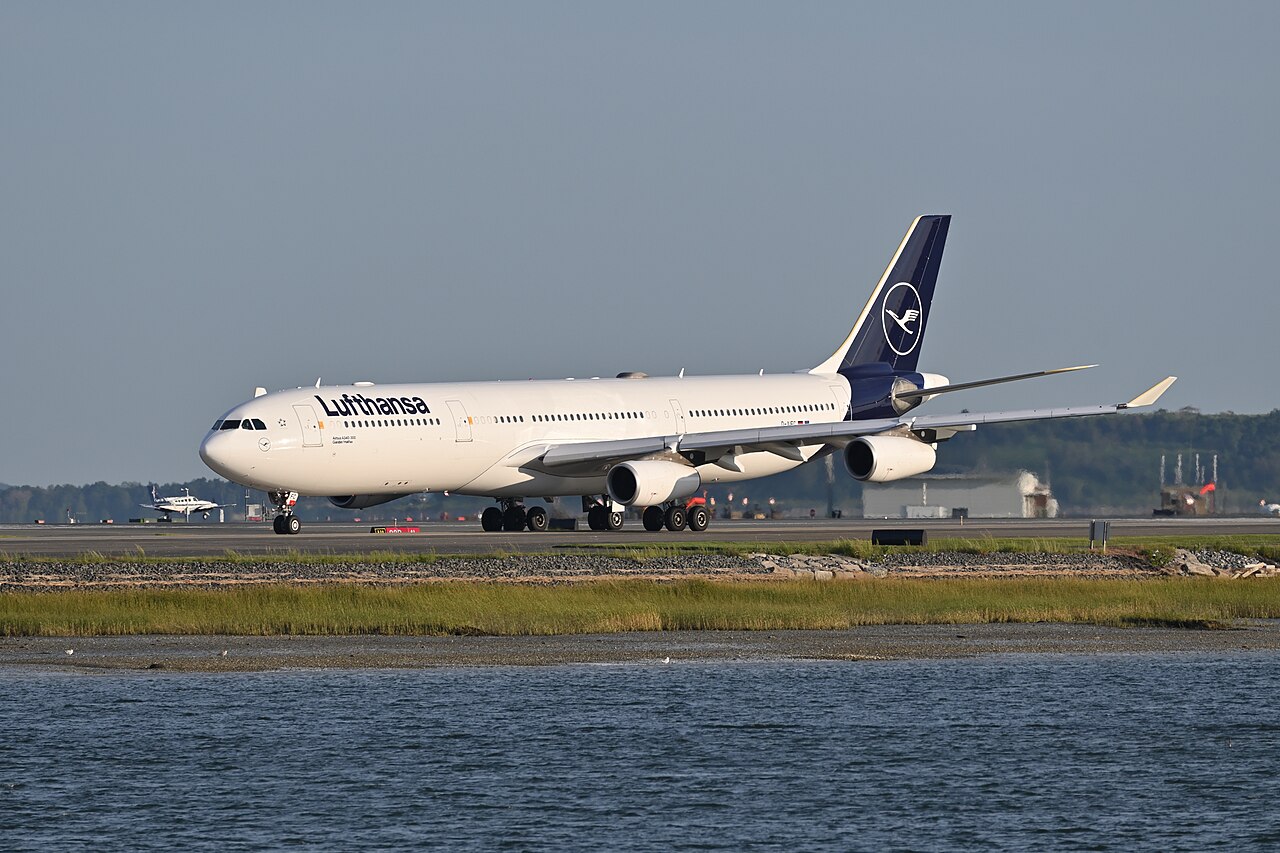
Lufthansa operated an unpressurised transatlantic flight remaining below 10,000 feet to Frankfurt following an incident in Boston this week.
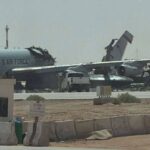
After suffering a puncture from a high loader in Boston, a Lufthansa A340-600 had to perform an unpressurised transatlantic flight to Frankfurt.
The aircraft (registration D-AIHZ) was patched to make sure it can be safely ferried back to Lufthansa base in Europe.
What Happens If an Airbus A340 Flies a Transatlantic Route at 10,000 Feet Instead of 33,000 Feet?
Commercial jets like the Airbus A340 are engineered to operate efficiently at high altitudes—typically around 33,000 to 39,000 feet. But what if a transatlantic flight tried to cruise at just 10,000 feet instead? The difference isn’t just theoretical—it has real consequences for fuel consumption, flight time, cost, and safety.
Fuel Consumption: Kerosene Burn at Lower Altitudes
The A340, a long-range widebody aircraft, is known for its four engines and capability to handle ultra-long-haul flights. Like most commercial airliners, it’s designed to be most fuel-efficient at high altitudes where the air is thin and drag is low.
At 33,000 feet, the A340-300 typically burns around 7 to 9 tons of jet fuel per hour, depending on weight, weather, and configuration. Drop it down to 10,000 feet, and that number can double, potentially reaching 14 to 18 tons per hour.
At lower altitudes, air density increases, which means much more drag and greater engine thrust is needed just to maintain speed—resulting in significantly higher kerosene usage.
Flight Time: Slower and Longer at 10,000 Feet
Increased drag doesn’t just burn more fuel—it also slows the aircraft down. While the A340 might cruise at Mach 0.82 (around 870–900 km/h or 540–560 mph) at cruising altitude, the speed at 10,000 feet would be considerably lower due to the higher air resistance.
This would translate into longer flight durations. A typical transatlantic flight from Frankfurt to New York that takes 8–8.5 hours at cruising altitude could take 9.5 to 10.5 hours or more at 10,000 feet—while burning much more fuel the entire way.
Safety Challenges
Flying an Airbus A340 at just 10,000 feet over the Atlantic introduces serious operational challenges:
- Weather: At that altitude, the aircraft would be flying directly through turbulent weather systems, instead of above them. Expect more turbulence, higher chances of icing, and exposure to storms.
- Emergency response: In the rare event of an emergency, the lower altitude gives the crew less time and fewer options to respond compared to cruise levels.
High Environmental Cost
Fuel efficiency is critical not just for cost but also for environmental impact. Flying at 10,000 feet would lead to a significant increase in CO₂ emissions, making the flight far less sustainable.
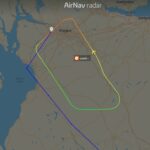
The ferry flight on July 8,2025 took 10h 30m at just 10,000 feet (it normally lasts 6h 30m) and burned about 100 tons of jet fuel as the cabin was empty.