

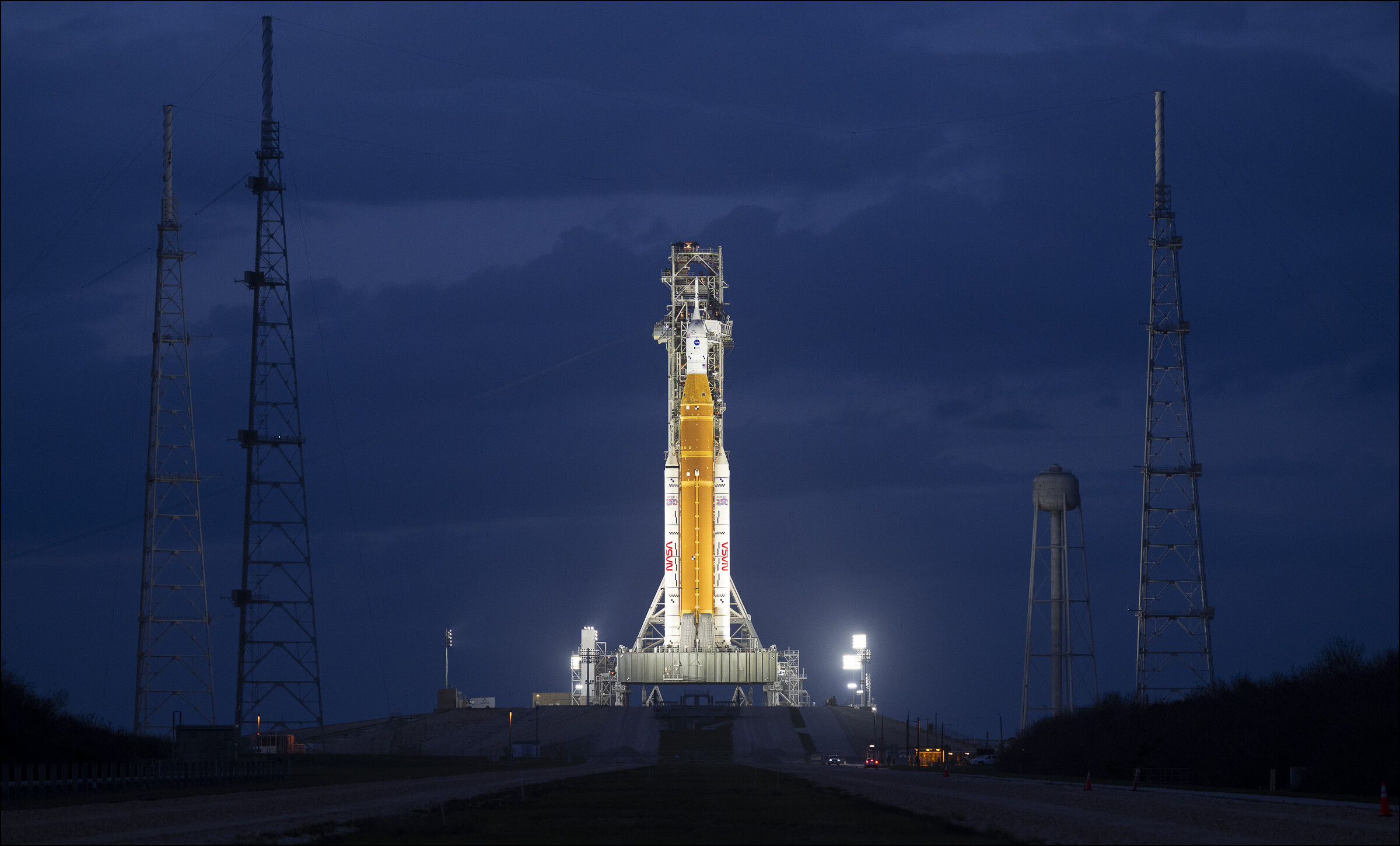
CAPE CANAVERAL, FL – For the first time in over 50 years, humans are heading back to the lunar frontier. Today, April 1, 2026, NASA began live mission coverage for Artemis II, a historic 10-day flight that will carry a crew of four around the Moon and back to Earth.
The mission, launching from the iconic Launch Complex 39B at Kennedy Space Center, marks the first crewed flight of the Space Launch System (SLS)—the world’s most powerful rocket—and the Orion spacecraft.
Meet the Pioneers
The Artemis II crew represents a new era of space exploration, breaking several historical barriers:
- Commander Reid Wiseman (NASA): A veteran of the International Space Station leading the flight.
- Pilot Victor Glover (NASA): Set to become the first person of color to travel to the vicinity of the Moon.
- Mission Specialist Christina Koch (NASA): Set to become the first woman to fly a lunar mission.
- Mission Specialist Jeremy Hansen (CSA): The first Canadian and first non-American to venture into deep space.
The Mission Roadmap
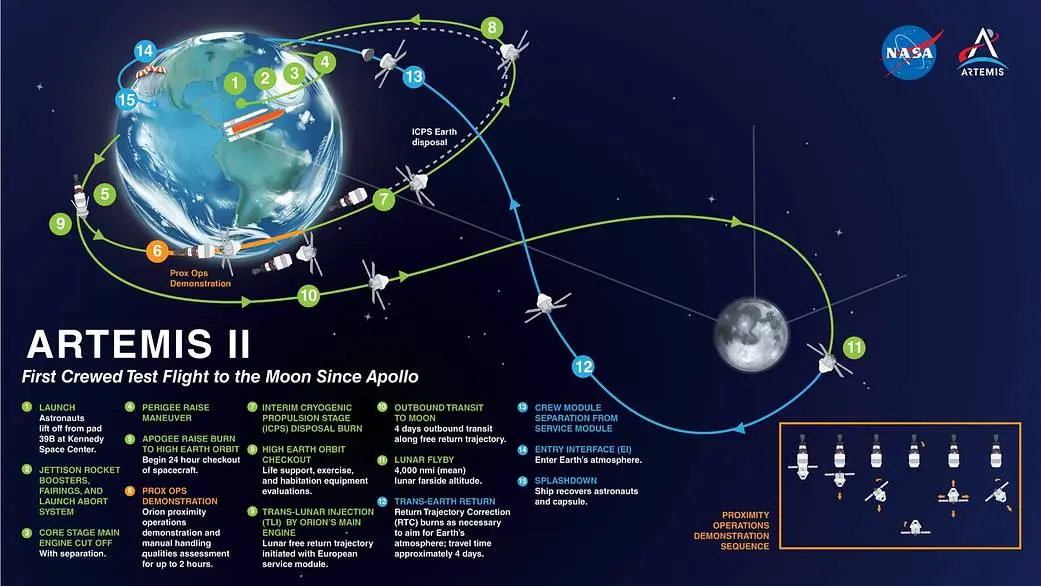
While Artemis II will not land on the lunar surface, its “free-return” trajectory is designed to test every critical system needed for future landings.
| Phase | Description |
| Launch & Earth Orbit | The crew will spend the first 24 hours in a high Earth orbit to test life-support and communication systems. |
| Lunar Flyby | Orion will travel 4,600 miles beyond the far side of the Moon—farther than any human has traveled since the Apollo era. |
| The Return | Using lunar gravity to “slingshot” back to Earth, the mission will conclude with a high-velocity splashdown in the Pacific Ocean around April 10. |
Why It Matters
NASA Administrator Bill Nelson previously described this mission as a “systems validation.” If successful, Artemis II proves that the Orion spacecraft can safely sustain human life in deep space. This paves the way for Artemis III (currently targeted for 2028), which aims to land the first woman and next man near the lunar South Pole.