
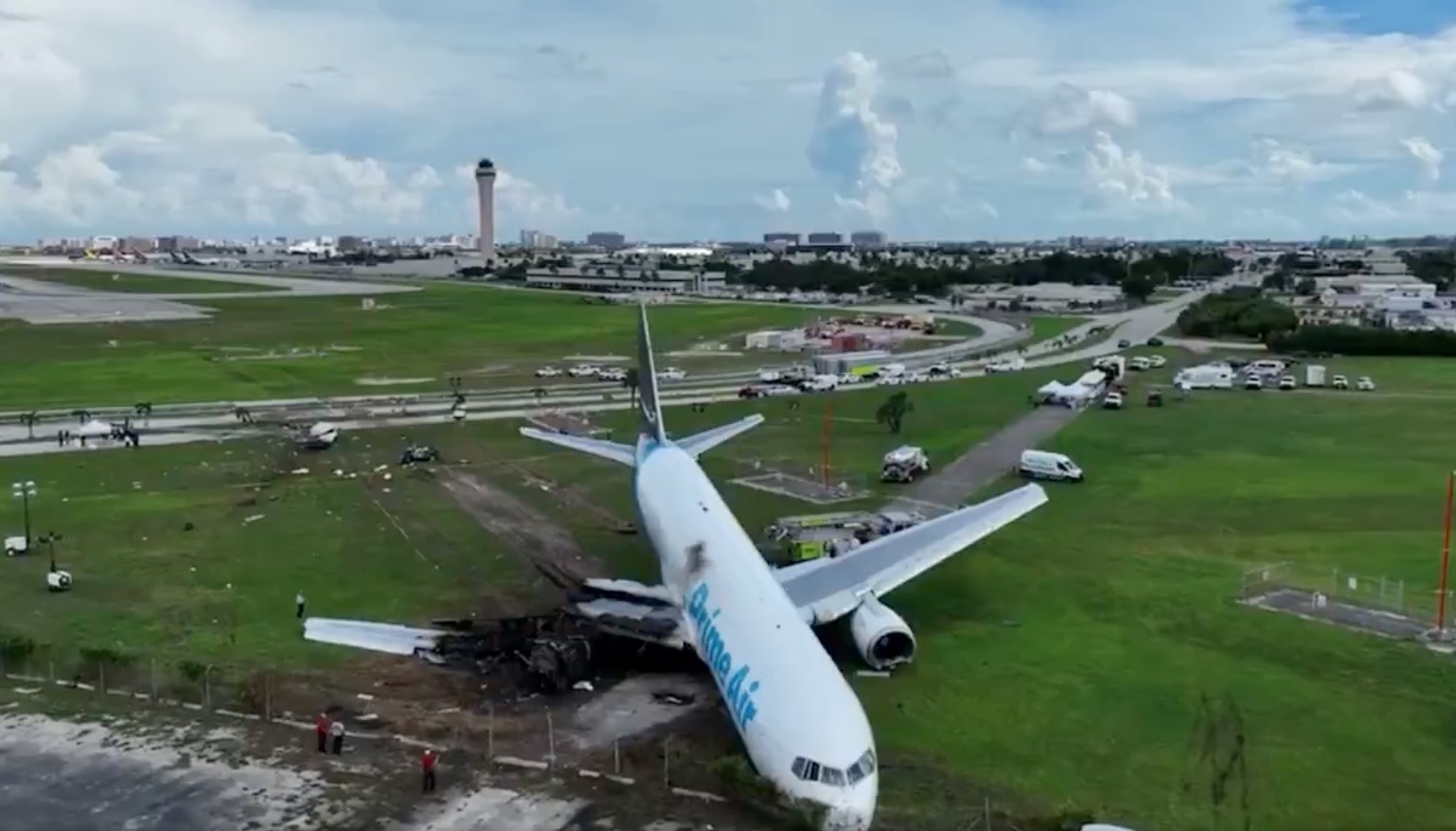
MIAMI — Federal investigators probing the fatal runway excursion of an Amazon Prime Air Boeing 767 cargo aircraft at Miami International Airport (MIA) have revealed critical findings from the recovered flight black boxes. According to updates released by National Transportation Safety Board (NTSB) Chairwoman Jennifer Homendy, the flight crew attempted to abort their landing and execute a “go-around” maneuver just seconds before the widebody jet overran the runway, crashed into vehicles, and claimed five lives.
The aircraft (a 32-year-old Boeing 767-33A operated by cargo carrier 21 Air as Flight 7598) was arriving from San Juan, Puerto Rico, amidst localized weather cells and rain showers surrounding the Miami airfield.
Key Findings from Flight Data Recorder Telemetry
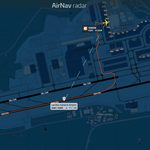
Data extracted from the plane’s Flight Data Recorder (FDR) indicates an abnormal and unstable touchdown sequence onto Runway 30:
- Unstable Landing Configuration: Approximately 30 seconds before telemetry ended, the nose landing gear and right main gear touched down first. The left main gear did not make contact until 11 seconds later (19 seconds before the end of the recording). Aviation analysts note that landing nose-first and on one side is characteristic of severe wing instability or landing downwind with a tailwind.
- Late Go-Around Decision: A few seconds after all landing gear touched down, recorded telemetry shows the wheel brakes were released and engine throttles were advanced to values consistent with go-around thrust.
- Absence of Reverse Thrust: The FDR recorded no deployment of speed brakes or thrust reversers prior to the throttles being increased.
- Insufficient Distance: By the time the crew attempted to abort the landing and regain airborne speed, the aircraft was already too far down the runway to either stop safely or achieve liftoff before reaching the perimeter.
Devastating Ground Impact and Human Toll
The Boeing 767 overran Runway 30 by approximately 1,300 feet (396 meters), destroying airport navigational equipment and tearing through perimeter fencing.
The primary impact occurred on an perimeter roadway where the aircraft struck a Ford Econoline van carrying seven employees of an aircraft cleaning contractor. Five occupants in the van were killed and two were critically injured. The plane continued past airport grounds, striking a commercial SUV and secondary fencing before stopping in an adjacent grassy lot near cargo warehouses.
Miami-Dade Fire Rescue personnel spent hours securing a fuel leak and extracting the trapped pilot and co-pilot from the cockpit. Both flight crew members survived and were released from the hospital before meeting with federal investigators.
Focus of Ongoing Investigation
The NTSB’s investigative teams are currently focused on several crucial aspects:
- Crew Decision-Making: Investigating why the go-around was attempted so late in the touchdown roll, and whether there was cockpit disagreement or confusion between the captain and first officer.
- Environmental & Air Traffic Factors: Examining whether a strong tailwind propelled the plane past its normal touchdown zone and whether controllers should have shifted approaches to a headwind runway.
- Airport Infrastructure: Evaluating why MIA’s Runway 30 lacked an Engineering Materials Arrestor System (EMAS)—a bed of crushable concrete designed to stop overrunning aircraft.
Timeline of Events
| Relative Time | Ground Speed | Aircraft & Crew Action | Technical / Telematic Detail |
| ~12:00 PM EDT | — | Departure from San Juan (SJU) | 21 Air Flight 7598 departs Puerto Rico bound for Miami (MIA). |
| ~1:50 PM EDT | — | Final Approach to Runway 30 | Aircraft aligns for touchdown amidst localized rain and thunderstorm activity. |
| 30 sec before end | 158 knots | Initial Partial Touchdown | Unstable Landing: Nose gear and right main gear make contact; left main gear remains airborne. |
| 23 sec before end | 146 knots | Braking Initiated | Wheel brakes are initialy applied during touchdown roll. |
| 19 sec before end | 134 knots | Full Gear Contact | Left main landing gear finally touches down (11 seconds after initial gear contact). No speed brakes or thrust reversers deployed. |
| 15 sec before end | 120 knots | Aborted Landing Attempt | Go-Around Initiated: Brakes are released and engine throttles are advanced to full go-around thrust. |
| 11 sec before end | 117 knots | Go-Around Aborted | Throttles Idle / Max Braking: Throttles are reduced back to idle and wheel brakes are reapplied; remain applied through end of recording. |
| 7 sec before end | 96 knots | Surface / Impact Disruption | Lateral, longitudinal, and vertical acceleration values shift dramatically as the plane overruns the pavement. |
| End of Recording | 65 knots | Telemetry Ends | Final recorded ground speed as aircraft breaks perimeter fence and strikes ground vehicles. |
| 1:53 PM EDT + mins | 0 knots | Final Impact & Emergency | Aircraft strikes cleaning service van (5 fatalities, 2 injuries) and SUV outside grounds before stopping; emergency response begins. |