
Several US Air Force tankers, radar aircraft and fighter jets were scrambled due to Russian aircraft operating in or near the Alaska Air Defense Identification Zone.
PETERSON SPACE FORCE BASE, Colo. – The North American Aerospace Defense Command (NORAD) detected and tracked two Tu-95 Bear strategic bombers and two Su-35 Flanker fighter jets operating in the Alaskan Air Defense Identification Zone (ADIZ) on September 24, 2025, in what represents one of the more substantial Russian aerial probes near North American airspace in recent months.
Substantial NORAD Response
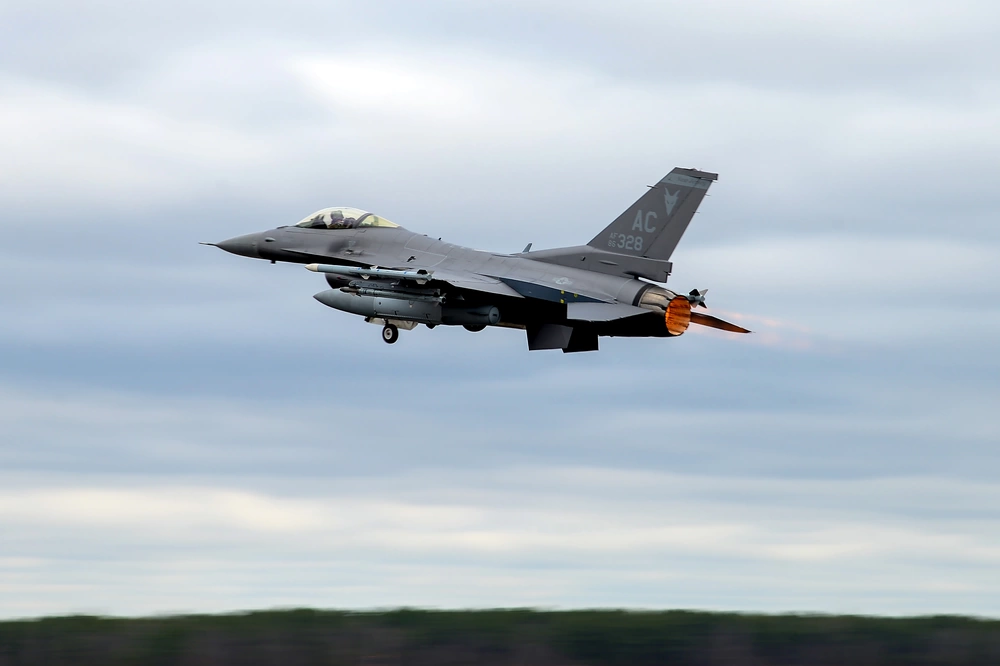
NORAD responded with a comprehensive intercept package consisting of an E-3 Sentry airborne warning and control aircraft, four F-16 Fighting Falcon fighters, and four KC-135 Stratotanker aerial refueling aircraft to positively identify and intercept the Russian formation in the Alaskan ADIZ.
RussianStrategic Aircraft
The Russian formation included two Tu-95 Bear strategic bombers, long-range aircraft capable of carrying nuclear weapons and representing Russia’s primary strategic bomber fleet. These aircraft are frequently used in long-range patrol missions designed to test and probe foreign air defense responses.
The inclusion of two Su-35 Flanker fighter jets as escorts represents a more aggressive posture, as these advanced multirole fighters provide air-to-air capability and demonstrate Russia’s commitment to protecting its strategic bomber operations during such missions.
Alaskan ADIZ Operations
The Alaskan Air Defense Identification Zone extends approximately 200 miles from the Alaska coastline and requires aircraft to identify themselves to air defense authorities. While not sovereign airspace, the ADIZ serves as an early warning buffer zone for potential threats to North American territory.
Russian aircraft regularly probe the boundaries of this zone as part of ongoing strategic reconnaissance and air defense testing operations, but the combination of strategic bombers with fighter escorts represents a more substantial show of force.