


An easyJet Airbus A320 is currently under technical review in Manchester after a harrowing 24 hours involving a cascade of mechanical faults and a mid-air emergency declaration.
EDINBURGH – The Airbus A320-200, registered as G-EZWK, first signaled trouble on the evening of February 6, 2026. As it approached Edinburgh Airport, the crew reportedly dealt with a complex series of pneumatic and electrical failures.
A Troubled Arrival in Edinburgh
Landing at 18:55 GMT, the technical log for the 12-year-old narrowbody read like a mechanic’s nightmare. The reported issues included:
- Pneumatic Failures: Total loss of Engine 1 & 2 Bleed air, a Hot Air Fault, and a failure of the Air Pressure Valve (14HK).
- Engine Issues: A specific fault with the Engine 1 High-Pressure (HP) Valve.
- Electrical & Structural: A tripped Overhead (OVHD) Panel and a reported Right Wing Leak in the Right Electrical Bay.
Despite the extensive list of “no-go” items usually associated with such faults, the aircraft was cleared for service the following day.
Emergency Squawk
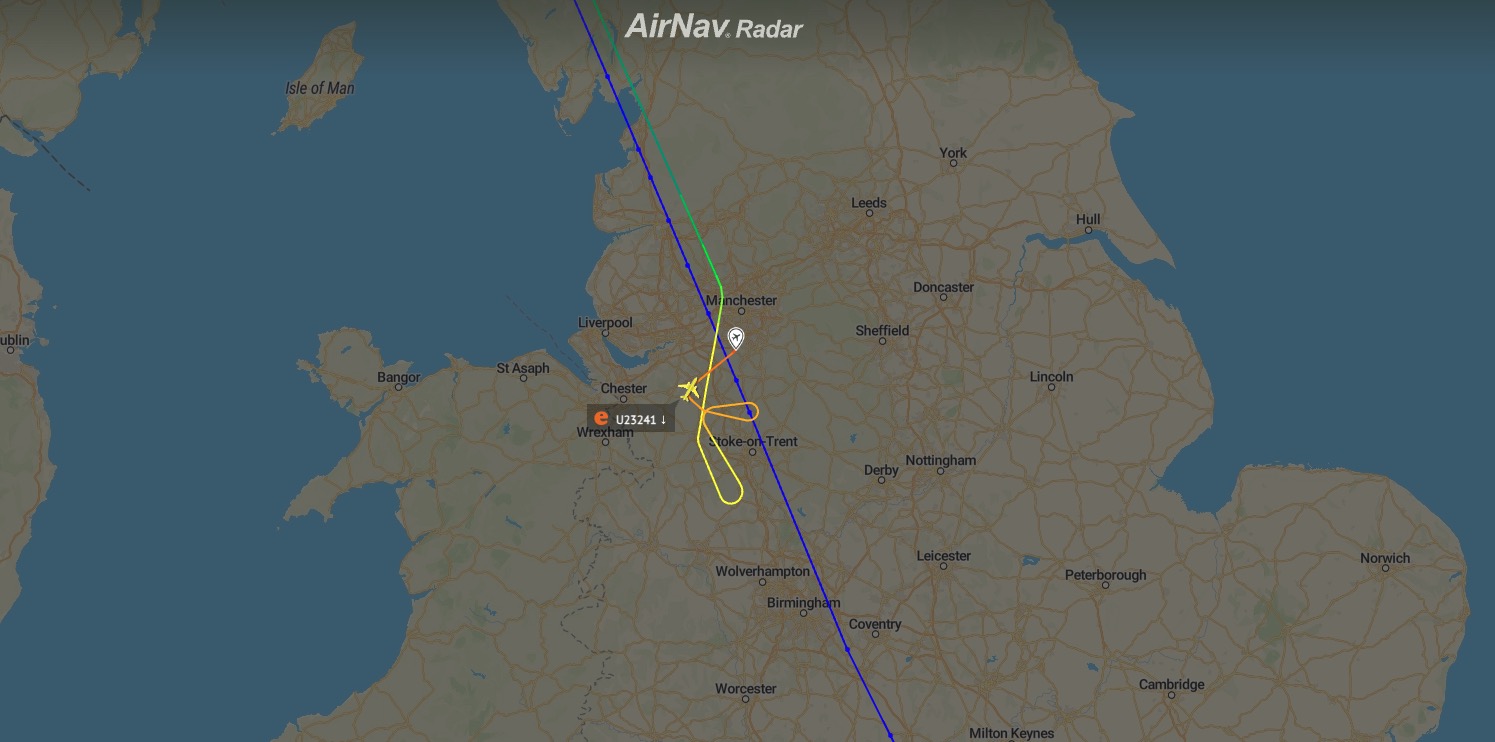
The next day, on February 7, G-EZWK departed Edinburgh for Paris (Flight U23241). However, roughly an hour into the flight, the crew was forced to declare a general emergency, broadcasting the 7700 squawk code.
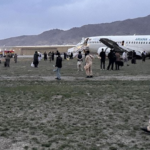
The aircraft diverted to Manchester (MAN), where it landed safely. Passengers reported a “tense” atmosphere as the pilots navigated what appeared to be a recurrence of the previous day’s mechanical instability.
The Aging Fleet Question
At 12 years old, G-EZWK is a middle-aged workhorse of the easyJet fleet. While Airbus A320s are designed for decades of service, the simultaneous failure of redundant systems—specifically the bleed air and high-pressure valves—raises questions about maintenance intervals.
Flight Status Summary
| Date | Flight | Origin/Destination | Status |
| Feb 6 | N/A | Arrived Edinburgh (18:55 GMT) | Multiple Technical Faults |
| Feb 7 | U23241 | Edinburgh to Paris | Diverted to MAN (Emergency) |
EasyJet has confirmed that all passengers were re-accommodated on a replacement aircraft, while G-EZWK remains on the ground in Manchester for a “deep-dive” inspection by engineering teams.