
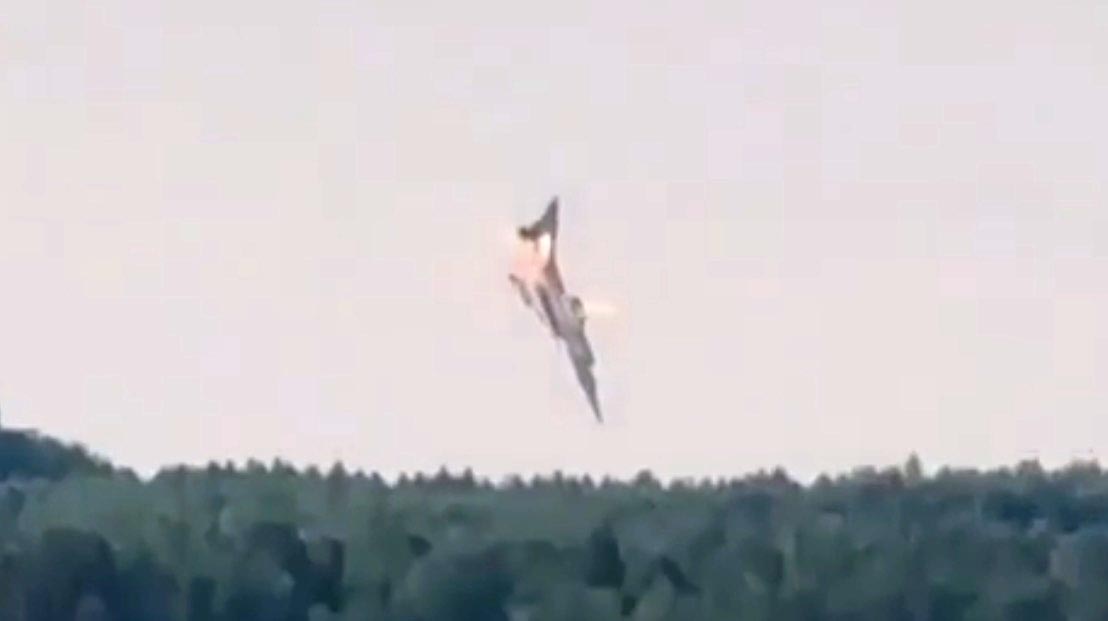
IRKUTSK, Russia — A Russian Tu-22M3 supersonic strategic bomber crashed in the Irkutsk region of Siberia on Monday, prompting an emergency search and rescue response and drawing international attention to Russia’s long-range aviation fleet.
The Russian Ministry of Defense confirmed the crash, stating that the heavy bomber went down while on its landing approach during a planned training flight. Local officials and military analysts believe the aircraft had departed from the Belaya military airbase, located approximately 30 kilometers (18 miles) from the impact zone near the town of Svirsk and the banks of the Angara River.
Videos circulating on social media showed the variable-sweep wing aircraft entering a steep nosedive before disappearing behind a tree line, followed by a massive explosion and a thick plume of black smoke rising above the forest canopy.
Crew Ejects Safely; Technical Malfunction Suspected
According to official statements carried by state media, all four members of the crew—consisting of the aircraft commander, co-pilot, navigator, and systems navigator—successfully managed to eject from the failing aircraft.
“The crew ejected. There is no threat to the life and health of the pilots,” the Defense Ministry said in a statement, adding that there were no casualties or destruction reported on the ground.
Preliminary reports from Russian aviation channels suggest that an engine failure or technical malfunction may have caused the crash. Analysts noted that the steep angle of descent suggested a sudden mechanical issue at a significant altitude, which gave the pilots enough time to steer the unguided aircraft away from populated areas before ejecting.
Nuclear-Capable Aircraft Flying “Without Ammunition”
The Tu-22M3, known by the NATO reporting name “Backfire-C,” is a Soviet-designed, long-range supersonic missile carrier capable of delivering both conventional and nuclear payloads. In its nuclear deterrence role, the bomber is capable of carrying heavy cruise missiles, such as the Kh-22, which can be fitted with nuclear warheads.
The defense ministry explicitly stressed that the aircraft was flying “without ammunition” at the time of the incident, alleviating immediate fears of secondary explosions or chemical and radiological hazards at the crash site. A specialized commission from the main command of the Russian Aerospace Forces has been dispatched to investigate the precise cause of the failure.
Heavy Operational Toll
The loss of the airframe comes amid an intense operational tempo for Russia’s long-range aviation units. The Tu-22M3 fleet has been heavily utilized by the Russian military to launch long-range conventional cruise missile strikes on critical infrastructure in Ukraine.
Belaya Air Base, the suspected origin of Monday’s flight, hosts the 200th Heavy Bomber Aviation Regiment. The strategic hub has faced mounting pressure over the past year, having been among several remote facilities targeted by long-range Ukrainian drone operations.
With international analysts estimating Russia’s active Tu-22M3 fleet at fewer than 60 operational airframes, the crash marks a highly visible and costly loss for Moscow’s strategic forces.