

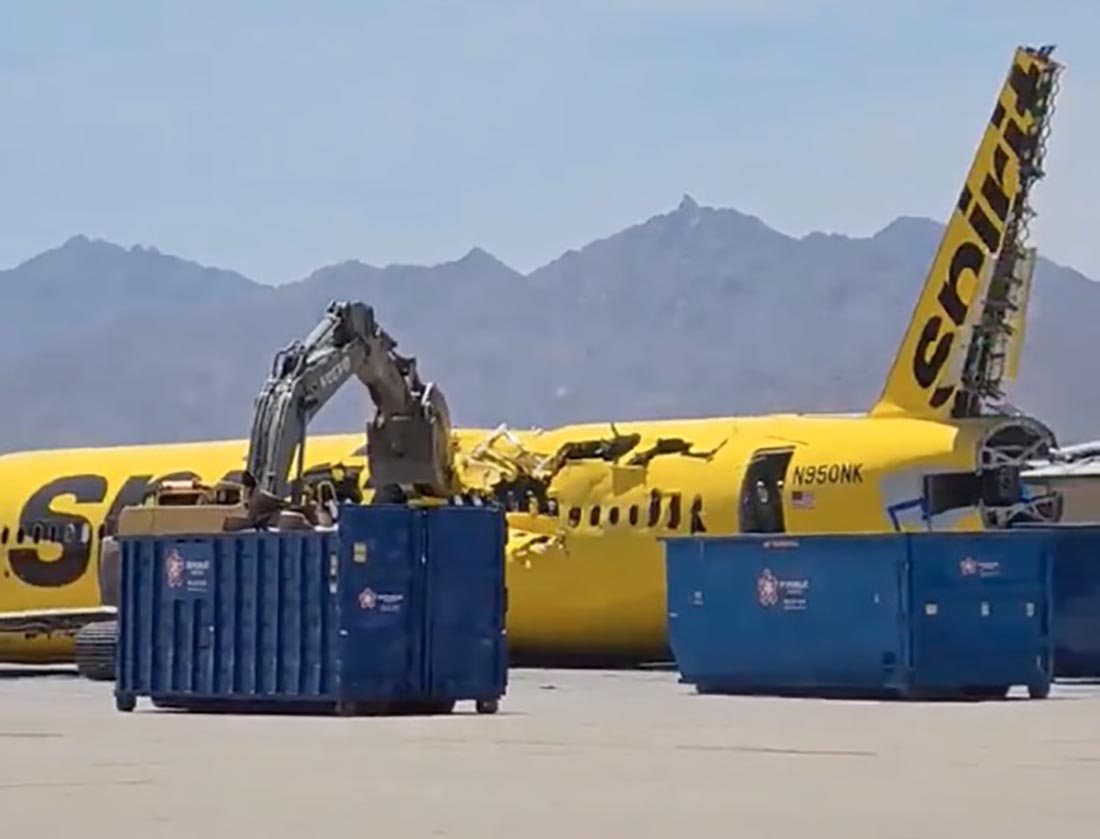
PHOENIX, AZ — In a striking visual metaphor for the sudden demise of ultra-low-cost travel in the United States, a nearly brand-new Airbus A320neo formerly belonging to Spirit Airlines is currently being broken up and systematically scrapped for parts at Phoenix Goodyear Airport (GYR).
The aircraft, bearing the registration N950NK, is just four years old. In the aviation industry, where commercial jetliners routinely fly for 20 to 25 years, dismantling an aircraft of this age for scrap metal and spare components is an exceedingly rare and dramatic move.
From the Skies to the Scrapyard
The jet’s premature retirement began well before the airline’s final collapse. According to tracking data, N950NK last flew commercially in 2024 before it was pulled from active service and placed into long-term storage at the Arizona desert facility.
Rather than being resurrected to fly for another carrier, the modern fuel-efficient jet was recently purchased by an aviation parts supplier. Demolition crews began breaking the airframe apart this month to harvest its high-value components (such as its engines, avionics, and landing gear) to support other Airbus A320 operators worldwide.
The Sudden Fall of an Aviation Giant
The dismantling of N950NK comes in the immediate wake of Spirit Airlines permanently grounding its signature bright-yellow fleet. Spirit abruptly ceased all global operations on May 2, 2026, ending 34 years of service and leaving an estimated 17,000 employees out of work.
The shutdown followed a chaotic week of intense speculation regarding a potential $500 million federal bailout from the Trump administration. While negotiations were reportedly advanced, the rescue package ultimately collapsed after a crucial group of creditors and bondholders rejected the terms, leaving Spirit’s parent company with no choice but to initiate an immediate and orderly liquidation.
The airline had been plagued by compounding financial troubles since the pandemic, culminating in two back-to-back bankruptcy filings. The final, fatal blow was delivered by a massive spike in global jet fuel prices through March and April, which completely drained the carrier’s remaining cash reserves.