


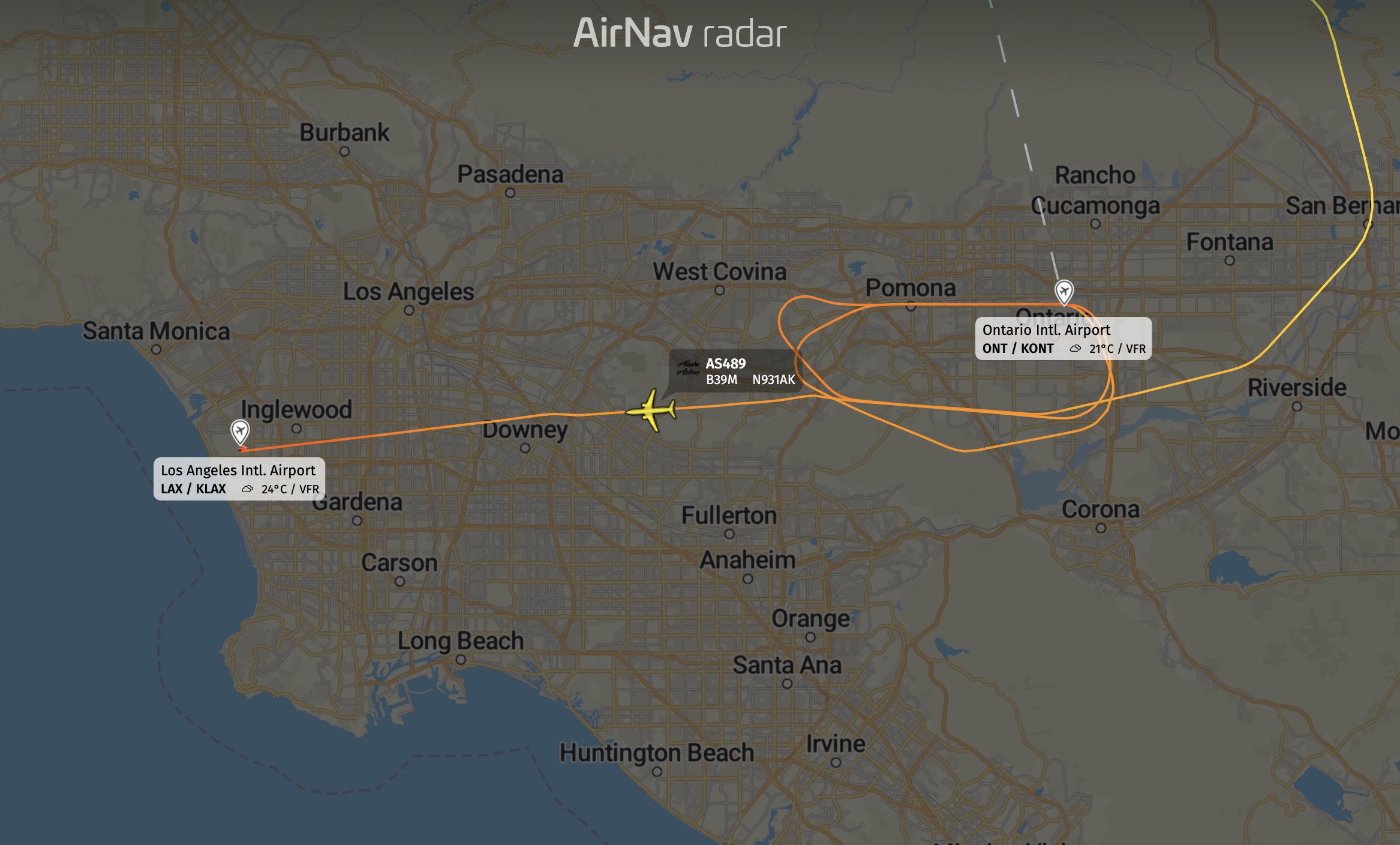
LOS ANGELES — Severe nighttime weather conditions over the Inland Empire forced an Alaska Airlines flight to abort multiple landing attempts early Friday morning before executing a late-night diversion to Los Angeles International Airport (LAX).
Alaska Airlines Flight AS489, operated by a Boeing 737 MAX 9 (registration N931AK), departed Seattle-Tacoma International Airport (SEA) at 11:20 PM PDT on Thursday, October 15, 2026, roughly two hours behind schedule. The flight was originally bound for Ontario International Airport (ONT).
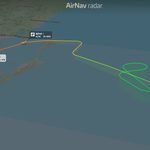
After a two-hour flight south, the aircraft initiated its initial approach to ONT’s Runway 08L in the dead of night. However, localized atmospheric instability produced sudden windshear and treacherous wind gusts exceeding 40 knots, forcing the flight crew to pull up and execute a go-around.
Determined to safely land the aircraft, the pilots lined up for a second approach onto Runway 08L. Shortly into the final descent, severe windshear triggered a second go-around warning, leaving the crew with no choice but to abandon the approach entirely and execute a diversion.
At 3:08 AM PDT on Friday, October 16, more than three hours after taking off from Seattle, Flight 489 touched down safely at LAX without further incident. No injuries were reported among the passengers or crew.
Ripple Effects in the Night Sky
The sudden double go-around caused immediate ripple effects for other incoming aircraft in the area.
Shortly after Alaska Flight 489 aborted its second landing attempt, the flight crew of Prime Air Flight 8C3330, an incoming cargo flight bound for Ontario, alerted air traffic control that they were monitoring the severe weather conditions and were actively preparing for a potential diversion of their own.
Despite the heightened turbulence and hazardous gusts, the Prime Air crew managed to navigate the conditions and successfully touched down on Runway 08L a short time later.
Go-arounds caused by severe windshear are standard safety maneuvers designed to prevent loss-of-control incidents during low-altitude flight, and the Alaska Airlines crew was praised for adhering strictly to safety protocols under challenging weather conditions.