
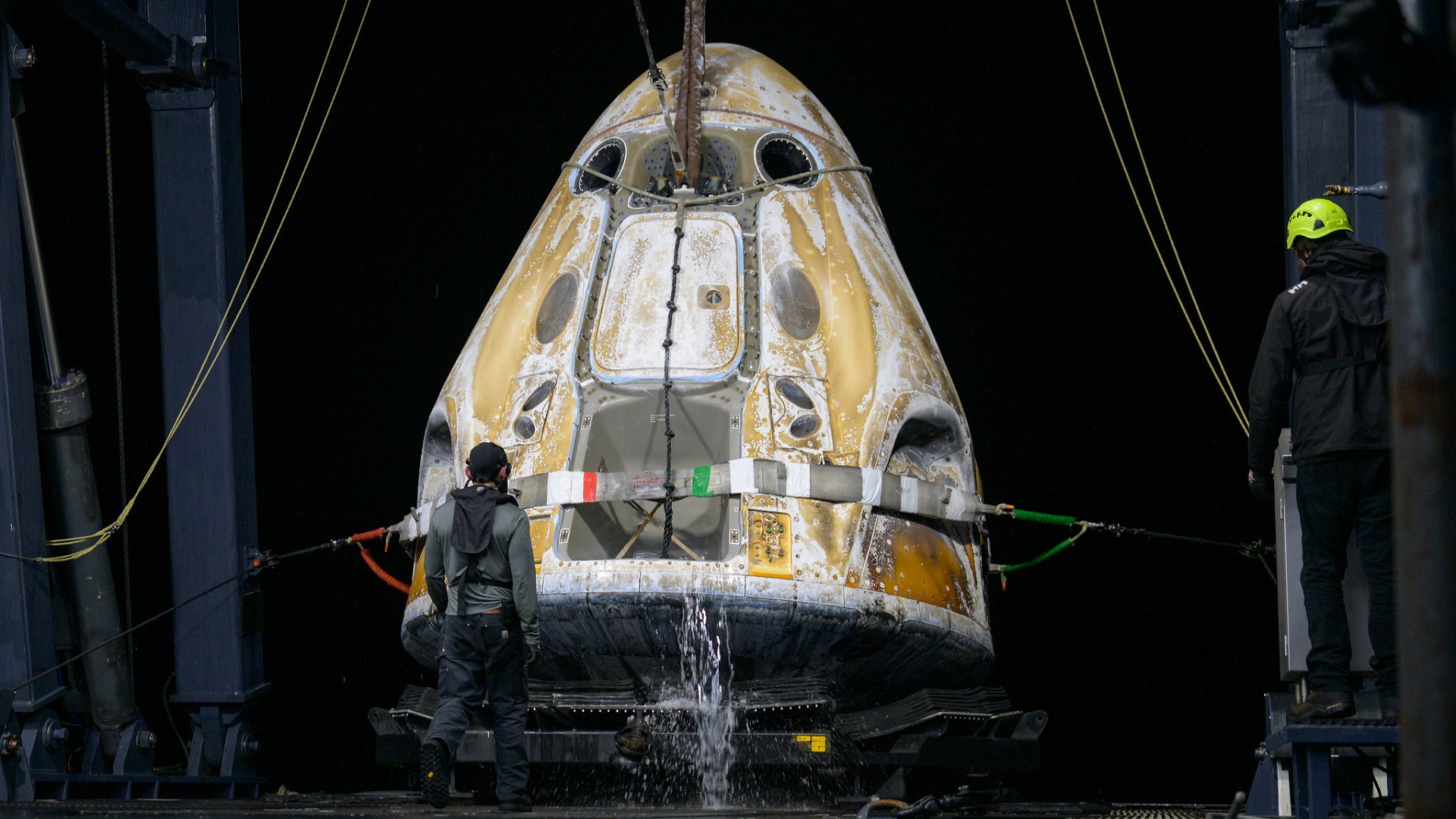
HOUSTON – In a landmark moment for space medicine, veteran NASA astronaut Mike Fincke has successfully returned to Earth following a high-stakes medical evacuation from the International Space Station (ISS). The mission, which was cut short due to the discovery of a significant blood clot, marks the first time in the station’s 25-year history that a crew member was brought home early for a non-emergency yet serious medical condition.
The Discovery
The issue was identified during a routine Doppler ultrasound of the neck vessels. While performing the scan, the crew detected an obstructive blood clot in Fincke’s internal jugular vein. Despite being asymptomatic, the find was critical; such a clot poses severe risks of cerebral obstruction or a pulmonary embolism if it were to dislodge and travel to the lungs.
Immediate Response & Telemedicine
Upon discovery, NASA activated an immediate medical protocol. Flight surgeons at Johnson Space Center coordinated an emergency consultation with an Earth-based specialist in anticoagulation. Using the station’s advanced communications, ground experts guided the crew through detailed imaging and biological monitoring of Fincke’s blood coagulation. Since the ISS is equipped for medical contingencies, Fincke began a regimen of anticoagulant (blood-thinning) medication available in the onboard pharmacy to stabilize the clot.
A Calculated Return
The decision to evacuate was a matter of logistics and safety rather than an immediate “emergency” scramble. With only a 40-day supply of the necessary medication on board, mission planners had a strict window to act.

Furthermore, the physical toll of atmospheric reentry presented a unique challenge. To mitigate the risk of internal bleeding during the high-vibration, high-G force descent, the medical team mandated that Fincke stop the anticoagulants four days before landing. This required a strategically timed departure to ensure the clot remained stable while the medication cleared his system before the “bumpier” part of the journey.
A Milestone for Space Medicine
The successful management of the case is being hailed as a “triumph of telemedicine.” The ability to diagnose, treat, and strategically evacuate a patient from low-Earth orbit provides a vital blueprint for future long-duration missions to the Moon and Mars, where immediate return is not an option.
NASA officials noted that the data gathered from this incident will be invaluable for improving medical screening and treatment protocols in isolated environments. Fincke is currently undergoing post-flight reconditioning and is reported to be in excellent spirits.