

The incident, which caused severe structural damage, occurred during an aborted landing execution that left the flight crew entirely unaware they had struck the runway.
TORONTO — The event took place aboard Air France Flight 356, an international passenger service arriving from Paris on January 21, 2024. The flight was being utilized for in-line pilot training, with the first officer serving as the “pilot flying” from the right seat, while the captain acted as the supervising pilot monitoring the flight.
Chronology of the Touchdown & Aborted Landing
The flight proceeded smoothly until its final segment on Runway 24L. Immediately after the widebody aircraft touched down, the captain issued a command to abort the landing and execute a go-around (a “balked landing”).
As the first officer complied and pushed the thrust levers forward, the aircraft became airborne again prematurely. Because jet engines require a few seconds to spool up to maximum power, the aircraft began climbing in a low-energy, low-speed state.
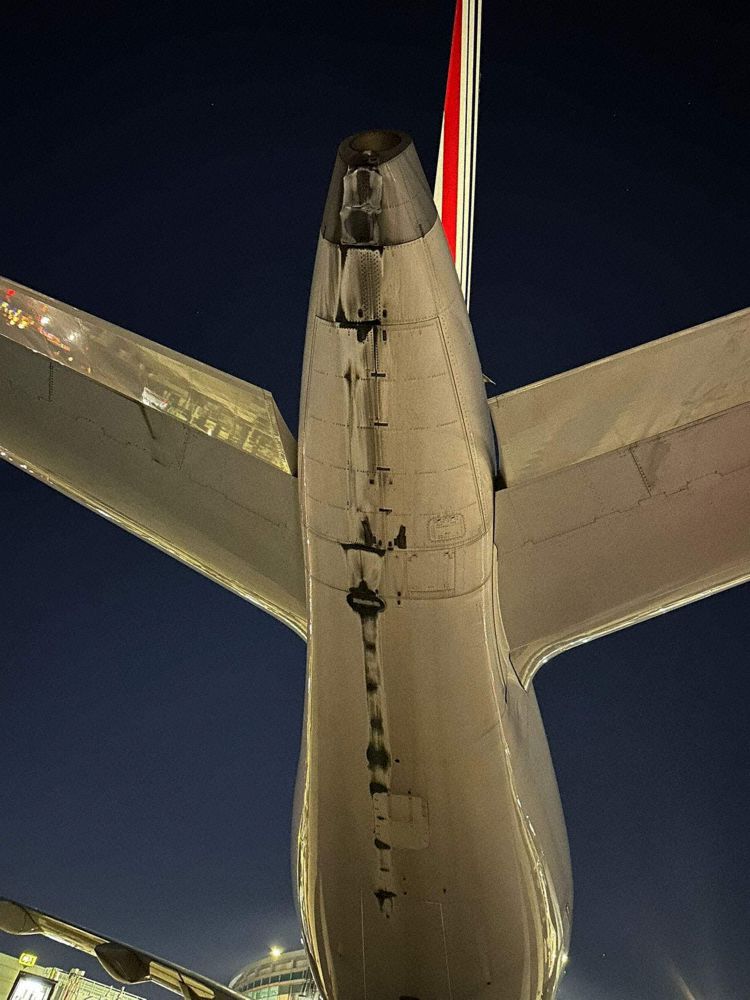
Wishing to get the plane back into the air, a steep nose-up pitch was initiated before full engine thrust was available. This severe pitch angle caused the rear underbelly of the massive jet to drag heavily against the tarmac.
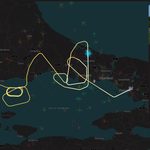
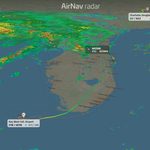
Unaware that the tail had impacted the ground, the flight crew completed the go-around procedure, repositioned the aircraft into the airport’s traffic pattern, and safely landed on a second attempt roughly 14 minutes later.
Substantial Composite and Structural Damage
A subsequent investigation launched by the Transportation Safety Board of Canada (TSB), with assistance from French authorities and Airbus, revealed that the aircraft had suffered extensive structural degradation to its lower aft fuselage and tail section.
The TSB investigation detailed the following post-flight findings:
- Composite skin delamination: Internal layers of the advanced carbon-fiber fuselage skin had separated from the impact stress.
- Structural punctures: Fractures and holes piercing through the outer shell of the aircraft.
- Severe tail cone deformation: Heavy crushing and twisting of the rear tail cone assembly and structural frames.
The extensive nature of the composite repairs forced the four-year-old Airbus to remain grounded out of service in Toronto for nearly six months. It was eventually cleared for a low-altitude repositioning flight back to Europe for final structural inspections and restoration.
Air France Implements Training Reforms
In the wake of the TSB’s ongoing investigation, Air France has taken proactive safety measures by dramatically reinforcing its pilot training syllabus. The carrier has introduced mandatory, enhanced simulator training sessions for its flight crews, specifically targeting:
- Balked landings: Aborting a landing after the wheels have already made contact with the ground.
- Go-arounds near the terrain: Managing critical energy states while transitioning from descending to climbing.
- Low-energy flight conditions: Proper handling techniques to avoid aggressive pitch changes before jet engines have fully spooled to takeoff power.
The adjusted fleet-wide protocols are explicitly designed to ensure pilots respect the unique geometry and aerodynamic boundaries of long-fuselage aircraft during high-workload landing rejections.