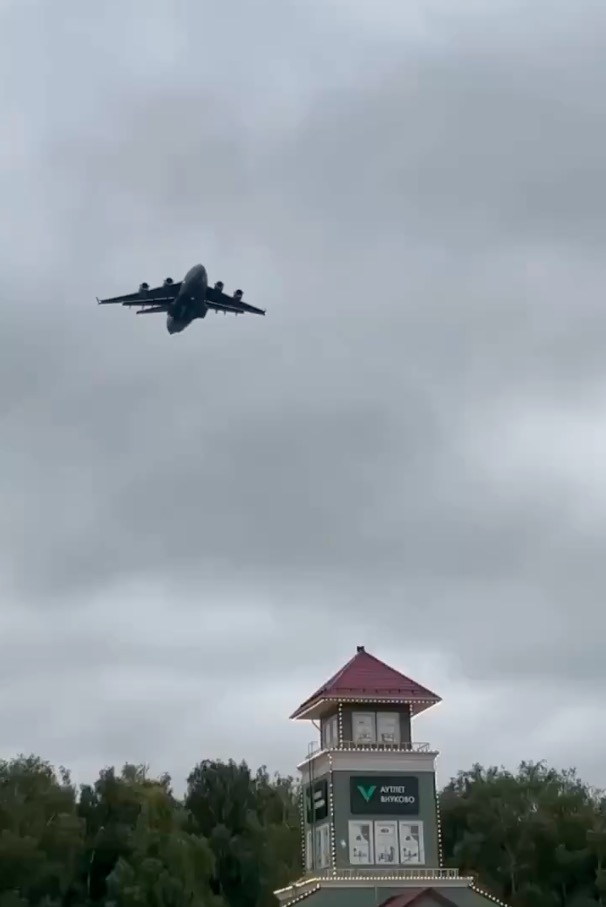

WASHINGTON — Newly declassified military footage released by the Department of Defense reveals the dramatic 50-hour rescue operation of a U.S. Air Force weapons systems officer who was shot down over hostile Iranian territory, surviving a violent high-speed ejection and two days behind enemy lines.
The officer, identified by his call sign “Dude 44 Bravo”, was serving as the backseat weapons systems officer aboard an F-15E Strike Eagle alongside his pilot, call-signed “Alpha.” Their aircraft was struck by an Iranian shoulder-fired surface-to-air missile during a nighttime strike mission near Isfahan.
Damaged Parachute and Violent Impact
When the missile struck the jet on 5 April 2026, the two crew members were forced to eject into the darkness over a mountainous desert region. While Alpha ejected cleanly, an inspection of Bravo’s parachute revealed severe damage caused by the blast.
Looking up into the night sky, Bravo saw his canopy failing to properly deploy. He free-fell to the ground at an estimated 70 to 100 mph, hitting the terrain hard roughly 5 miles away from where his pilot landed.
Despite breaking his back, an arm, and a shoulder upon impact, Bravo immediately evacuated the landing zone. Armed with survival training, he managed to hike up a 7,000-foot desert ridgeline to evade enemy capture as Iranian ground units moved into the area to hunt for the crew.
The Race Against Time
While Pilot Alpha was successfully recovered six hours after the ejection in a risky daytime extraction, joint rescue teams were initially unable to locate Bravo. Iranian search parties reached within a few hundred meters of his position during the manhunt.
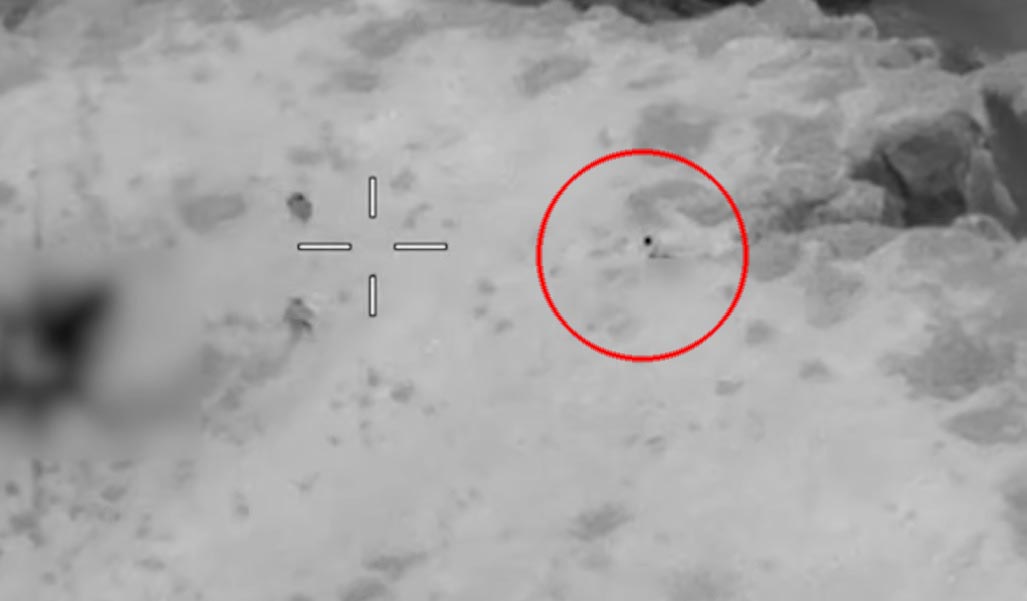
To locate the injured officer in the dark, high-desert terrain, search-and-rescue teams utilized specialized targeting suites and an infrared stroboscope signal emitted from Bravo’s survival kit. The infrared beacon allowed military sensors to pinpoint his location on the steep cliffside while remaining invisible to the naked eye on the ground.
Timeline of the Operations
- F-15E Hit Over Iran
Night of April 2
An Iranian shoulder-fired missile strikes aircraft Dude 44 near Isfahan. Both airmen eject into hostile territory. - Pilot ‘Alpha’ Rescued
+6 Hours
Special operations teams execute a daylight helicopter raid under direct small-arms fire, successfully extracting the pilot. Bravo remains undetected 5 miles away. - Tactical Deception & Beacon Signal
+24 to +40 Hours
The CIA coordinates a multi-pronged deception campaign. Bravo uses an infrared stroboscope to signal his position on a 7,000-foot ridge while evading Iranian ground units. - Bravo Extracted
+50 Hours (Easter Sunday)
Over 90 U.S. personnel execute a ground assault via MH-6 Little Bird helicopters. Bravo is recovered, marking the end of the 50-hour operation behind enemy lines.
“A Modern-Day Miracle”
The multi-agency rescue involved over 90 U.S. personnel on the ground, marking the first operational U.S. military boots on Iranian soil in 46 years, supported by hundreds of crew members in the air.
During the extraction, two American rescue aircraft and several small helicopters became stuck in the soft desert sand at a makeshift airstrip. To prevent advanced technology from falling into enemy hands, U.S. forces deliberately destroyed the stranded equipment before airlifting all personnel out.
Reflecting on his survival after his recovery, Bravo described surviving the initial high-speed landing and subsequent two-day evasion as a “modern-day miracle,” praising the Joint Force’s unwavering commitment to leaving no service member behind.