

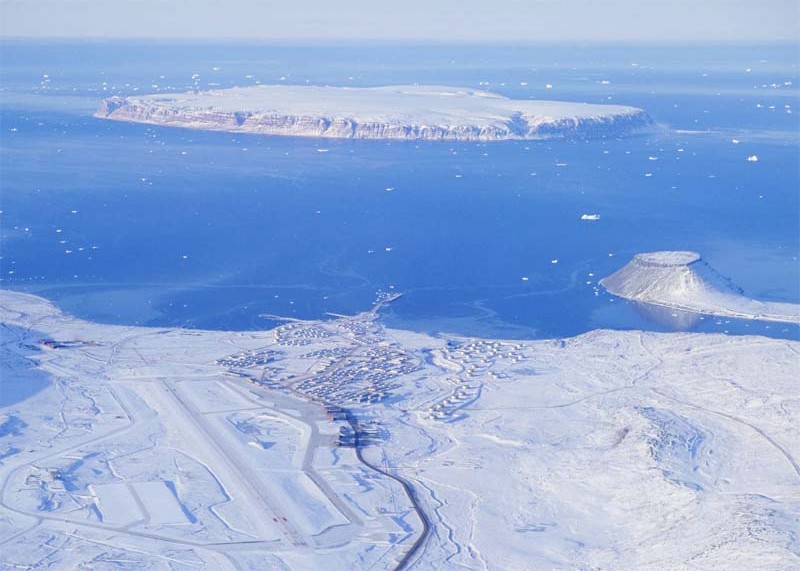
PITUFFIK, GREENLAND – The North American Aerospace Defense Command (NORAD) announced on Monday that a fleet of military aircraft will soon arrive at Thule Air Base/Pituffik Airport (THU) in Greenland. While officials described the movement as part of “long-planned” defense activities, the deployment comes at a moment of soaring geopolitical tension regarding the status of the Arctic island.
A Strategic Move in the High North
The deployment involves aircraft from both the United States and Canada, intended to support dispersed operations in the defense of North America. NORAD emphasized that the activities are conducted in coordination with the Kingdom of Denmark and that the Government of Greenland has been fully informed.
Pituffik, formerly known as Thule Air Base, is the Pentagon’s northernmost installation. It serves as a vital hub for:
- Ballistic Missile Warning: Housing a sophisticated phased-array radar system to detect ICBMs.
- Space Domain Awareness: Tracking satellites and orbital debris.
- Logistics: Operating the world’s northernmost deep-water seaport.
Tensions Over “Project Greenland”
Despite the “routine” label from military officials, the timing is being closely scrutinized. The deployment follows a series of recent statements from the White House regarding a renewed interest in acquiring Greenland.
President Donald Trump has recently signaled that the U.S. might impose escalating tariffs—starting at 10% in February and rising to 25% by June—on Denmark and other European nations unless a deal is reached to transfer the territory to the United States.
In response, several European nations including Germany, France, and Norway have sent small contingents of military personnel to Greenland this week to participate in Danish-led sovereignty exercises. Denmark has also reportedly dispatched additional troops to the island to safeguard critical infrastructure.
As the aircraft prepare to touch down at Pituffik, the base—which is locked in ice for nine months of the year—has once again become the focal point of a 21st-century “Cold War” over Arctic resources and territory.