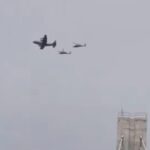


Belgium officially welcomed only three of its first four F-35 Lightning II fighter jets at Florennes Air Base on Monday, October 13.
Belgium had been preparing to officially welcome its first four F-35A Lightning II fighters on October 13, 2025, marking what the Belgian Ministry of Defense described as “the beginning of a strategic transformation” of the Belgian Air Component. The absence of the fourth aircraft from the ceremony represents an embarrassing setback for the high-profile delivery.
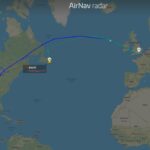
Three F-35 fighter jets (tail numbers FL009, FL010, and FL012) successfully completed the transatlantic flight from Fort Worth, Texas, arriving at Florennes Air Base after a stopover in the Azores. However, the fourth jet, FL011, remained stranded at Lajes due to technical problems discovered during the journey.
Technical Airworthiness Concerns
According to the Ministry of Defence, the fourth aircraft was delayed due to “technical uncertainty regarding its airworthiness.” The specific nature of the technical problem has not been disclosed, though the decision to ground the aircraft at Lajes rather than attempt to continue the flight indicates serious enough concerns to warrant a precautionary approach.
Stranded at Lajes Air Base
Lajes Air Base in the Azores, Portugal, serves as a strategic mid-Atlantic refueling and diversion point for transatlantic military flights. The base provides maintenance facilities and support for NATO aircraft, making it a logical stopover point for the F-35 delivery flight and a suitable location to address technical issues.
The aircraft remains at Lajes pending resolution of the airworthiness concerns. Lockheed Martin technical support and potentially Belgian maintenance personnel may need to deploy to the Azores to address the problem.
Belgium’s F-35 Program
Belgium ordered a total of 45 F-35s from US defense manufacturer Lockheed Martin to replace its F-16 fleet. Brussels has so far contracted for 34 aircraft and plans to purchase 11 more, representing a major investment in next-generation air defense capabilities.
The F-35A Lightning II represents one of the world’s most advanced fighter aircraft, featuring stealth capabilities, advanced sensors, and network-centric warfare systems. However, the program has been plagued by technical issues and cost overruns throughout its development.
The F-35 arrival was set to unlock early F-16 transfers to Ukraine, with Belgium planning to accelerate the donation of its older fighters to support Ukrainian defense efforts. The successful delivery of at least three F-35s allows this process to begin, even with the fourth aircraft delayed.
Pilot and Technician Training
A detachment is currently preparing for the arrival and operation of Belgian F-35A aircraft. A total of 48 pilots, 14 flight simulator instructors, and 120 technicians will pass through training or conversion to the state-of-the-art F-35A in the coming years.
The extensive training requirements reflect the technological sophistication of the F-35 compared to the F-16s Belgian personnel have operated for decades. The learning curve for maintenance crews and pilots represents a significant investment beyond the aircraft acquisition costs.
F-35 Reliability Questions
The breakdown of one of the first four aircraft delivered to Belgium raises questions about F-35 reliability, a persistent concern throughout the program’s troubled history. While the F-35 has matured significantly since early operational deployments, technical issues continue to affect the fleet.
The incident will likely prompt scrutiny from Belgian politicians and taxpayers who are funding the multi-billion euro acquisition program, particularly if the stranded aircraft requires extended repairs or reveals systemic problems.