
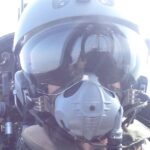

During a sharp right roll, a Spanish Air Force F/A-18 Hornet had a close call during airshow over the scenic coastal city of Gijón.
The F/A-18 Hornet fighter jet of the Spanish Air Force was flying at a very low altitude toward a beach crowded with spectators when it suddenly performed a sharp right roll.
The abrupt maneuver caused the aircraft to dip dangerously close to the ocean’s surface before regaining altitude in a dramatic climb-out.
This aerodynamic characteristic likely played a crucial role in preventing a catastrophe. Without the Hornet’s ability to perform such precise corrections, there’s a real chance the pilot and aircraft might not have made it. Had the jet—or even debris from it—crashed onto the crowded beach, the outcome could have been devastating.
Performing a maneuver while flying perpendicular to the crowd line is inherently dangerous, as any loss of control could send the aircraft or debris across the showline and into the audience—something strictly cautioned against and routinely emphasized in airshow safety briefings.
What could be the cause
It appears the pilot may have been reacting to a flock of birds in the flight path. At low altitude and high angle of attack, such a collision could have had catastrophic consequences, especially with the jet pointed toward a densely packed shoreline. The black smoke from left engine could suggest a bird strike.
For now, the Spanish Air Force says the F-18 fighter jet performed an evasive maneuver upon detecting a flock of birds in its path as standard protocol to preserve both the pilot’s safety and the public’s security.