

AIRLIVEAIRLIVE
  • News
  • Emergency
  • Accident
  • Incident
  • Tracking
  • Military
  • Space
  • Reports
  • Exclusive
  • CamsLIVE
Notification Show More
AIRLIVEAIRLIVE
Search
Follow US
AIRLIVE Aviation news network
Get aviation breaking news on WhatsApp
AIRLIVE > All articles > History > New research shows shockwaves from WWII bombing raids reached the edge of space
History

New research shows shockwaves from WWII bombing raids reached the edge of space

Bryan Pearce
Last updated: October 1, 2018, 11:41 UTC
Published: Monday, October 1, 2018, at 13:00 UTC
Category: History
Author: Bryan Pearce
Image Source: US DoD/CNN
SHARE
Image Source: US DoD/CNN

New research suggests that Allied bombing raids during World War II reached the edge of space and temporarily weakened the ionosphere.

The find came about when researchers at the University of Reading analysed recordings made at the Radio Research Station at Ditton Park near Slough in England. The station took the “longest continuous set of ionospheric measurements in the world” with recordings taken from 1933-1996.

Researchers used measurements taken through 152 large Allied bombing raids from 1943-1945 rather than the Blitz. “This is because the blitz was ongoing from September 1940 to May 1941, which means the data would be harder to separate from other seasonal changes due to the sun that might affect the ionosphere.”

Other factors for using the data from Allied raids ad not the Blitz were the Luftwaffe planes not being able to carry bombs as heavy as the Allied forces, Allied raids being more intense, shorter and happening during daylight hours.

The ionosphere can be affected by certain big events: solar flares, volcanic eruptions—and the massive bombs dropped on Germany during World War II. Those bombings produced shockwaves strong enough to weaken the ionosphere right near the edge of space. https://t.co/zU2tm1LR7P

— Ars Technica (@arstechnica) September 30, 2018

The research showed the shockwaves from the bombs hitting the earth reached the ionosphere 1000km from the earth’s surface. It is believed the shockwaves heated the ionsphere, weakening it. The effects lasted around 24 hours.

The ionosphere is always changing for various reasons such as solar activity and thunderstorms. The ionosphere impacts radio communications, GPS and some radar.

Lead author of the study, Chris Scott, said, “The images of neighborhoods across Europe reduced to rubble due to wartime air raids are a lasting reminder of the destruction that can be caused by man-made explosions. But the impact of these bombs way up in the Earth’s atmosphere has never been realized until now. It is astonishing to see how the ripples caused by man-made explosions can affect the edge of space. Each raid released the energy of at least 300 lightning strikes. The sheer power involved has allowed us to quantify how events on the Earth’s surface can also affect the ionosphere.”

The research also explains why some aircraft were damaged by shockwaves even though they were flying at the recommended altitude to avoid them.
Leave a Comment

Leave a Reply Cancel reply

You must be logged in to post a comment.

LATEST NEWS

Tokyo-bound American Airlines Boeing 787-9 diverted to LAX after 10 hours in air
Tracking USA
September 24, 2026
American Airlines Boeing 787-9 Dreamliner
AA AA167 LAX N824AN
Captain of Ryanair flight FR7073 transmitted hijack code before returning to Porto
Emergency Europe Tracking
September 24, 2026
Ryanair Boeing 737-8200 MAX
EI-IKJ FR FR7073 OPO
BREAKING Royal Air Force Hawk aircraft crashed shortly after taking off from RAF Valley
Europe Military UK
September 23, 2026
How the Iranian delegation flew to New York for the UN General Assembly
Reports Tracking USA
September 23, 2026
Airbus A340-311
EP-IGI

Related news

EuropeHistoryUK

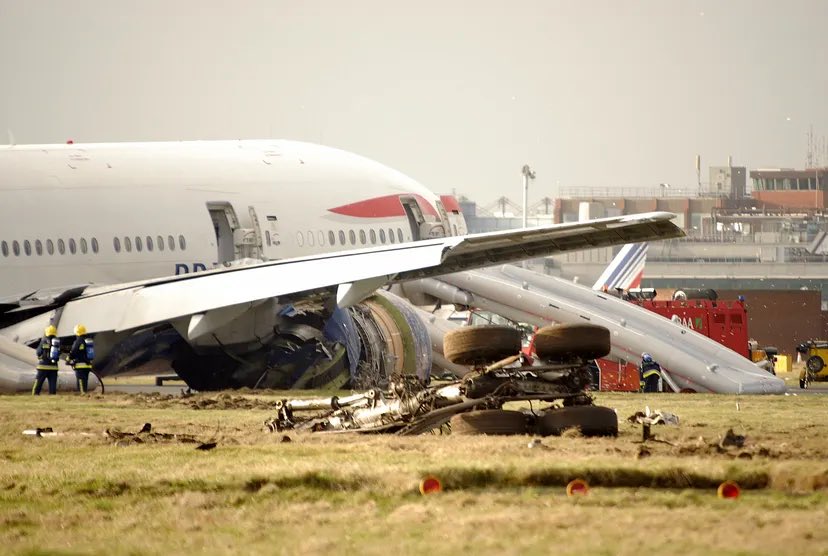
18 years ago, a British Airways Boeing 777 crash-landed 270 meters short of runway at Heathrow

January 17, 2026
History

The Worst Plane Crashes in Aviation History

September 30, 2023
History

10 years ago, a Boeing 747 stalled and crashed on takeoff from Bagram Air Base

April 29, 2023
History

On March 12, 2003 Singapore Airlines Boeing 747 suffered a tail strike as the rotation speed was 33 knots less than required

March 12, 2023
AIRLIVE.net is an Aviation news network supported by a team of journalists and aviation enthusiasts.
Add AIRLIVE as Google preferred source
Since 2014, AIRLIVE.net has been publishing accurate aviation news and live updates from our sources around the world. This has led to the creation of the largest aviation community on social media.
Eyewitness to an event?
Alert AIRLIVE's newsdesk on WhatsApp
AIRLIVEAIRLIVE
Follow US
Copyright AIRLIVE 2026
  • Contact
  • Submit a story
  • Privacy policy
  • Return policy
Welcome Back!

Sign in to your account

Username or Email Address
Password

Lost your password?