


Emirates flight from the United States to the United Arab Emirates was forced to declare a fuel emergency over the Gulf.
The flight, operated by an Airbus A380-800 (Registration: A6-EEV), departed Washington Dulles International Airport (IAD) on Friday, January 2, 2026, at 11:02 EST. After nearly 13 hours in the air, the aircraft approached its destination of Dubai International (DXB) during a period of severe meteorological challenges.
Thick Fog Grips Dubai
As EK232 approached the UAE, a heavy blanket of fog descended upon the region. Visibility at Dubai International plummeted to a mere 200 meters, falling below the safe operating minimums for standard arrivals.
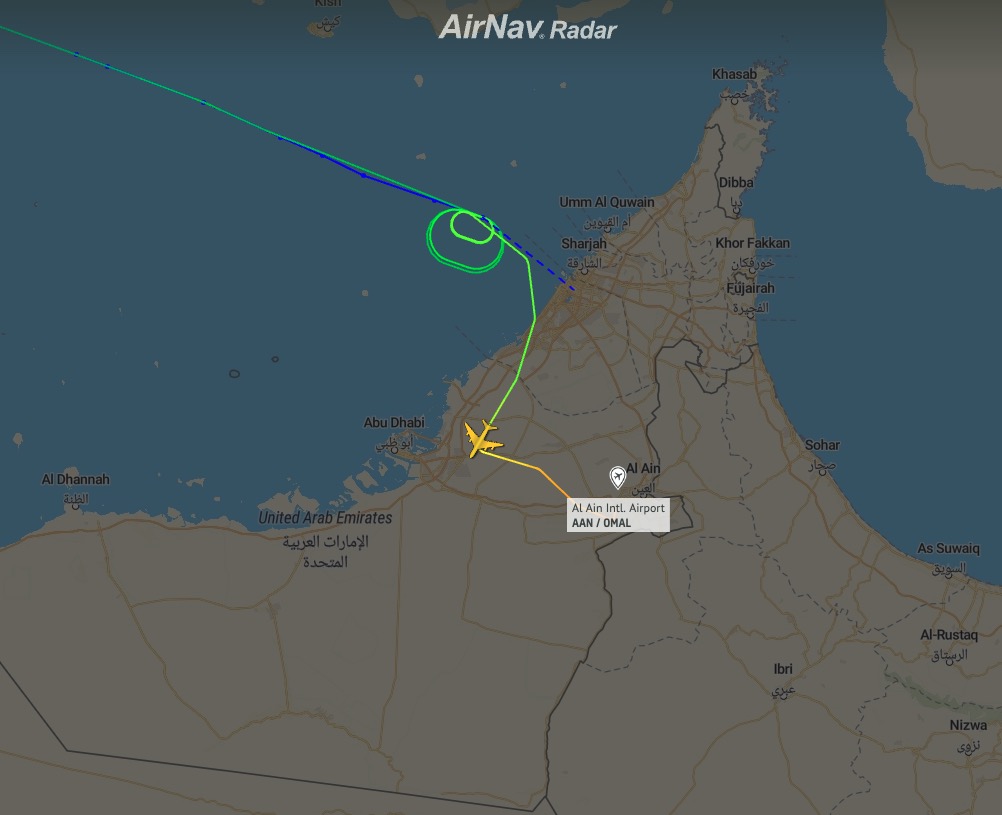
Unable to land, the flight crew entered a holding pattern. For nearly one hour, the world’s largest passenger jet circled near the coast, waiting for a weather window that never materialized.
From Holding to Emergency
Extended circling at the end of a long-haul journey is a critical phase for fuel management. With reserves dwindling and no immediate improvement in Dubai’s visibility, the pilots declared a an emergency (squawk 7700) due to low fuel.
This declaration grants the aircraft priority handling from Air Traffic Control (ATC). The crew made the tactical decision to divert to Al Ain International Airport (AAN), located approximately 120 kilometers inland, where visibility conditions were more favorable.
Diversion and Resolution
The A380 touched down safely at Al Ain, where it was met by ground crews and refueled. After the weather cleared in Dubai and the aircraft was deemed fit for the short hop back, EK232 took to the skies once more for a 21 minutes flight back to DXB.