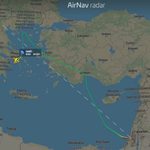

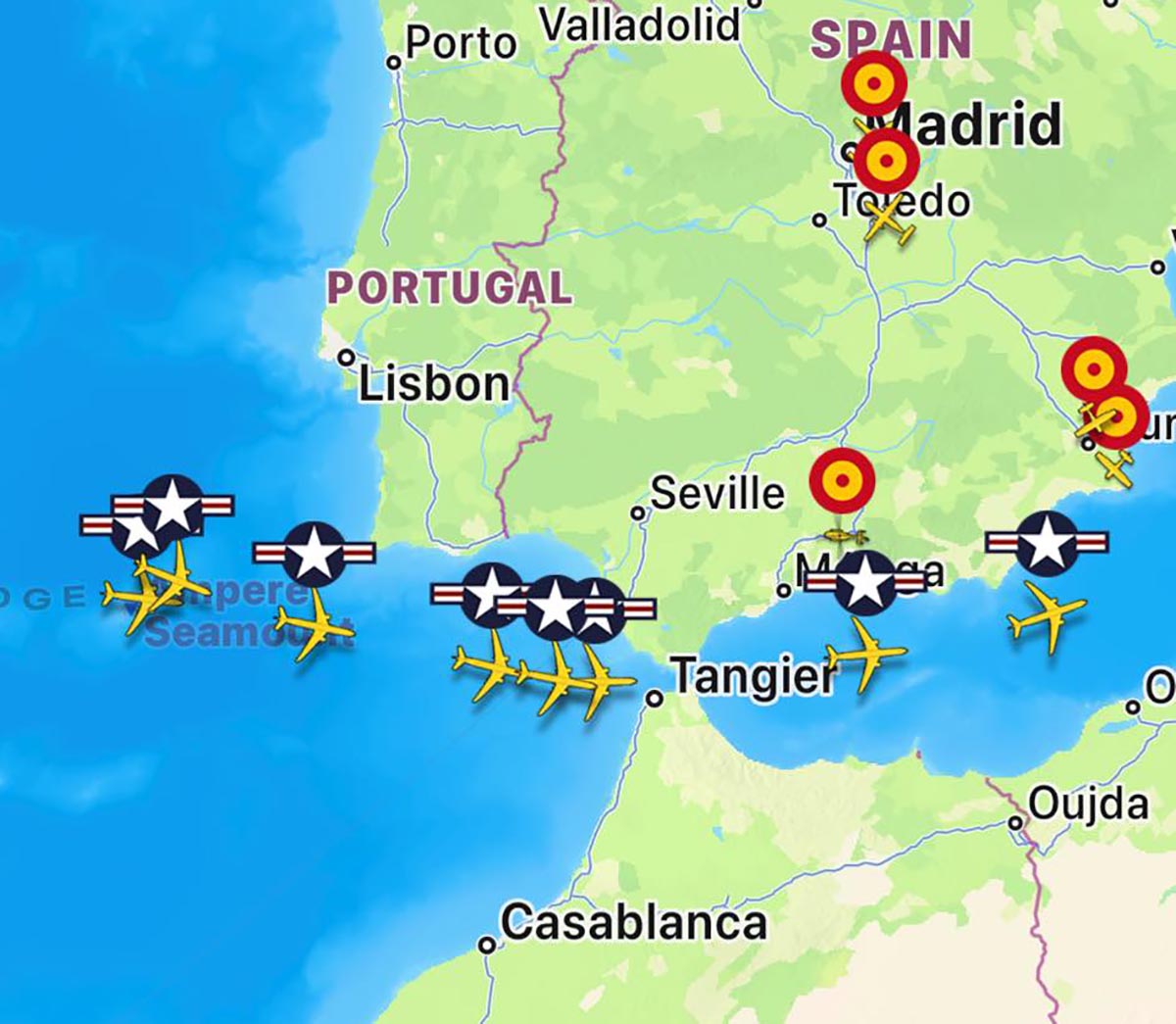
GIBRALTAR — In a significant movement of Western air power, nine U.S. Air Force refueling tankers were tracked transiting the Strait of Gibraltar on Thursday, signaling a major reinforcement of American combat capabilities in the Middle East.
The formation, consisting of three distinct cells of aircraft, follows a multi-day staging operation in the Atlantic as the U.S. ramps up its military presence in response to the ongoing conflict in Iran.
Strategic Transatlantic “Bridge”
The tankers—using the callsigns ADOBE 33, 34, 35, 43, 44, 45, 53, 54, and 55—arrived over the Mediterranean after a brief layover at Lajes Air Base in the Azores. Lajes has long served as a critical “stepping stone” for U.S. aircraft crossing the Atlantic, providing a final refueling and maintenance point before entering the European and African theaters.
Aviation analysts suggest the sheer volume of tankers indicates they are escorting a significant strike package. Based on standard U.S. Air Force deployment ratios, the nine tankers are estimated to be supporting approximately 18 F-18 fighter jets.
Navigating Diplomatic Turbulence
The flight path of the ADOBE formation highlighted simmering diplomatic tensions within NATO. The aircraft remained strictly within international airspace while passing through the Strait of Gibraltar, avoiding Spanish territory.
Spain has maintained a formal blockade of its airspace for any U.S. military assets directly involved in the Iranian conflict. This restriction forced the heavy tankers to navigate the narrow “Gibraltar gap,” a move that requires precise coordination to stay outside of Spanish sovereign limits while managing heavy commercial traffic in the region.