

AIRLIVEAIRLIVE
  • News
  • Emergency
  • Accident
  • Incident
  • Tracking
  • Blog
  • Report
  • Military
  • Space
  • CamsLIVE
  • Store
    • T-shirts
    • Hat
    • Models
    • Toys
    • Boeing
    • Airbus
    • Space
    • My Account
    • Order tracking
0

No products in the cart.

Notification Show More
AIRLIVEAIRLIVE
0
Search
  • News
  • Emergency
  • Accident
  • Incident
  • Tracking
  • Blog
  • Report
  • Military
  • Space
  • CamsLIVE
  • Store
    • T-shirts
    • Hat
    • Models
    • Toys
    • Boeing
    • Airbus
    • Space
    • My Account
    • Order tracking
Follow US
AIRLIVE Aviation news network
Get aviation breaking news on WhatsApp
AIRLIVE > All articles > Location > Europe > France > Weather radar of Airbus A350 raises concerns among Air France pilots
EuropeFranceReports

Weather radar of Airbus A350 raises concerns among Air France pilots

Last updated: January 9, 2026, 07:19 UTC
Published: Friday, January 9, 2026, at 12:45 UTC
Category: Europe France Reports
Author: Melanie Kraft
Data: AF AF291 Airbus
SHARE

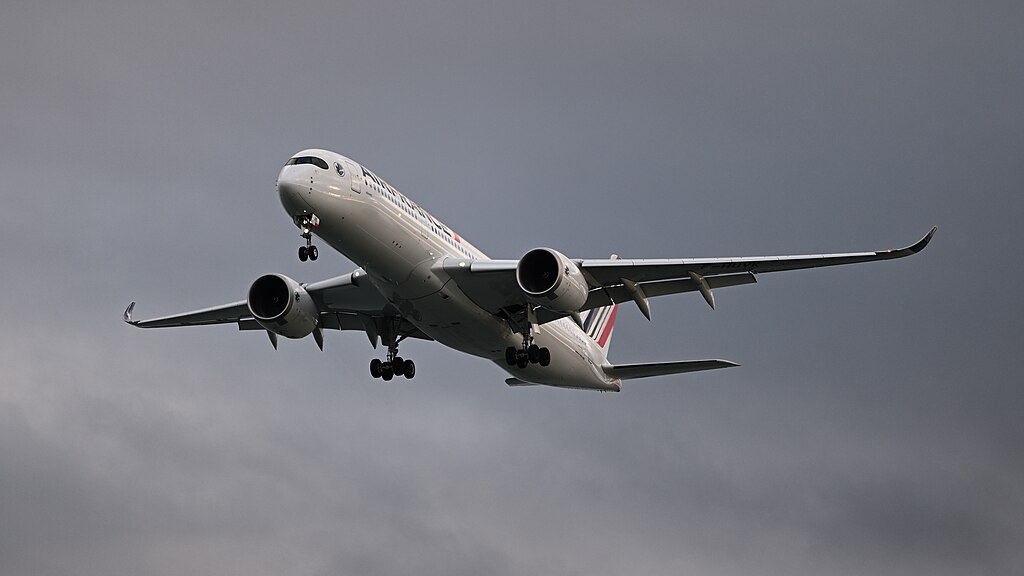
Air France pilots have raised serious concerns regarding the weather radar systems on the Airbus A350.

According to findings from the French Bureau of Enquiry and Analysis, the issue has come to light following a dramatic incident involving a flight from Osaka to Paris, revealing critical maintenance and structural vulnerabilities.

The Incident: A Serious Failure

The alarm was primarily triggered by an incident involving Air France flight AF291. Shortly after takeoff from Osaka, the crew of the Airbus A350 (registration F-HTYO) received multiple “WXR Fault” alerts, indicating a total failure of the weather radar.

Unbeknownst to the pilots, the aircraft’s radome—the “nose cone” that protects the radar antenna—had been structurally weakened by previous undetected bird strikes. As the plane climbed, the weakened composite material could no longer withstand the aerodynamic pressure. At 30,000 feet, the radome collapsed inward.

This structural failure caused a “cascading” emergency:

  • Radar Loss: The collapsed cone physically crushed the radar antenna, leaving the pilots “blind” to weather conditions.
  • Instrument Chaos: The deformed nose disrupted the airflow to the Pitot probes (airspeed sensors). This led to “unreliable airspeed” indications, forcing the pilots to fly the plane manually while dealing with conflicting data on their screens.
REPORT BEA releases report about of Air France A350’s radome collapsing after departure from Japan

Why Pilots are Worried

The core of the concern, as highlighted by Le Parisien, is that these radar failures were not isolated. The investigation revealed that the specific aircraft had experienced recurring weather radar faults in the days leading up to the accident.

Pilots and safety investigators are highlighting several “critical and regular” failures:

  1. Invisible Damage: Composite materials used in modern aircraft like the A350 can suffer “delamination” (internal peeling) from bird strikes without showing any cracks or dents on the outside.
  2. Maintenance Gaps: In the Osaka case, maintenance teams had checked the radar and deemed it operational because it passed electronic tests. However, they failed to perform a physical internal inspection of the radome structure itself, which is required after bird strikes.
  3. Frequency of Faults: Pilots have noted that radar “fault” messages are becoming uncomfortably common, sometimes masking deeper structural issues that could lead to a repeat of the Osaka incident.

Corrective Measures

In response to these findings, both Airbus and Air France have taken steps to tighten safety protocols:

  • Mandatory Inspections: Maintenance technicians are now required to systematically open and inspect the interior of the radome after any bird strike, lightning strike, or hail encounter, regardless of how the exterior looks.
  • Updated Procedures: Airbus has revised the troubleshooting manuals for the A350 to ensure that recurring radar faults are treated as potential signs of structural damage rather than just electronic glitches.
  • Pilot Training: Air France has reinforced training for its long-haul pilots on how to handle the specific “NAIADS” (data switching) logic of the A350 when sensors provide conflicting information.

Conclusion

The report serves as a wake-up call for the aviation industry regarding the maintenance of next-generation composite aircraft. While the A350 remains one of the most advanced jets in the sky, the “silent” degradation of its nose cone has forced a rethink of how airlines balance high-tech sensor data with old-fashioned physical inspections.

For now, Air France pilots remain vigilant, calling for stricter adherence to maintenance schedules to ensure a “fault” on the screen doesn’t turn into a structural failure in the air.
TAGGED:AFAF291Airbus
ByMelanie Kraft
Melanie's aviation journey began at a young age, earning her first pilot certifications while still a teenager, before she ever held a driver’s license! As lead journalist at AIRLIVE.net, she plays a pivotal role in shaping the voice and editorial direction of the website. Her experience spans flight operations, air traffic coordination and emergency incident analysis.

LATEST NEWS

American Eagle AA3927 declared an emergency due to low fuel after 3 missed approaches
Emergency Tracking USA
August 12, 2026
American Eagle Embraer E175LR
AA AA3927 EVV N285NN
Iberia to livestream solar eclipse from Airbus A321XLR flying at 33,000 ft
Europe News
August 11, 2026
Iberia Airbus A321XLR
IB
An American Airline Boeing 737 suffered a bird strike on takeoff from Myrtle Beach
Incident USA
August 11, 2026
American Airline Boeing 737-800
AA AA1760 MYR
Trump hid in catering truck to secretly board an Air Force C-32A and leave NATO summit in Turkey
Middle East Military
August 12, 2026
Swiss flight LX52 to Boston declared Mayday mid-Atlantic reporting onboard smoke
Emergency Europe Ireland Tracking
August 9, 2026
Swiss International Air Lines Airbus A330-343E
DUB HB-JHN LX LX52
British Airways A380 to London made a U-turn and returned to Johannesburg 7 hours after takeoff
Africa Tracking
August 9, 2026
British Airways Airbus A380-841
BA BA54 G-XLEJ JNB

Related news

EuropeIncidentUK

Fire suppressant foam inadvertently triggered tonight inside Virgin Atlantic’s hangar at London Heathrow

August 8, 2026
EmergencyEuropeUK

Emergency vehicles on alert at London Heathrow ahead of British Airways flight BA1459 landing

August 7, 2026
EuropeTrackingUK

BREAKING Due to a grass fire, the southern runway of London Heathrow is closed until further notice

August 6, 2026
EmergencyEuropeTrackingUK

Jet2 flight LS3251 is declaring an emergency after departure from Liverpool

August 6, 2026
AIRLIVE.net is an Aviation news network supported by a team of journalists and aviation enthusiasts.
Add AIRLIVE as Google preferred source
Since 2014, AIRLIVE.net has been publishing accurate aviation news and live updates from our sources around the world. This has led to the creation of the largest aviation community on social media.
Eyewitness to an event?
Alert AIRLIVE's newsdesk on WhatsApp
AIRLIVEAIRLIVE
Follow US
Copyright AIRLIVE 2026
  • Contact
  • Submit a story
  • Privacy policy
  • Return policy
Welcome Back!

Sign in to your account

Username or Email Address
Password

Lost your password?