


A veteran Delta Air Lines Boeing 767 has been forced to abort an international crossing, raising further questions about the reliability of the carrier’s aging widebody fleet.
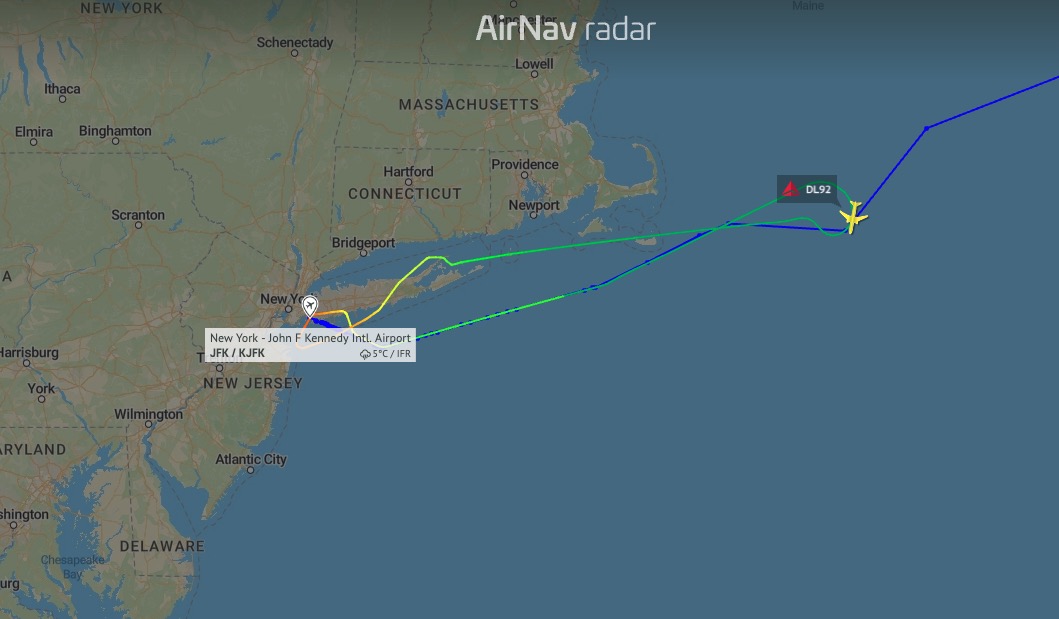
NEW YORK — On the evening of Saturday, April 25, 2026, Delta Flight DL92, bound for Berlin (BER), departed from New York’s John F. Kennedy International Airport at approximately 9:30 PM. The aircraft, a Boeing 767-300ER registered as N185DN, performed a standard climb-out from Runway 4L and reached an initial cruising altitude of 33,000 feet over the Atlantic Ocean.
The Incident
The routine flight quickly turned into a “flight to nowhere” for passengers. Less than an hour into the journey, while positioned off the coast, the flight crew identified a technical discrepancy.
Deciding not to risk a long-haul oceanic crossing with a mounting mechanical problem, the pilots declared an issue and initiated a sharp U-turn back toward New York. The aircraft touched down safely at JFK roughly 90 minutes after its initial departure.
Official Response
Delta Air Lines confirmed the diversion shortly after landing, citing a “mechanical issue” as the primary cause.
A Growing Trend?
The aircraft involved, N185DN, is currently 31 years old, making it one of the most senior airframes in Delta’s active stable. This latest incident highlights a persistent pattern:
- Fleet Age: Delta remains one of the few major U.S. carriers still heavily utilizing the 767-300ER for European routes.
- Maintenance Frequency: Aviation analysts have noted an uptick in “technical returns” and diversions involving Delta’s 767 fleet over the past 18 months.
- Retirement Plans: While Delta has begun transitioning to the more modern Airbus A330neo and A350, the 767 continues to be a workhorse for the airline’s “thin” long-haul markets.
No injuries were reported among the crew or passengers. The aircraft remains on the ground in New York for a full inspection by maintenance teams.