


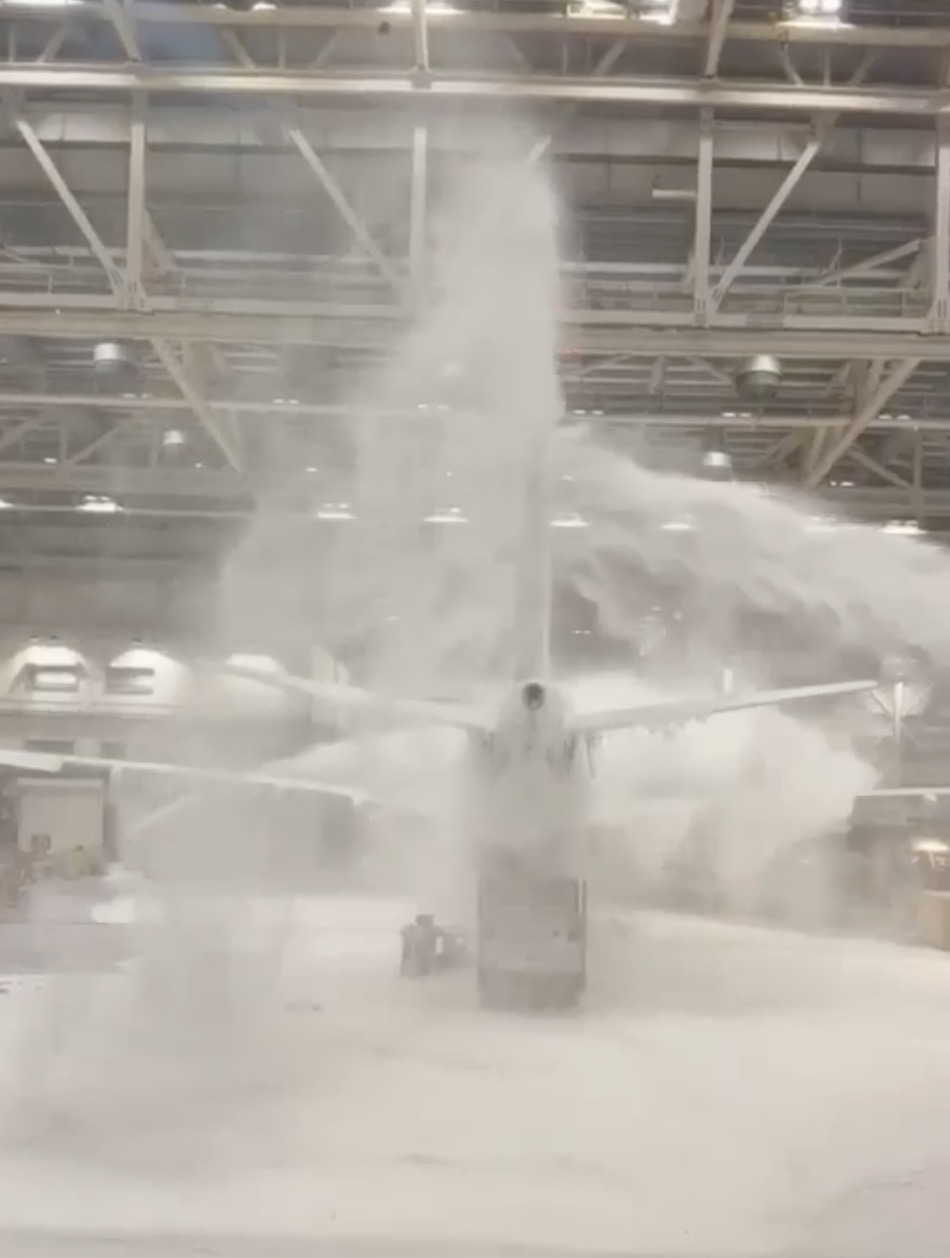
LONDON — A routine night shift inside Virgin Atlantic’s engineering hangar at London Heathrow Airport turned into an extraordinary mess tonight after an automated fire suppression system inadvertently triggered, burying a multi-million-pound aircraft under a towering blanket of white chemical foam.
A Virgin engineer stationed inside the cockpit of a neighboring aircraft witnessed the event unfold firsthand. While performing routine paperwork in the flight deck, the hangar’s fire alarms suddenly began blaring. Within seconds, high-expansion foam generators overhead unleashed a massive torrent, filling the bay and completely swamping the jet parked directly in front of the engineer’s windshield.
To the untrained eye, hangar fire suppressant foam resembles simple soapy froth. To aircraft maintenance teams, it is a logistical nightmare. Clean-up is not merely a matter of grabbing a hose and washing it down the drain—it requires a complex, highly regulated, and physically demanding operation.
| Cleanup Challenge | Primary Concern & Impact |
| Corrosion Risk | Fire retardant foam contains compounds that are corrosive to aircraft metals, rubber seals, and exposed composites if left sitting on the airframe. |
| Avionics & Sensors | Moisture and chemical residue can damage external pitot tubes, static ports, and sensitive flight-control wiring, requiring tedious hand-cleaning. |
| Engine Decontamination | Foam inside turbofan engines forces technicians to perform full internal flushes and detailed borescope inspections before flight clearance. |
| Hazardous Disposal | Strict environmental laws prevent foam from entering airport storm drains, requiring industrial vacuums and containment booms to transport wastewater away. |
The hardest part of the recovery effort comes down to labor-intensive detail work. Ground crews and specialized hazardous material teams wearing protective suits must work around the clock in shifts:
- Manual Scraping & Vacuuming: Industrial wet-vacuum trucks and containment booms must first extract thousands of gallons of thick, heavy liquid foam off the hangar floor before it hardens or migrates into drainage systems.
- Hand-Wiping the Airframe: Teams must physically scrub down every surface of the jet by hand, using neutralizer solutions to prevent the chemicals from etching painted surfaces or eating away at aluminum skin joints.
- Deep Mechanical Inspections: Engineers are required to inspect every nook, cranny, wheel well, and internal bay where foam may have seeped, meticulously drying and testing electrical components to ensure total operational safety before the aircraft can fly again.