


A Boeing 787 experienced an uncommanded shutdown of its right Rolls-Royce Trent 1000 engine while the aircraft was on descent into Perth Airport due to a blocked inlet filter in a fuel metering valve servo assembly, an ATSB investigation report details.
Operated by Scoot Airways, the Boeing 787-9, registered 9V-OJE, departed Singapore on 11 October 2018 on a regular scheduled flight to Perth, with 11 crew members and 356 passengers on board. About 2 hours into the flight the fight crew received status messages indicating abnormalities with the right engine, and later told the ATSB that the engine was slow to respond to commanded inputs and that engine performance continued to decline. At 9,000 ft, severe thrust asymmetry developed, and the autopilot made a rudder input. Shortly after, the right engine shutdown uncommanded.
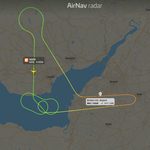
The flight crew issued a PAN and air traffic control provided a clearance to level-off at 5,000 ft and vectored the aircraft off the approach to allow time for the completion of the quick reference handbook checklist, which required the crew to decide whether they should attempt to relight the engine. With the close proximity of Perth Airport and the aircraft’s capability to land safely with one engine, the flight crew decided not to attempt an engine restart. They then completed their landing performance calculations and advised air traffic control they were ready to land. The aircraft subsequently landed safely at 1909 local time and passengers disembarked as normal.
ATSB Director Transport Safety Stuart Macleod, said the investigation highlights the importance of flight crews being familiar with their emergency procedures.
“In this case the flight crew worked effectively to assess the situation and took appropriate action to minimise risk in line with the operator’s flight crew manual,” said Mr Macleod.
To determine the cause of the uncommanded engine shut down engine manufacturer Rolls-Royce conducted a review of flight data information from the electronic engine controller (EEC), the report explains.
“A series of maintenance messages were found indicating a gap between the commanded and actual position of the fuel metering valve (FMV) – part of the hydro-mechanical unit (HMU) used to control the supply of fuel to the engine – that increased until the engine shut down,” Mr Macleod said.
“The first message showed that the flight metering valve was taking longer than needed to reach the position as specified by the EEC, subsequent data showed that after a later commanded declaration the FMV moved below the idle position as directed and did not move back as directed reducing fuel to the engine and it shutting down.”
Before the aircraft’s non-revenue flight to return to Singapore for further maintenance the right engine’s HMU was replaced. Similar maintenance messages were generated during a later flight but without an in-flight engine shutdown.
“Examination of the two HMUs showed evidence of a blocked inlet filter in the FMV servo assembly from worn journal bearings the engine’s secondary high pressure fuel pump, limited the EEC’s ability to effectively manipulate the FMV position and therefore the flow of fuel to the engine,” said Mr Macleod.
In response to the incident Rolls-Royce have updated its Fault Isolation Manual to include the removal of the fuel pump and HMU in the event of maintenance messages indicating the FMV not moving as commanded position.
In addition, when on 1 November 2018, another Scoot Boeing 787 generated maintenance messages related to the HMU during start-up, the engine was inspected and some wear was found on some journal bearings. To search for similar maintenance messages, Rolls-Royce examined all maintenance data across the fleet of Trent 1000 Package B and Package C engines and monitored ongoing flights. Six other events were found, five with Scoot-operated aircraft, but none resulted in an in-flight shutdown. The majority occurred between late 2018 and early 2019.
The report notes Rolls-Royce considered a number of factors to explain the incidences of journal bear wear on Scoot operating aircraft but due to the number of variables they were unable to identify a dominant factor that could explain their susceptibility to pump bearing wear; however, Rolls-Royce identified and implemented a number of interim measures such as engine data monitoring to address the risk from low life wear of bearings.
“This occurrence highlights that positively identifying all factors that contribute to technical failures can be difficult and time consuming but that it is possible for manufacturers and operators to implement interim risk mitigation measures as done in this case,” said Mr Macleod.
“Rolls-Royce have advised the ATSB they will continue to monitor maintenance messages and the condition of unserviceable fuel pumps and are investigating the possibility of using flight data to detect fuel pump journal wear before its effects on valve operation becomes apparent.”
Read the investigation report AO-2018-069: Engine failure involving Boeing 787, 9V-OJE, Perth Airport, Western Australia, on 11 October 2018