

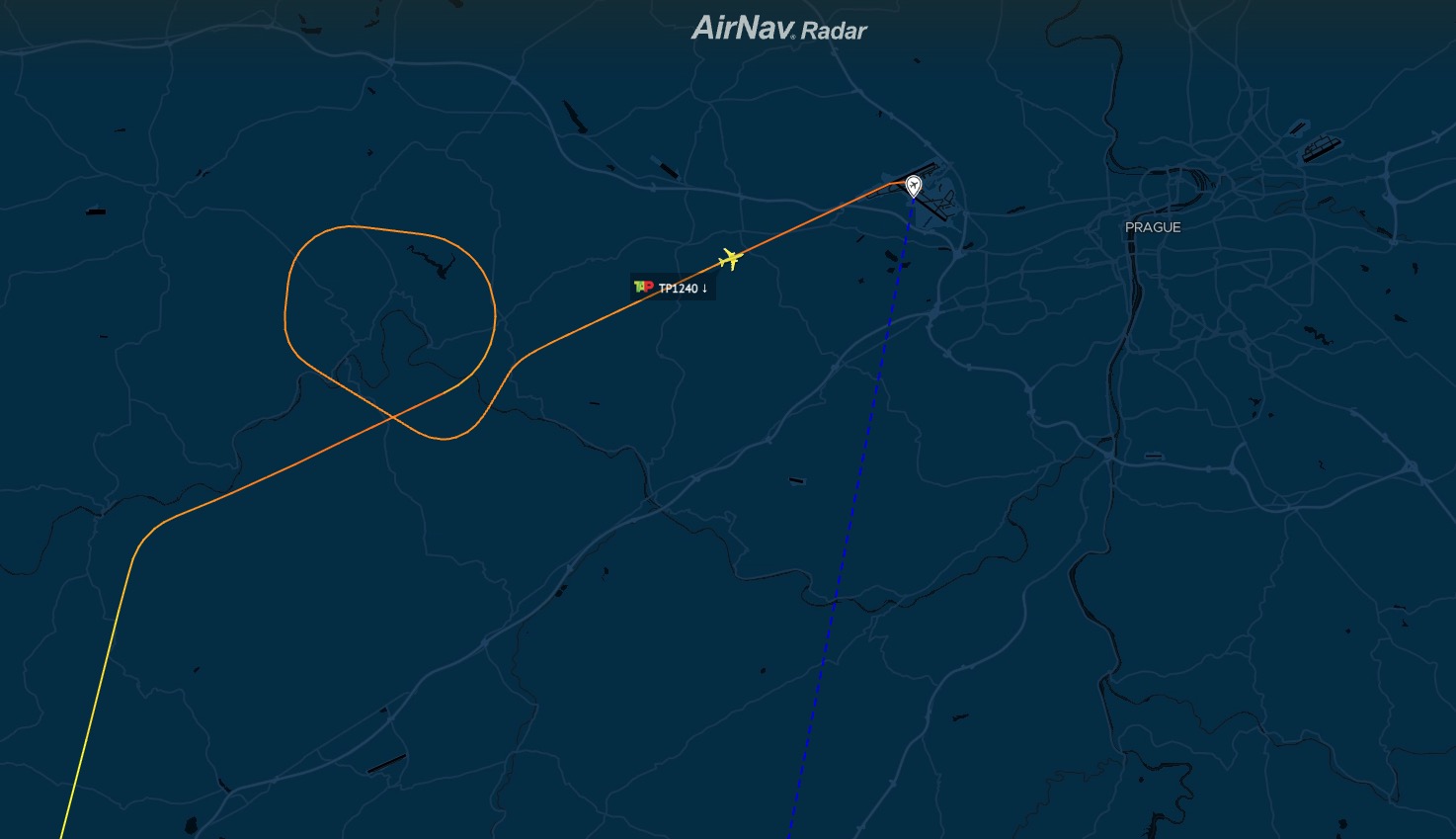
Czech aviation authorities have launched a high-priority investigation after a Portuguese Airbus A320neo was well too low on approach to Prague.
PRAGUE – The incident occurred on the morning of January 17 during a flight from Lisbon to Prague. While cruising over Germany, the aircraft began a descent that continued far beyond its cleared flight level. At 11:16 AM, the plane had dropped well below the minimum safe altitude, screaming toward the terrain at speeds and descent rates described by experts as “extreme.”
A Race Against the Clock
At the height of the crisis, the Airbus was traveling at nearly 600 km/h just 305 meters above the ground. For an aircraft in its approach phase, this speed and proximity to the terrain were highly irregular.
According to reports from iDnes, the plane’s descent rate was nearly three times faster than a standard approach. The tragedy was averted by a combination of a frantic warning from Prague Air Traffic Control and the activation of the aircraft’s onboard safety systems.
Inside the cockpit, the Ground Proximity Warning System (GPWS) triggered, flooding the flight deck with the urgent audible command: “TERRAIN, TERRAIN, PULL UP!”
The Recovery Maneuver
Reacting to the alarms, the pilots executed a maximum-performance climb. The plane climbed 930 meters (3,050 feet) in a mere 36 seconds as engines were pushed to maximum thrust (TOGA – Takeoff/Go-Around power).
Investigation Underway
The Institute for Professional Investigation of the Causes of Air Accidents (UZPLN) is currently analyzing the flight data recorders (“black boxes”) to determine why the crew allowed the aircraft to descend so dangerously low.
Incident Summary
| Metric | Recorded Value | Comparison |
| Lowest Altitude | ~305 meters (1,000 ft) | Below safe terrain clearance |
| Airspeed | ~600 km/h | Unusually high for low altitude |
| Descent Rate | 3x Normal | Rapid uncontrolled-style loss of height |
| Recovery Time | 30 Seconds | Estimated time to impact without intervention |
The investigation will focus on whether the incident was the result of pilot fatigue, a technical glitch in the autopilot system, or a breakdown in cockpit communication.