


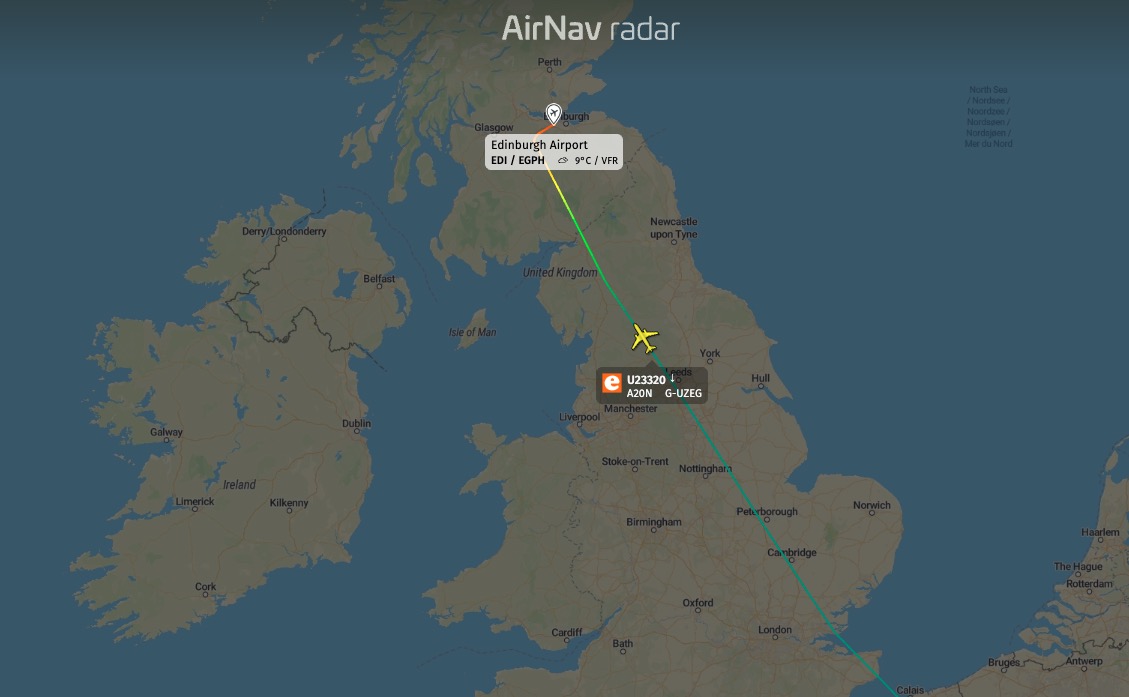
EDINBURGH — Ground crews and medical personnel at Edinburgh Airport were alerted late Tuesday evening after cabin crew aboard an easyJet flight from Egypt reported multiple passengers suffering from acute illness mid-air.
Flight U23320, operated by an Airbus A320neo registered as G-UZEG, was en route from the Red Sea resort destination of Hurghada to Edinburgh on Tuesday, November 3, 2026. Prior to touchdown, the flight crew contacted air traffic controllers to report that at least seven passengers had become unwell during the journey.
According to initial reports from the crew, the affected passengers exhibited a range of symptoms:
- High Temperature: At least three passengers registered elevated fevers.
- Flu-like Symptoms & Vomiting: Several travelers suffered from nausea, severe vomiting, and general influenza-like distress.
- Child with Rash: One young passenger developed an unexplained skin rash during the flight.
The aircraft landed safely at Edinburgh Airport at 23:10 GMT, where local teams evaluated the condition of those on board. Crew members noted that it was difficult to determine immediately whether the illnesses stemmed from separate cases of food poisoning contracted prior to boarding or another contagious issue.
Pattern of In-Flight Illnesses from Egypt
Tuesday’s incident follows a remarkably similar outbreak less than two weeks earlier aboard another easyJet service from Egypt to Scotland reported by AIRLIVE.
On Thursday, October 22, 2026, easyJet flight U23116 from Sharm el-Sheikh to Glasgow reported at least eight passengers experiencing severe vomiting while on approach. That incident was subsequently linked to food contamination consumed at a resort hotel prior to departure.
Health and aviation authorities have not yet confirmed whether the latest cases on the Hurghada-to-Edinburgh flight share a similar source of origin or represent an isolated cluster.